FAB-722287910
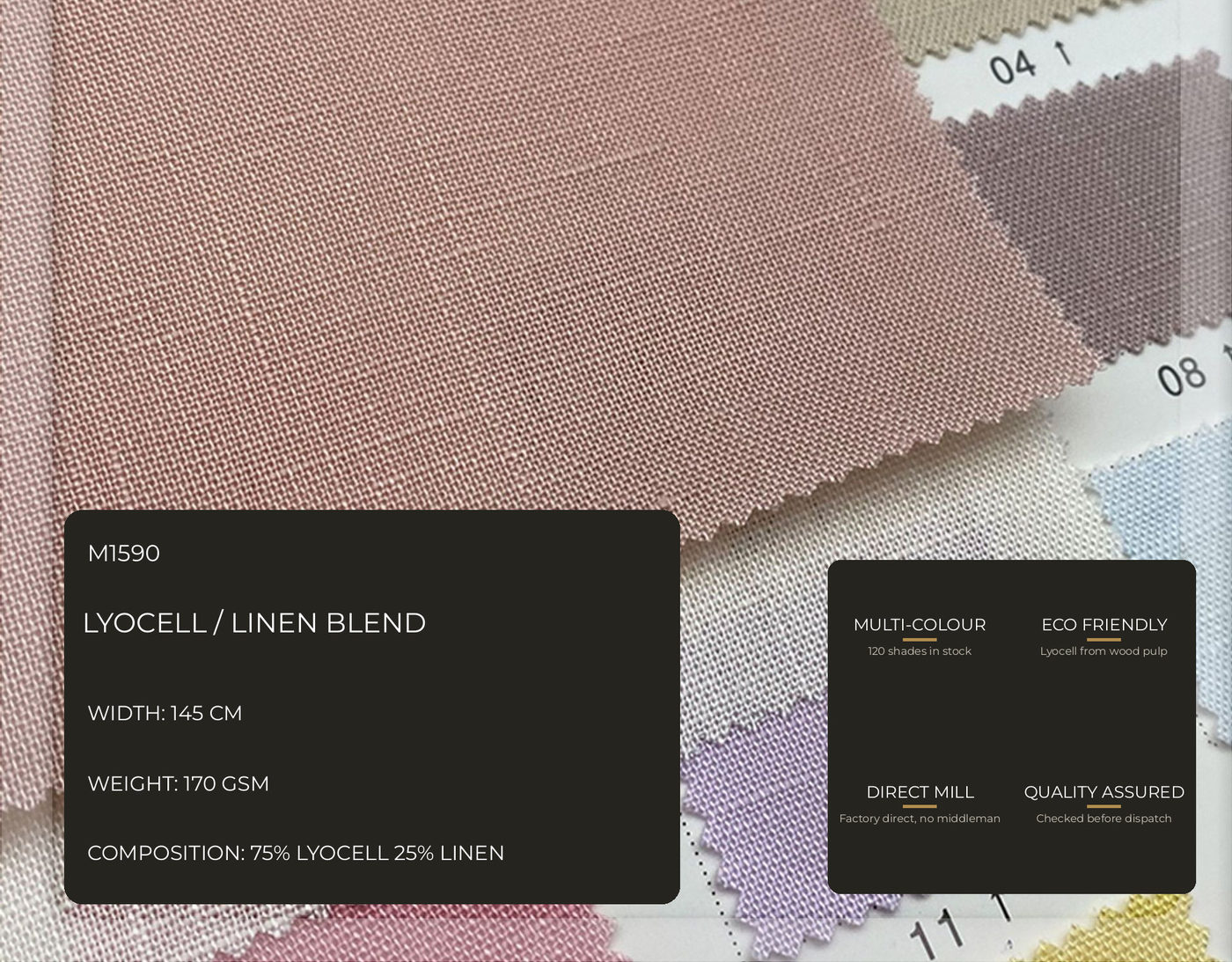
M1590 75% Lyocell 25% Linen Blend Fabric 12S 170 GSM 145cm Width – for Trousers, Shirts and Suits
Quote required
Contact us for the latest price and availability.
- Composition
- 75% Lyocell 25% Linen
- Weight
- 170 GSM
- Width
- 57 inches
- Weave
- Plain weave
- Category
- Lenzing Fabric / Linen Fabric Wholesale / Linen Solid Color Dyed Fabric / Woven
- MOQ
- Negotiable
Sampling & delivery
Build your sample selection, then download a sourcing brief. Ordering, stock and delivery will be enabled after the store information is confirmed.
FABRIC STORY
Product details
| SHAOXING HENGHUI TEXTILE CO., LTD. | ITEM NO. M1590 LYOCELL-LINEN · 75% LYOCELL 25% LINEN · 12S · 170 GSM |
Linen Blend Fabric 12S
145 CM
12S YARN
75% LYOCELL / 25% LINEN
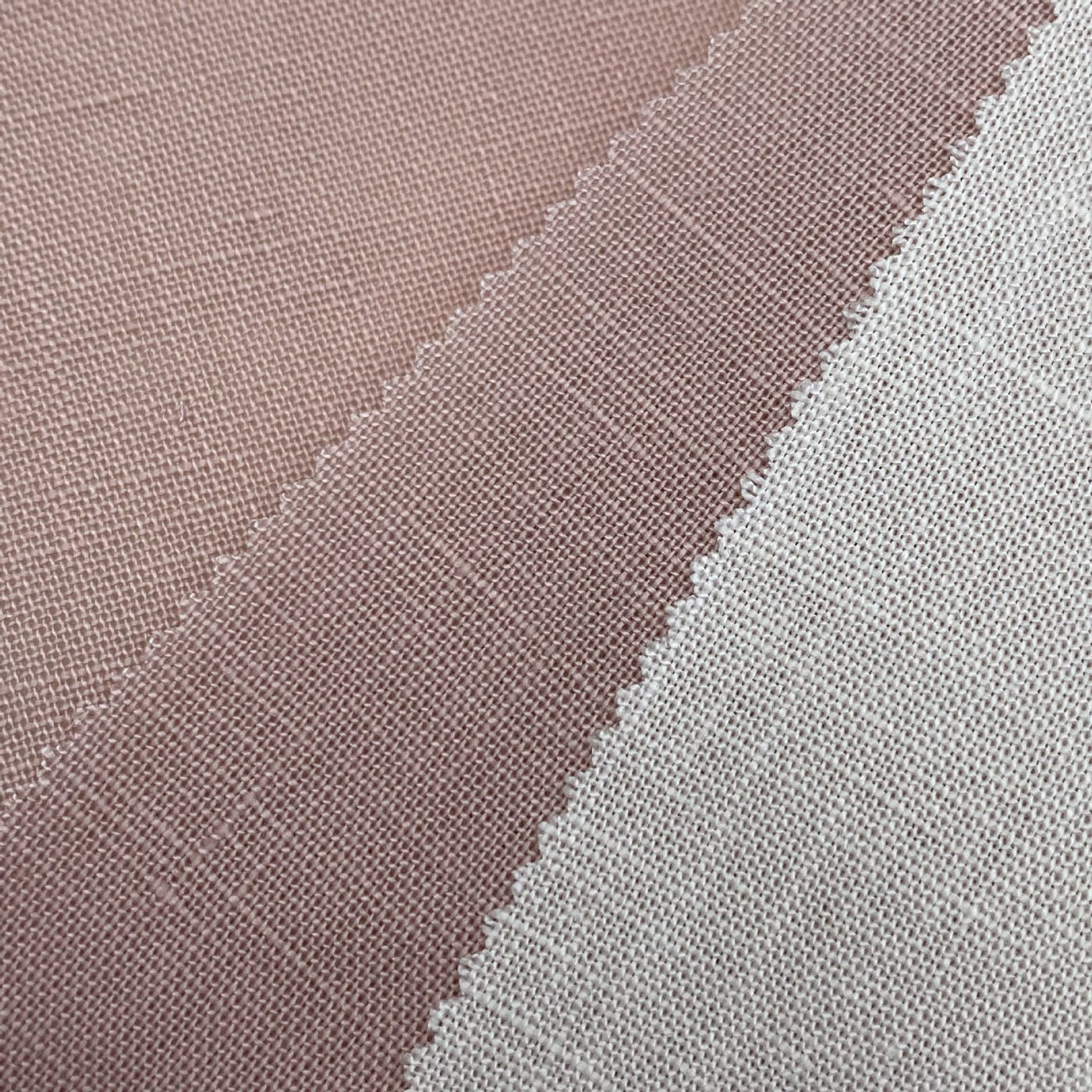
Item M1590 is a woven 75% lyocell / 25% linen blend — the 12 × 12 plain-weave construction, finished at 170 GSM and 145 cm wide, in solid dyed shades. The important thing about this construction is the direction of the ratio. It is not a linen cloth with a little smoothing added: three quarters of the fibre is lyocell, a regenerated cellulose spun from wood pulp, and the quarter that is flax sits on top of it. That reverses what the cloth feels like from the first wear — soft rather than crisp, fluid rather than stiff — while the flax keeps the dry, irregular texture and the airflow that stops it reading as a synthetic.
Two consequences follow, and both matter commercially. First, the surface reflects light in a more directional way than an all-linen build, so color reads slightly deeper and cleaner — which is why this construction holds a dye so well and is worth specifying when the shade is the priority. Second, the lyocell component softens and releases a crease instead of setting it, which is the single most common reason a buyer moves away from pure linen. At 170 GSM it sits across the middle of the range: heavier than a summer shirting cloth, lighter than a suiting weight, and the point at which the construction works for trousers and shirts rather than only for overlays.
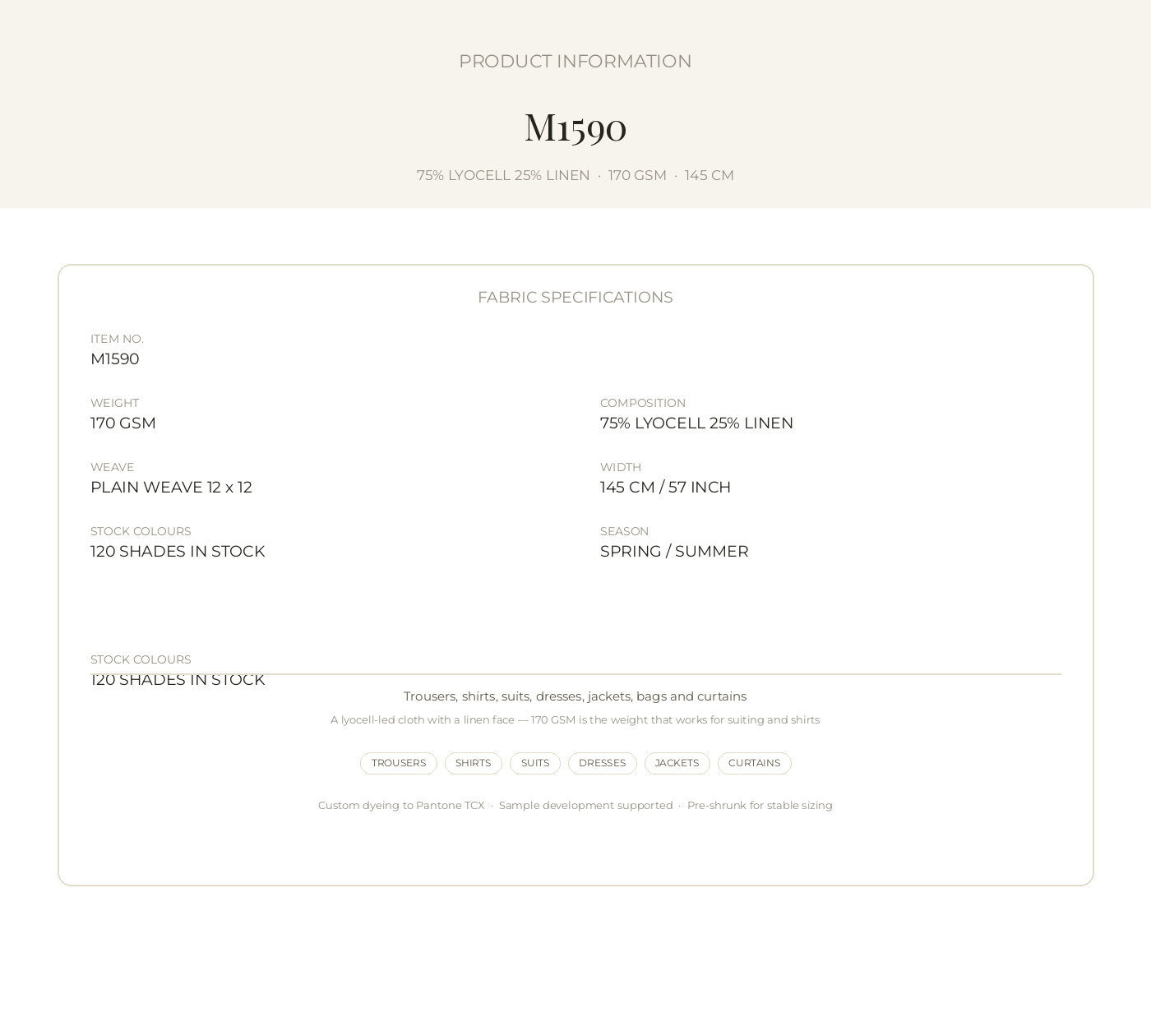
| Specification | Item M1590 |
| Item No. | M1590 |
| Composition | 75% Lyocell, 25% Linen |
| Yarn Count | 12S × 12S |
| Weave | Plain weave |
| Weight | 170 GSM |
| Width | 145 cm / 57 inch |
| Finish | Solid dyed |
| Season | Spring / Summer |
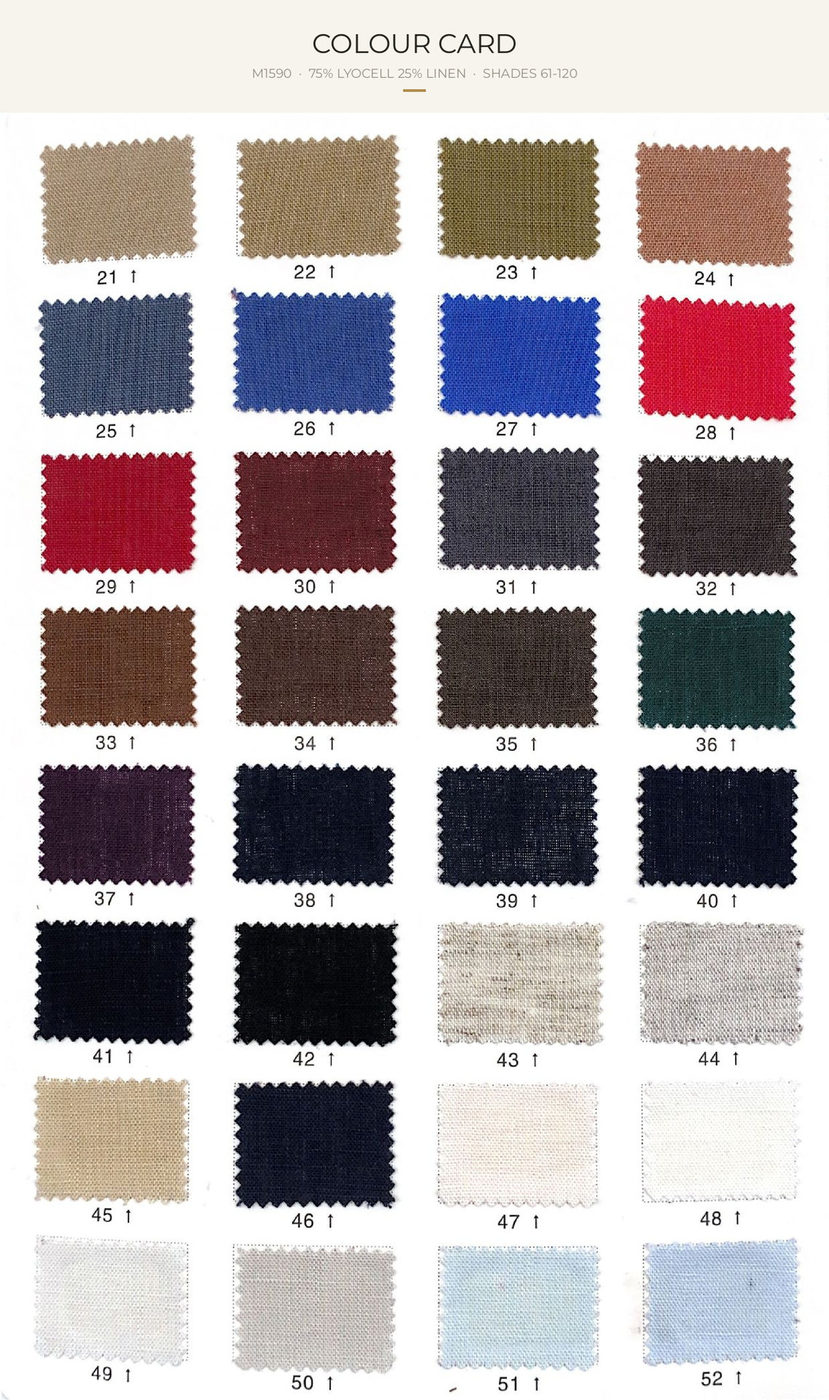
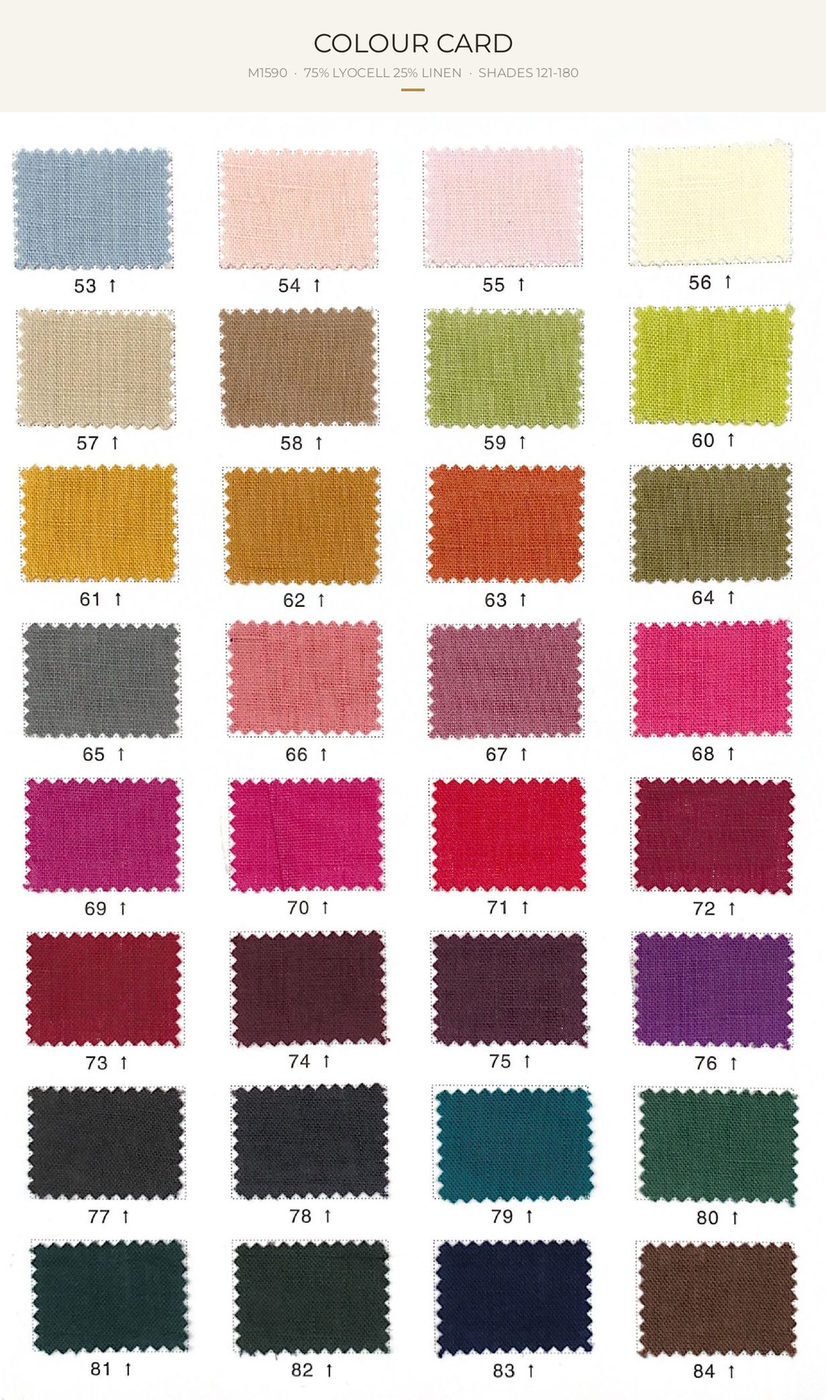
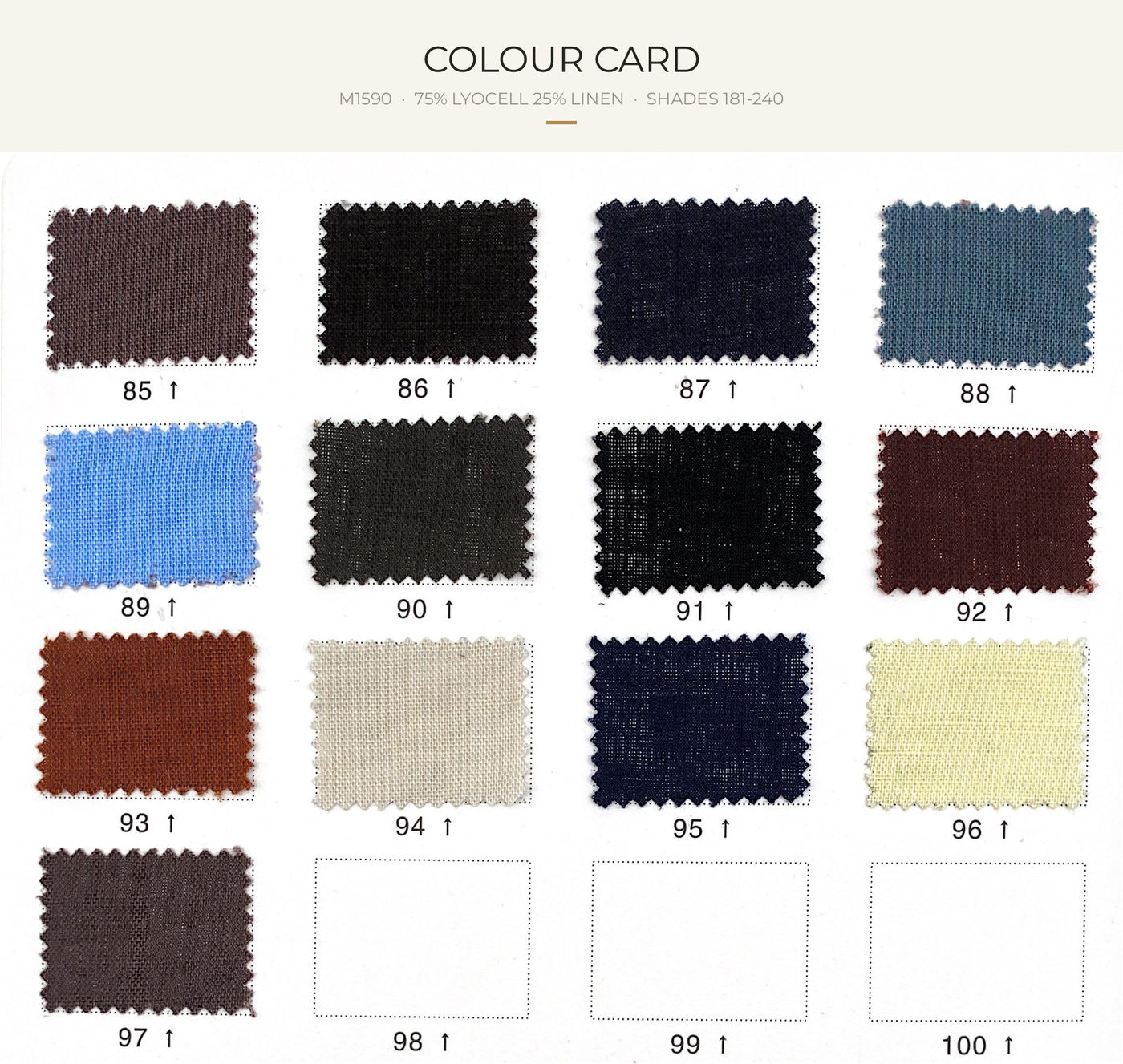
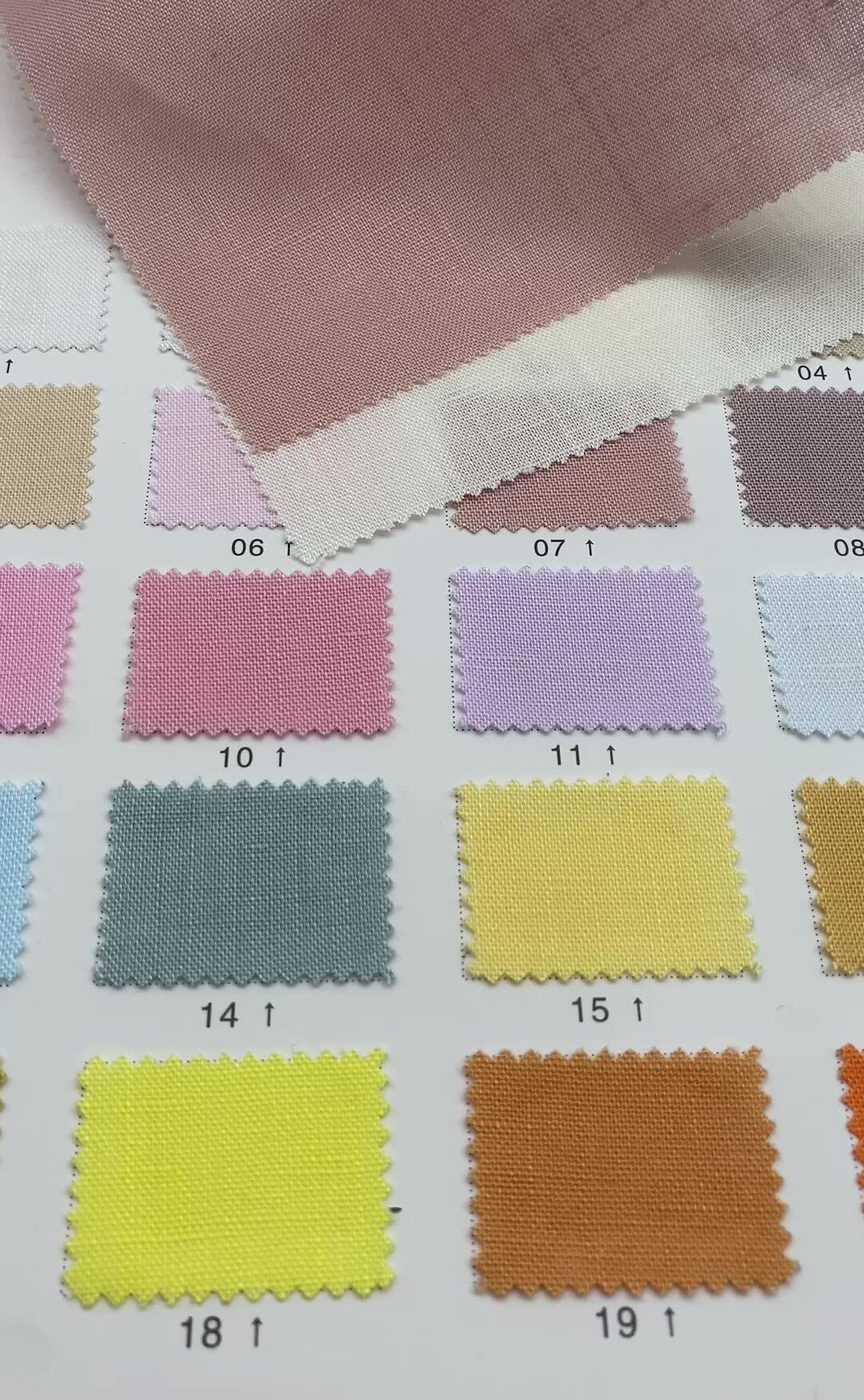
| Stock Colors | 120 shades in stock |
Five properties decide how this cloth behaves in wear, and because the blend runs lyocell-led, three of them are about a fibre that most buyers know as Tencel rather than about flax. That is the point of this construction — it is a different fabric from a linen, and it should be specified on its own terms.
Where this weight sits. In the middle of the range, and the middle is where most linen apparel actually lives. Heavier than the 60–100 GSM cloths used for sheers and summer shirting, lighter than the 200+ GSM linens used for upholstery and heavy tailoring. That makes it the natural choice for shirting that stands away from the body, dresses and skirts that hold a shape, unlined jackets — and the honest trade-off is that fibrillation on high-friction areas and a gentler wash than pure linen — and it is a blend, so it cannot be sold as flax-only.
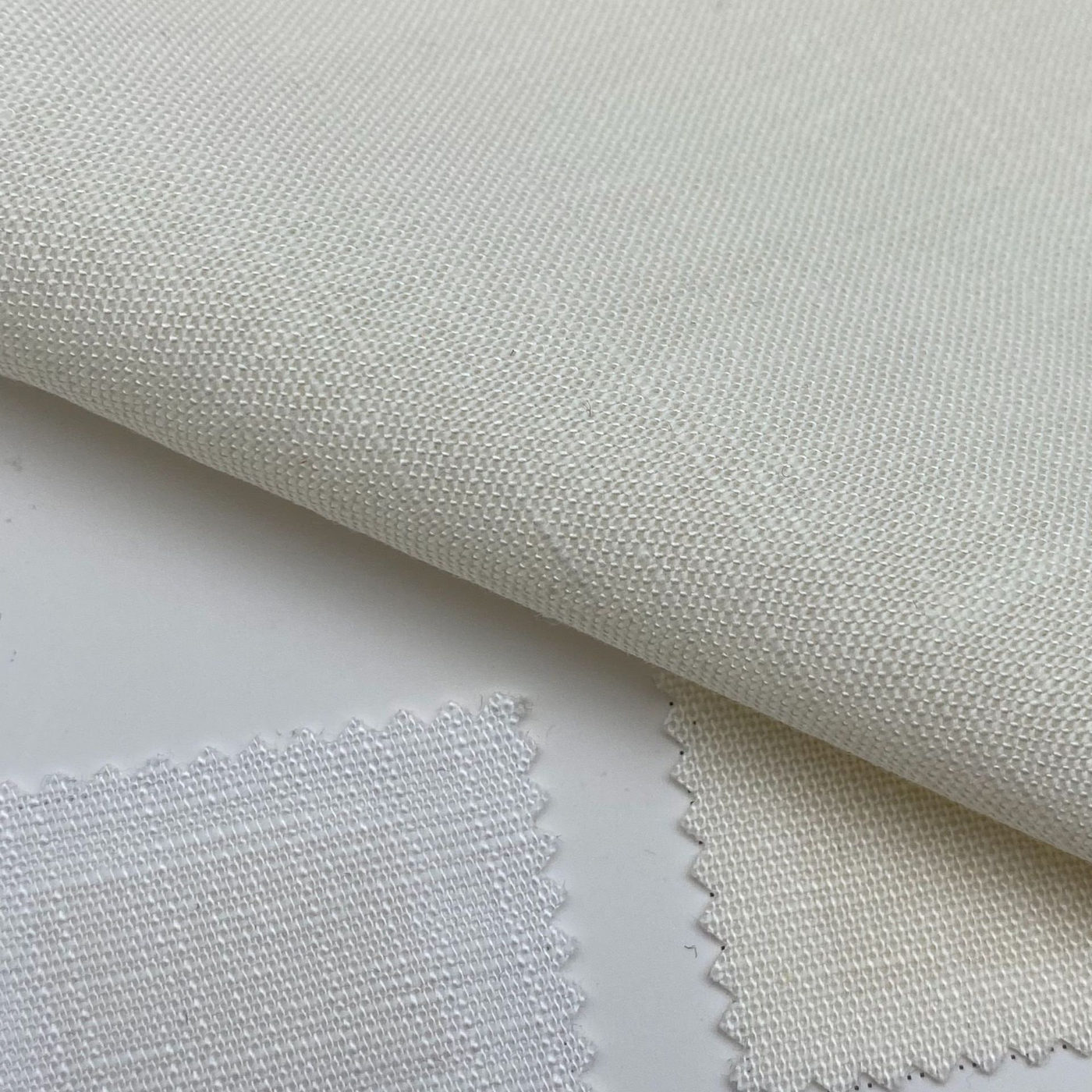
This is 75% lyocell and 25% linen, which is the opposite of the usual linen-dominant blend, and it changes what the cloth is. The bulk of the fibre is a regenerated cellulose spun from wood pulp, with a smooth, near-circular cross-section and no natural irregularity. The hand is soft from the first wear rather than after ten washes, and the surface reflects light directionally enough that color reads slightly deeper and cleaner than the same shade in an all-linen build. The 25% flax is what stops it reading as a synthetic: it brings the dry, irregular texture, the hollow-lumen airflow and a faint natural lustre.
Pure linen holds a sharp, papery crease that stays until the garment is pressed again. The lyocell component changes the kind of fold rather than eliminating it: the crease forms, but it relaxes as the garment is worn, and in warm slightly humid air it softens further. Comparative sampling on a 55/45 construction puts the visible creasing at roughly half that of a comparable pure linen. For a buyer who has decided against linen because of the ironing, this is the single most persuasive number in the specification — but it should be stated honestly: the cloth still creases, it simply creases less severely and recovers on its own.
Most cellulose fibres are at their weakest when wet, and viscose loses roughly half its strength in that state, which is why viscose garments are washed gently. Lyocell does not behave that way. It retains about 85% of its dry strength when wet, with a dry tenacity of 35–40 cN/tex, and it is a more even fibre than flax, which is long and strong but variable along its length. The practical consequence is that this cloth is least vulnerable during the wash cycle rather than only on the shelf — which matters for a trouser, a shirt cuff or anything that goes through the machine repeatedly.
The two fibres manage water in different but complementary ways. Lyocell has a moisture regain of about 11–13% against cotton’s 8.5%, and takes up roughly 1.5 times what cotton absorbs, pulling perspiration into the fibre core rather than leaving it on the surface. Flax adds a hollow central lumen that moves that moisture along the fibre and releases it to the air. The result is a cloth that pulls moisture away from the skin and then lets it go, rather than holding it against the body — the reason this construction works for summer trousers, a shirt that is worn all day, and travel pieces that have to dry overnight.
Honest limits matter more than slogans. Lyocell fibres can fibrillate — the microscopic surface fuzzing that produces a peached or sand-washed surface, and which in a high-friction area can read as pilling or a dulled surface over time. Standard fibrillating grades (G100) are deliberate about this; non-fibrillating grades (A100) avoid it. We ask the mill for a low-fibrillation route on this quality, and we recommend washing inside out and keeping it away from rough loads such as denim in the drum. On care, cold gentle wash, line dry, and a warm rather than hot iron on the reverse. Shrinkage is pre-shrunk to under 3%, but a blend that contains a regenerated fibre cannot be described as pure flax — and if your label says linen, it needs to say more than that.
At 170 GSM and 145 cm this is the middle of the range and the middle is where most apparel actually lives. It is not a sheer summer voile and not an outerweight suiting cloth — it is the weight a buyer reaches for when one fabric has to cover trousers, shirts and unstructured jackets in the same delivery.
This is the core use, and the reason for the weight and the width. At 170 GSM a 145 cm cloth has enough body to hold a wide-leg trouser away from the leg and to give a shirt a collar that stands without interfacing, while the lyocell content lets both hang with a fluid line rather than a stiff one. The 145 cm width also gives efficient marker making for long panels, which matters when the order is in trousers.
The soft hand and the drape are what make this cloth work on a body rather than only in tailoring. A shirt-dress or a bias skirt made from it falls cleanly and moves with the wearer, and because the lyocell surface is smooth and rounded there is no prickle against the skin — the usual objection to a linen blend in a warm climate. It also works as an overshirt or a light jacket over a summer dress, where a pure linen would be too crisp to layer.
Off the body the same construction works for a different reason: the cloth is stable, absorbent and holds a shape, so it suits tote bags and pouches that keep their form, cushion covers with body, table cloth and runners, and curtain cloth that falls straight and washes without going limp. At this weight it is furnishing-adjacent rather than true upholstery.
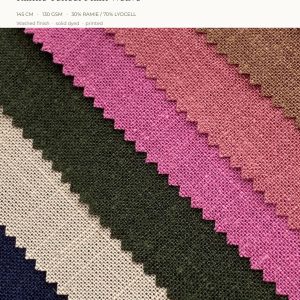
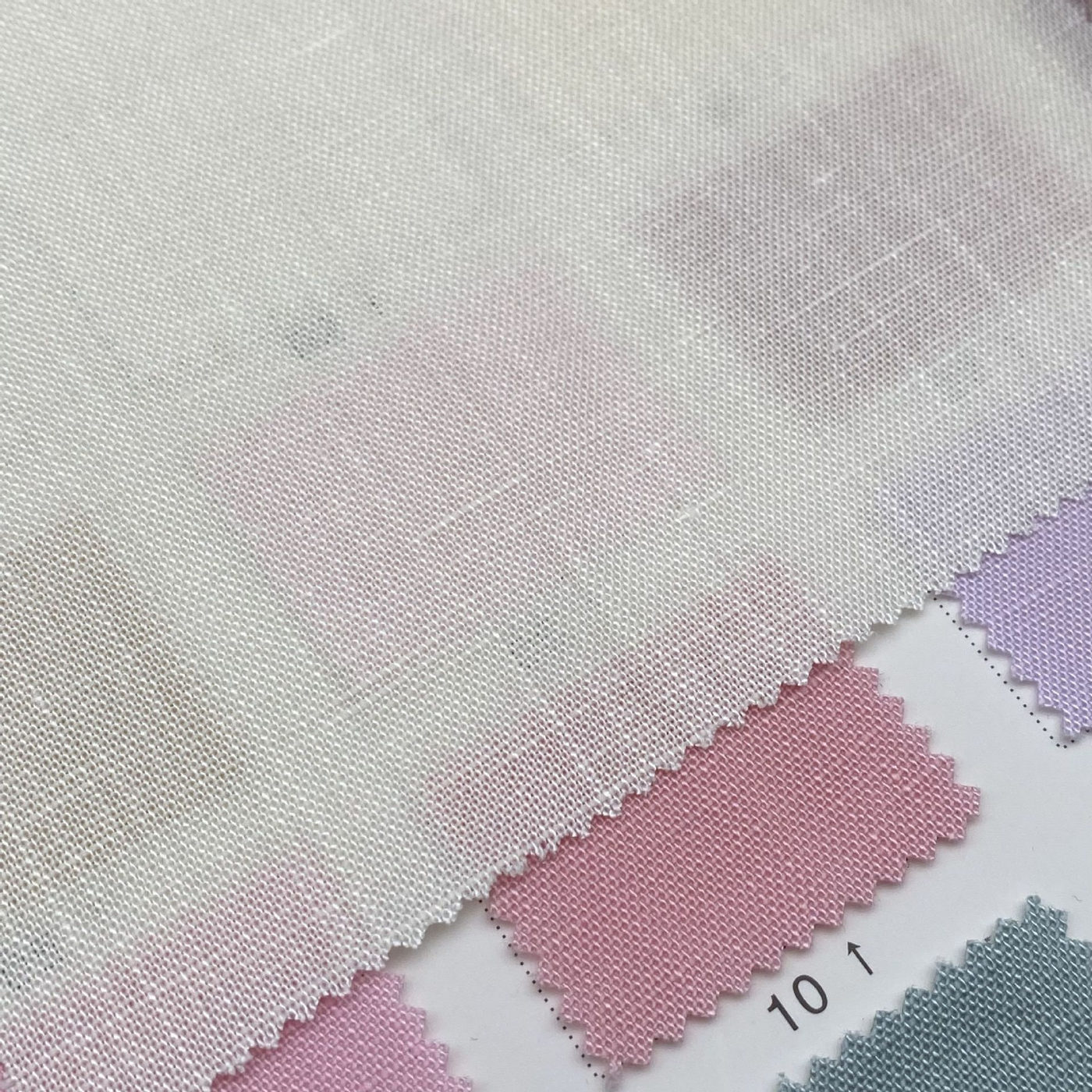
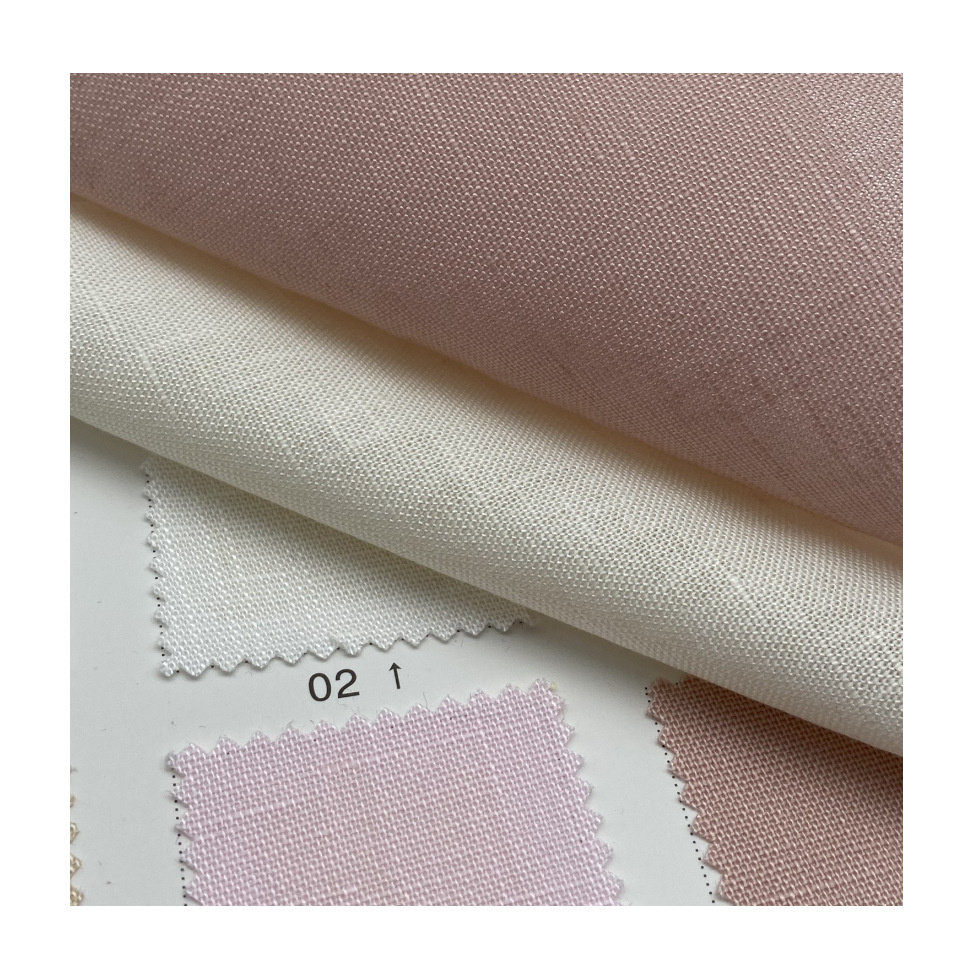
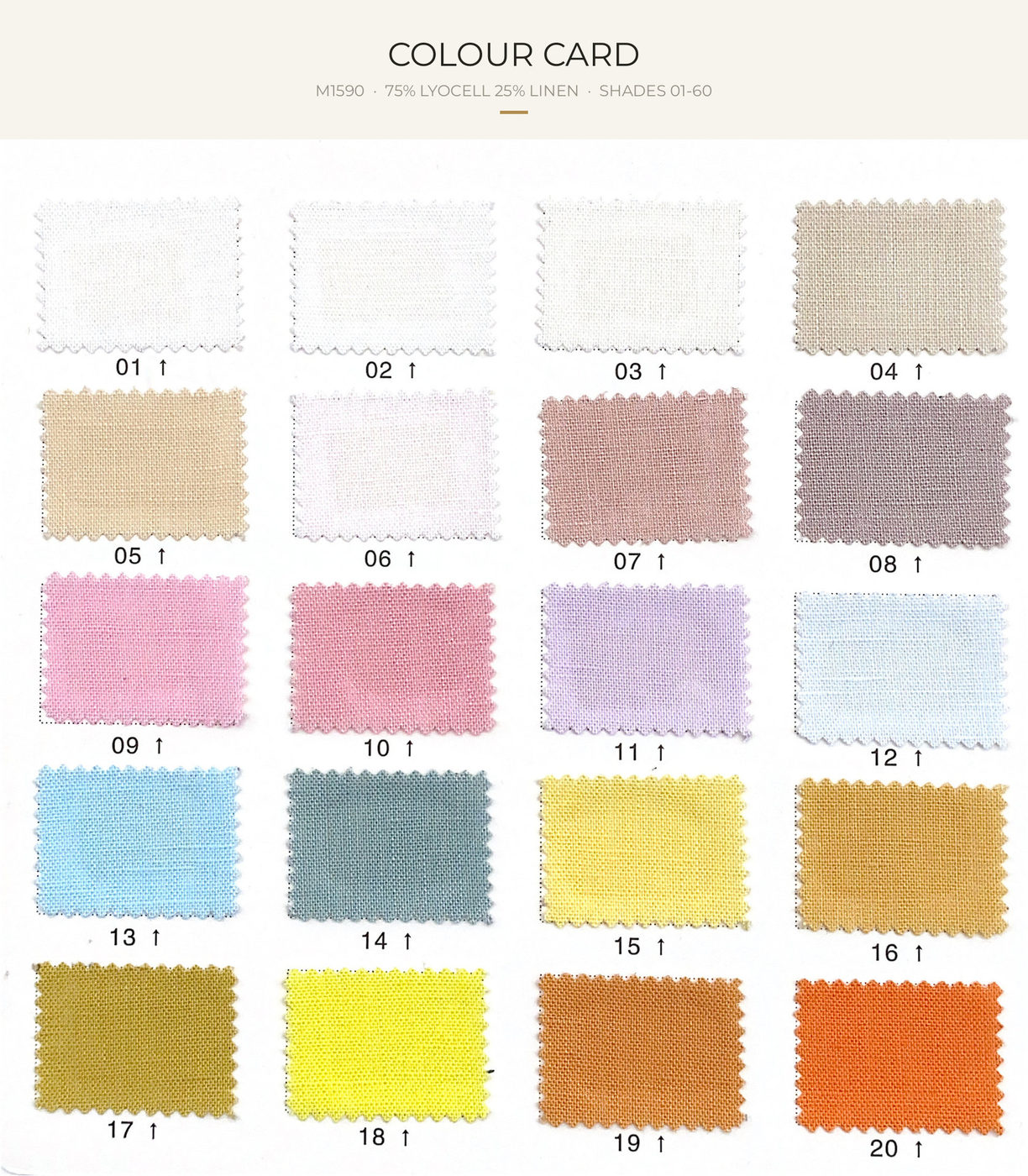
120 stock shades are held for immediate dispatch, running from naturals and whites through pastels, mid tones and deeper shades. Custom solid dyeing to Pantone TCX is available for development orders, and the lyocell content takes dye cleanly and evenly — one of the reasons this construction is used for color-critical work.
Hand samples and cutting samples are supplied before bulk production, either from stock greige or from a lab dip matched to your shade. For this construction we recommend sampling the finished cloth rather than the yarn alone: at 75/25 the hand, the drape and the way the surface takes light are all decided by the ratio, and none of them can be judged from a fibre sample.
Development runs around three points: the fibre ratio and yarn count, the shade matched to Pantone TCX, and the weight confirmed against the end use. On a lyocell-led blend we also confirm the fibrillation route with the mill — a low-fibrillation grade gives a cleaner surface and better performance in high-friction areas such as the seat of a trouser or where a bag strap sits — and we test shrinkage and crease behaviour on a washed sample before bulk is scheduled. Full-width greige and finished samples, small trial orders and custom development are supported for new customers.
| Service | Detail |
| Sampling | Hand sample or cutting sample before bulk |
| Lab dip | 3–5 shades against Pantone TCX or our own library |
| Greige | Full-width greige available on request |
| Development | Custom ratio, weight, width, finish and dyeing |
| Stock range | 120 shades held in stock |
| Production | Yongshun Dyeing & Finishing Plant |
| MOQ | Negotiable |
FABRIC ENQUIRY
Ask about this fabric
Share your requirements and our team will reply within 24 hours.