FAB-729194978
M1382 Ramie Cotton Plain Weave Fabric 80% Ramie 20% Cotton 8S x 8S 220 GSM 140cm – for Trousers, Jackets and Slip Dresses
Quote required
Contact us for the latest price and availability.
- Composition
- 80% Ramie / 20% Cotton
- Weight
- 220 GSM
- Width
- 55 inches
- Weave
- Plain weave
- Category
- Linen Fabric Wholesale / Linen Solid Color Dyed Fabric / Woven
- MOQ
- Negotiable
Sampling & delivery
Build your sample selection, then download a sourcing brief. Ordering, stock and delivery will be enabled after the store information is confirmed.
FABRIC STORY
Product details
n
| SHAOXING HENGHUI TEXTILE CO., LTD. | ITEM NO. M1382 RAMIE-COTTON · 8S x 8S · 220 GSM · 140 CM |
8 × 8 · 220 GSM
140 CM
8 x 8 YARN
80% RAMIE
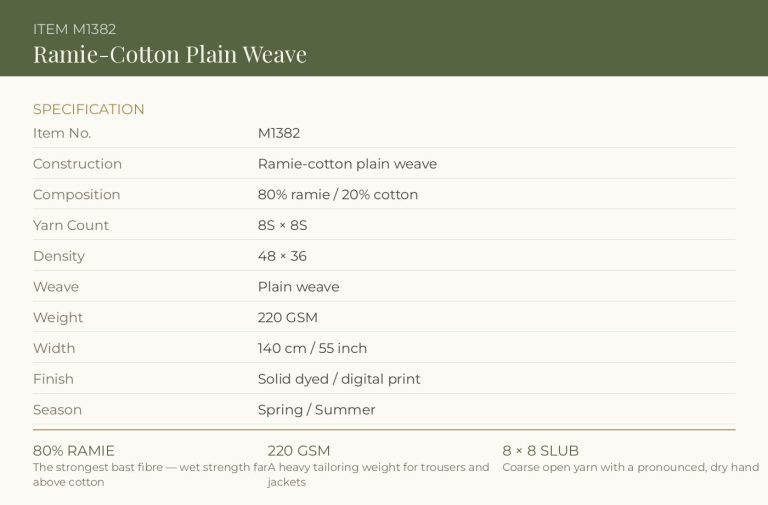
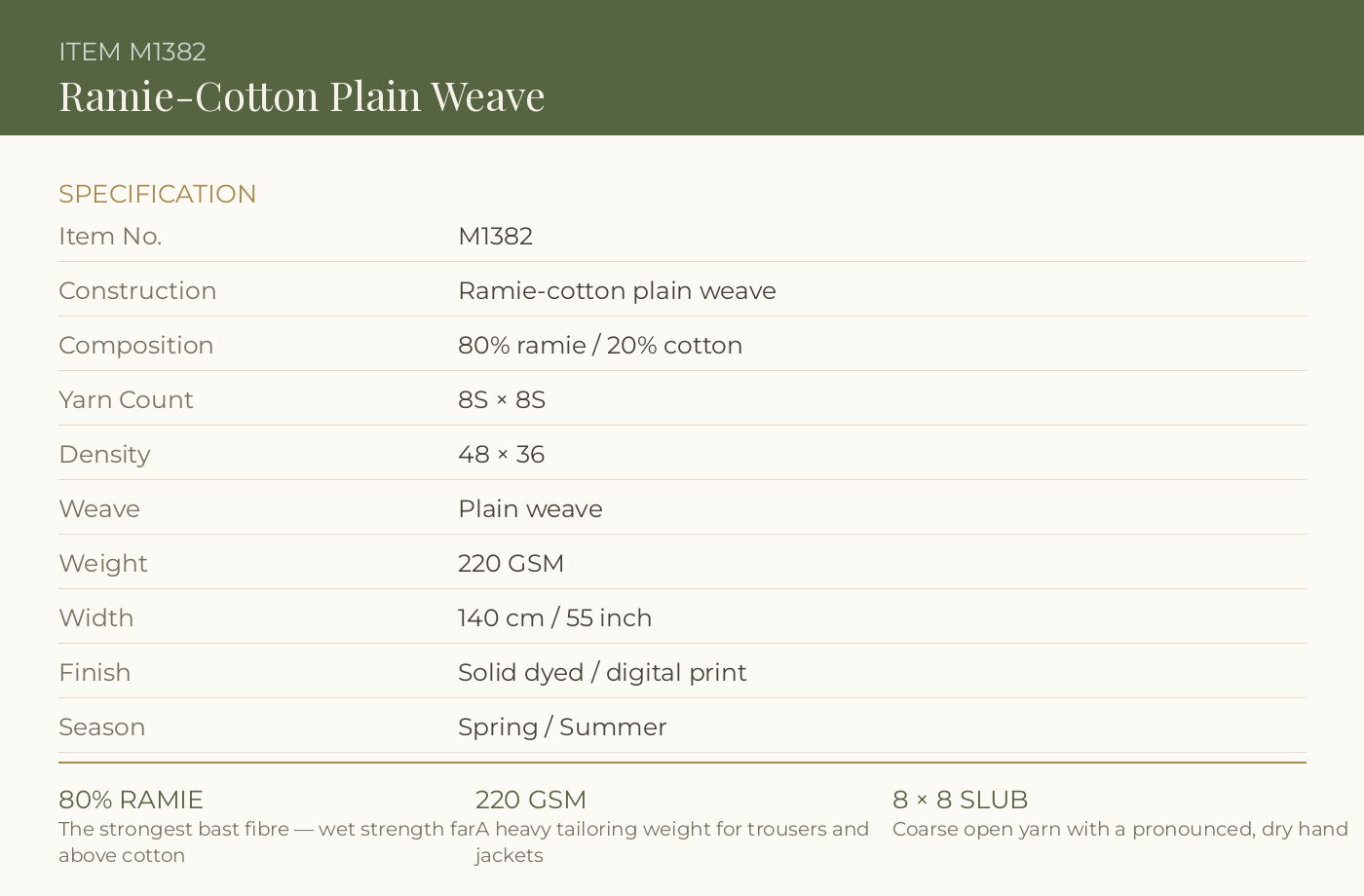
| Specification | Item M1382 |
| Item No. | M1382 |
| Construction | Ramie-cotton plain weave |
| Composition | 80% ramie / 20% cotton |
| Yarn Count | 8S × 8S |
| Density | 48 × 36 |
| Weave | Plain weave |
| Weight | 220 GSM |
| Width | 140 cm / 55 inch |
| Finish | Solid dyed / digital print |
| Season | Spring / Summer |
Item M1382 is a ramie-cotton plain weave at 8s × 8s, finished at 220 GSM and 140 cm wide, in solid dyed shades and digital print. The composition is 80% ramie and 20% cotton — and ramie is not flax. It is a bast fibre too, but a different plant with a different character, and at this share of the blend it decides how the cloth behaves.
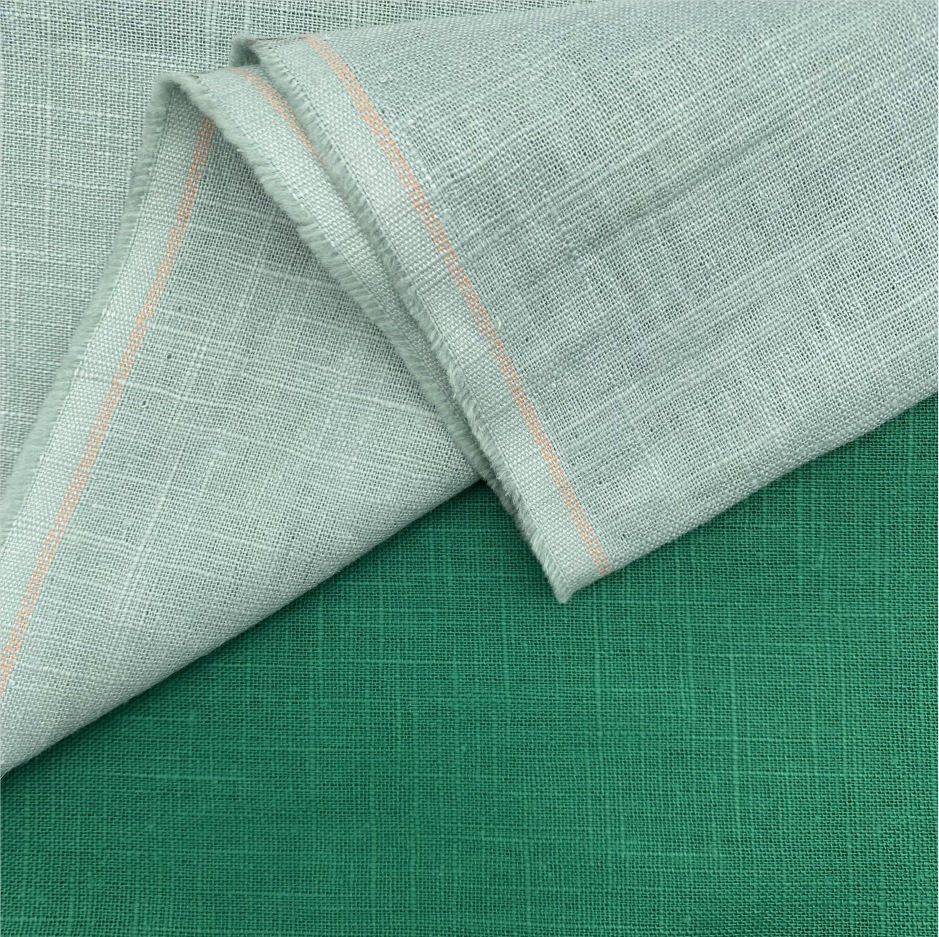
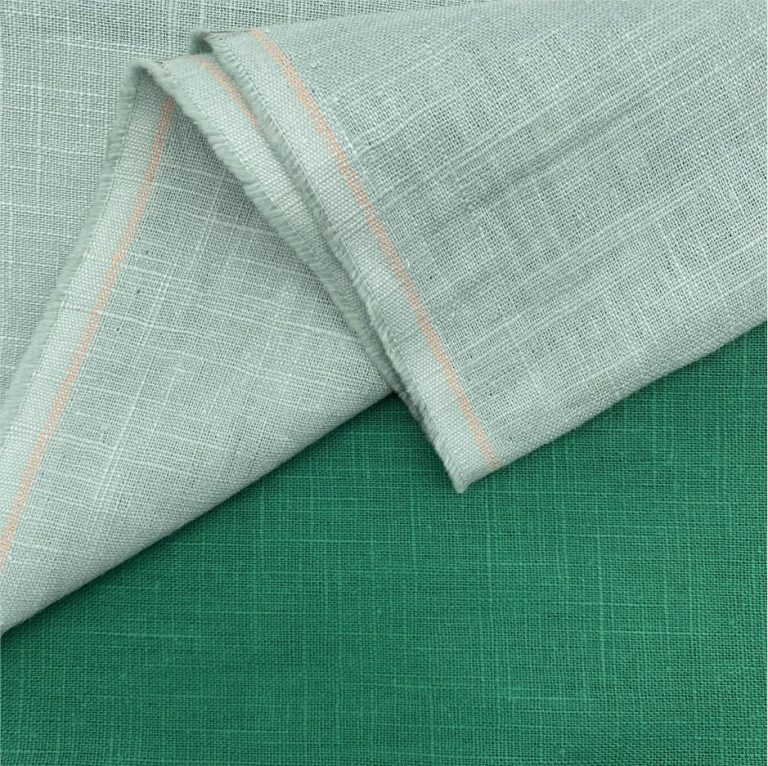
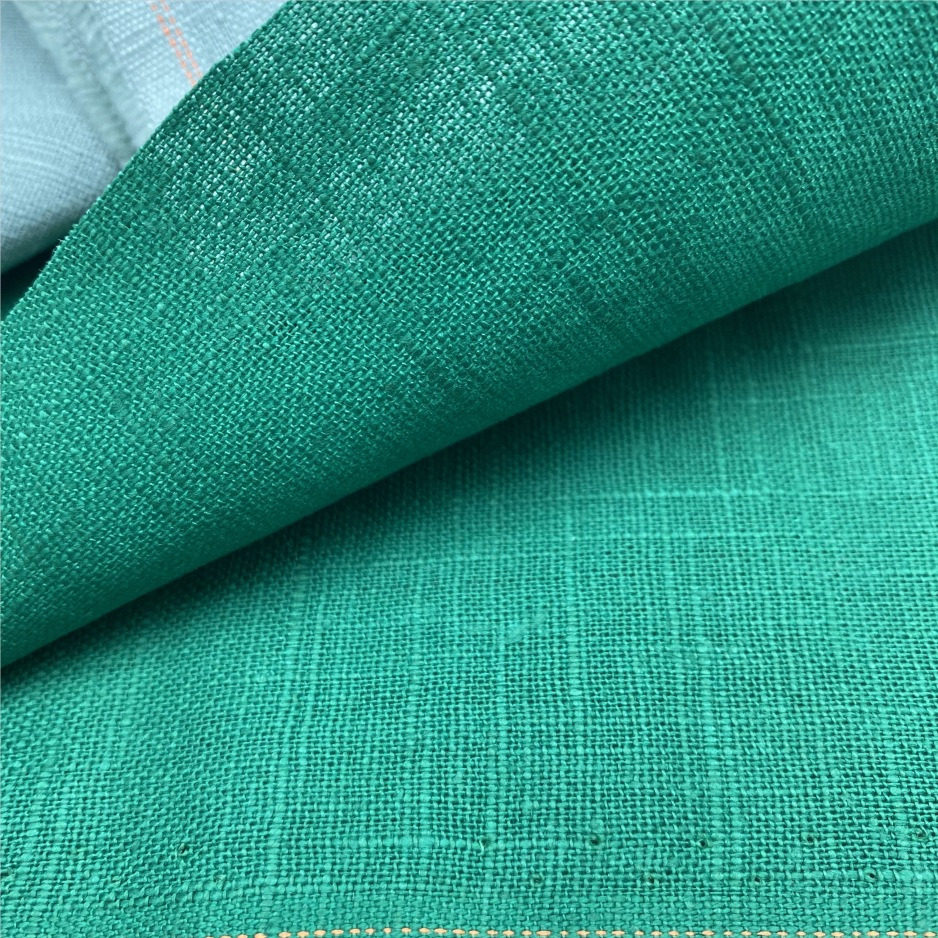
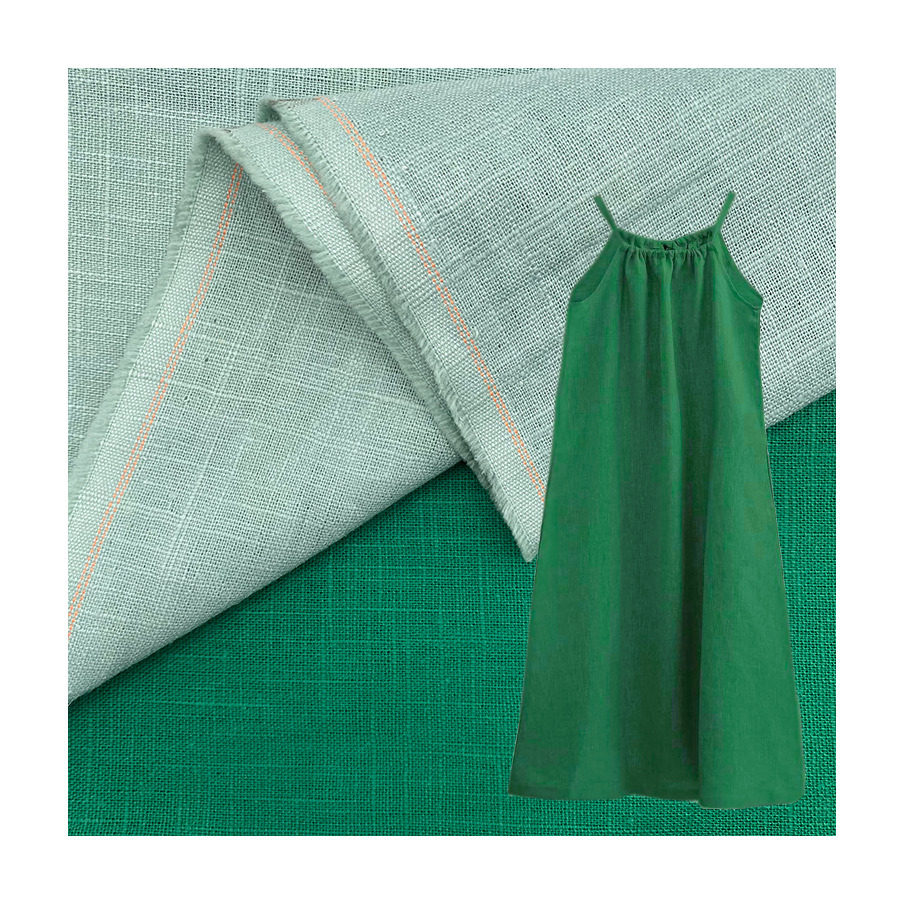
At 220 GSM on a coarse 8s yarn this is a tailoring cloth: trousers, jackets and slip dresses. The density of 48 × 36 is open enough for the yarn to read clearly and for the cloth to stay breathable, and the 140 cm width takes a full dress panel or trouser leg in one piece. The photograph above shows the gold selvedge — a woven edge stripe you can use as a design line.

Where this weight sits. At 220 GSM this is the heavy end of the range — the weight that holds a tailoring line rather than a shirt line. The honest trade-offs of a high-ramie cloth are that it creases sharply, that it is stiff and slightly brittle rather than forgiving, and that it stiffens when wet. Ramie also brings two things no other fibre in this range brings: a silk-like luster and the ability to get stronger when wet.
This is 80% ramie and 20% cotton on a 8s × 8s yarn — a coarse, open weave at 220 GSM. Ramie and flax are both bast fibres, but they are not the same fibre. Ramie comes from China grass, and its fibre runs 6 to 60 centimetres, longer than any other bast fibre — in natural fibres only silk beats it.
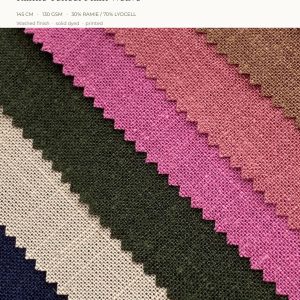
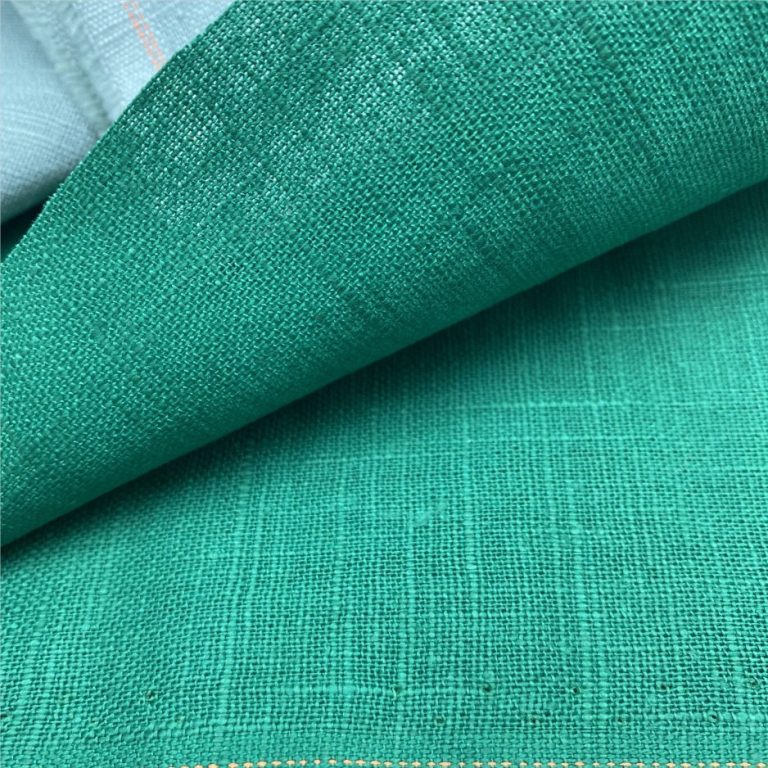
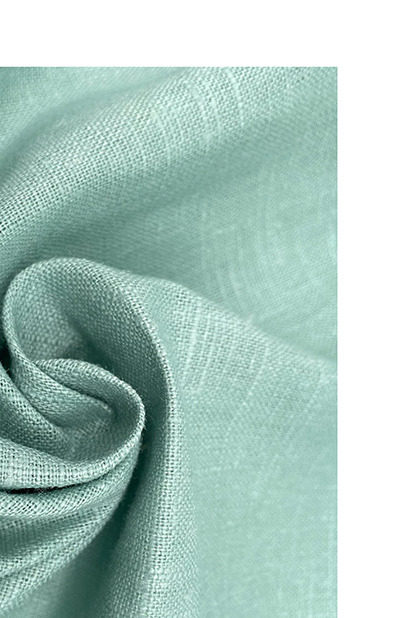
That length is why ramie is about seven to eight times stronger than cotton, and why the cloth looks closer to linen with a silk sheen than to ordinary linen. Ramie carries the highest luster of any bast fibre, which is why the greens and naturals on this color card photograph so well. Where flax is soft and relaxed, ramie is crisp, structured and slightly shiny — expect that difference rather than being surprised by it.
Cotton loses roughly 20% of its strength when it is wet. Ramie does the opposite — immersed in water its tensile strength increases by about 47%. Its tensile strength runs 400 to 938 MPa against cotton’s 287 to 597, and it is the strongest of all the bast fibres.
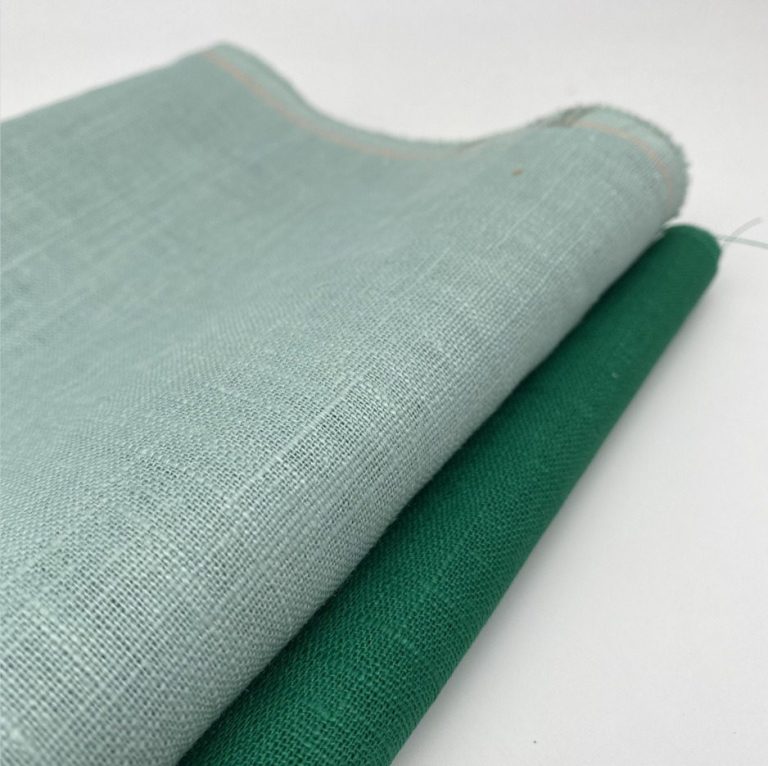
The consequence is quiet but real. A ramie-cotton cloth holds its structure through washing and repeated wear in a way a linen of the same weight does not — lab work puts ramie at 50 to 70 wash cycles before visible degradation, against 30 to 40 for cotton. It also shrinks only 3 to 4%, where cotton shrinks 5 to 8% and pure flax considerably more. The 20% cotton is there for a reason: it takes the edge off ramie’s stiffness and adds the recovery that ramie alone simply does not have.
At 220 GSM on an 8s yarn this is a heavy tailoring cloth — trousers, jackets and slip dresses, not shirting. The density is 48 × 36, open enough for the yarn to read clearly and for the cloth to stay breathable, and open enough that the slub is a design feature rather than an accident.
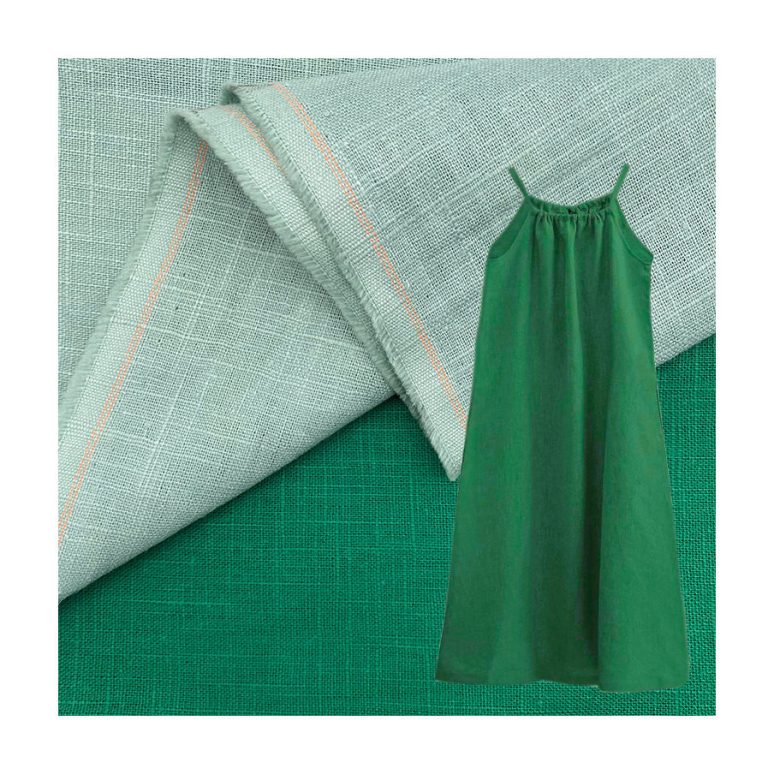
Four honest limits. Ramie has low elasticity, so it creases sharply with defined edges where linen creases softly and gradually — if you want a relaxed washed look, say so at sampling.
It is stiff and slightly brittle: fold it repeatedly in the same place and the fibre can break, so it is not a fabric for sharp repeated creasing. It stiffens when wet, the opposite of flax, so press from the reverse.
And ramie carries 20 to 30% natural gum that must be removed by degumming — properly degummed it is white and lustrous, but an under-degummed lot feels boardy, and that is worth checking on an approved sample.
The 1688 factory lists this construction for trousers, jackets, slip dresses, dresses, casualwear and fashion. At 220 GSM and 140 cm it is a tailoring cloth, and it is at its best where a crisp, slightly lustrous surface is wanted rather than a soft washed one.
At 220 GSM there is real body in the cloth, and ramie holds a crease rather than losing it — which is exactly what a wide-leg trouser wants. The open weave at 48 × 36 keeps it breathable through a summer day despite the weight.
This is the construction that made ramie famous in the first place. A slip dress in ramie-cotton hangs in a clean line, catches the light with a silk-like sheen, and dries fast. At 140 cm a full dress panel cuts in one piece, and the 3–4% shrinkage rate means sizing is predictable.
At 220 GSM the cloth can carry an unlined jacket or overshirt with real structure. The gold selvedge is worth designing around — it can run down the side seam as a visible line. One honest note: ramie is brittle at a sharp fold, so avoid a hard crease that will be folded in the same place every day.
It works as a shirt, but at 220 GSM you are getting a heavy shirt — one that stands away from the body and holds its shape. If you want a light summer shirt, this is not the weight; ask us for the 135 GSM pure linen instead.
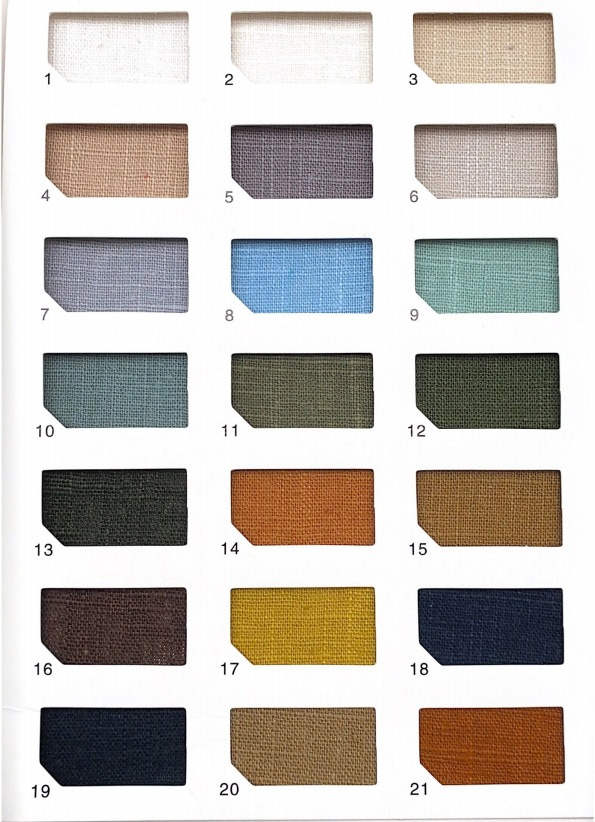
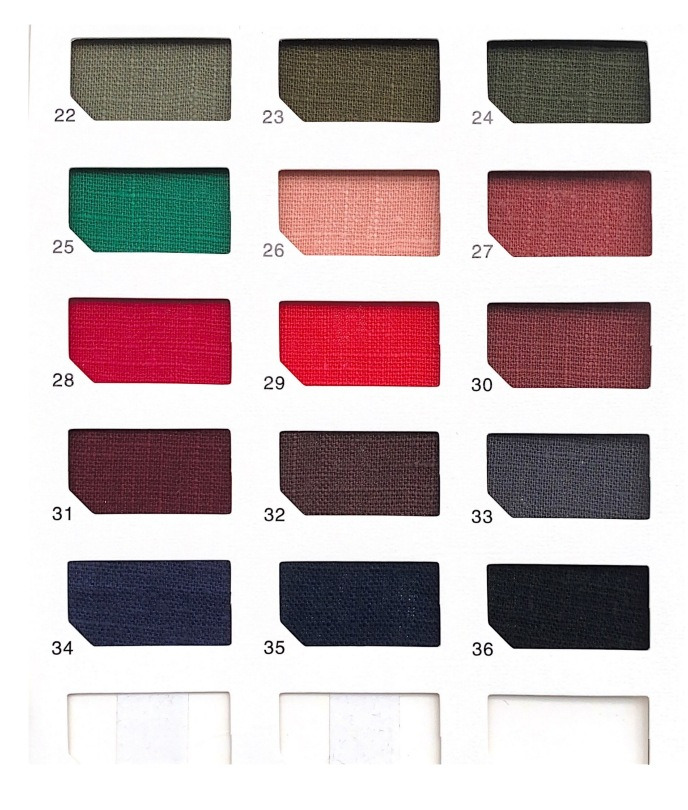
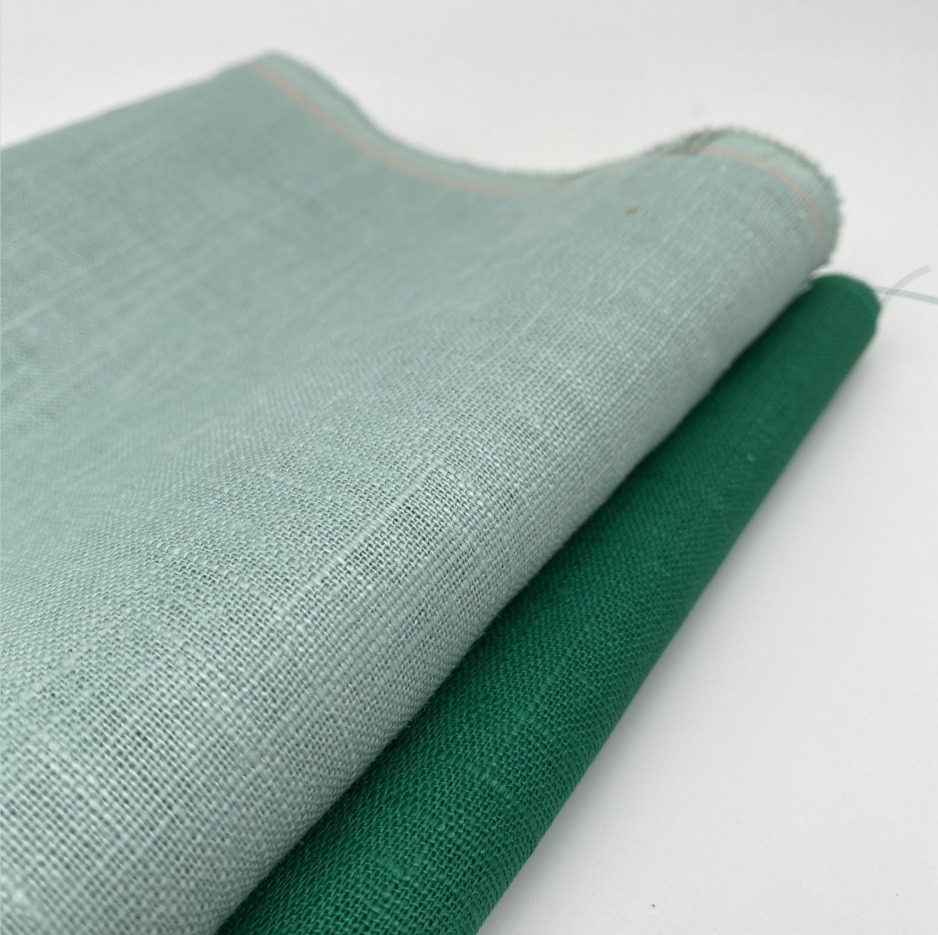
A full color card is held for this construction — 48 shades running from naturals and creams through olives and greens, terracottas, navies, wines and blacks. Ramie has the highest luster of any bast fibre, so the greens and naturals in particular photograph with a depth that a matte flax does not have. Custom dyeing to Pantone TCX is available for development orders.
Hand samples and cutting samples are supplied before bulk, either from stock greige or from a lab dip matched to your shade. For a ramie cloth we recommend approving the sample washed, and we specifically ask you to check the degumming: properly de-gummed ramie is white and lustrous, but an under-degummed lot feels boardy and stiff. That is the single most useful thing to check on a ramie sample.
Development runs around three points: the yarn count and density, the shade matched to Pantone TCX, and the weight confirmed against the end use. This construction is also available in digital print, so we support print development from your own design files. Full-width greige and finished samples, small trial orders and custom development are supported for new customers.
| Service | Detail |
| Sampling | Hand sample and cutting sample before bulk |
| Lab dip | 3–5 shades against Pantone TCX or our own library |
| Greige | Full-width greige available on request |
| Degumming | Check the hand on the approved sample — see Sampling |
| Development | Custom yarn count, density, weight, width and dyeing |
| Digital print development from your design files | |
| Stock range | 48 shades held on one full color card |
| MOQ | Negotiable |

FABRIC ENQUIRY
Ask about this fabric
Share your requirements and our team will reply within 24 hours.