FAB-570931750
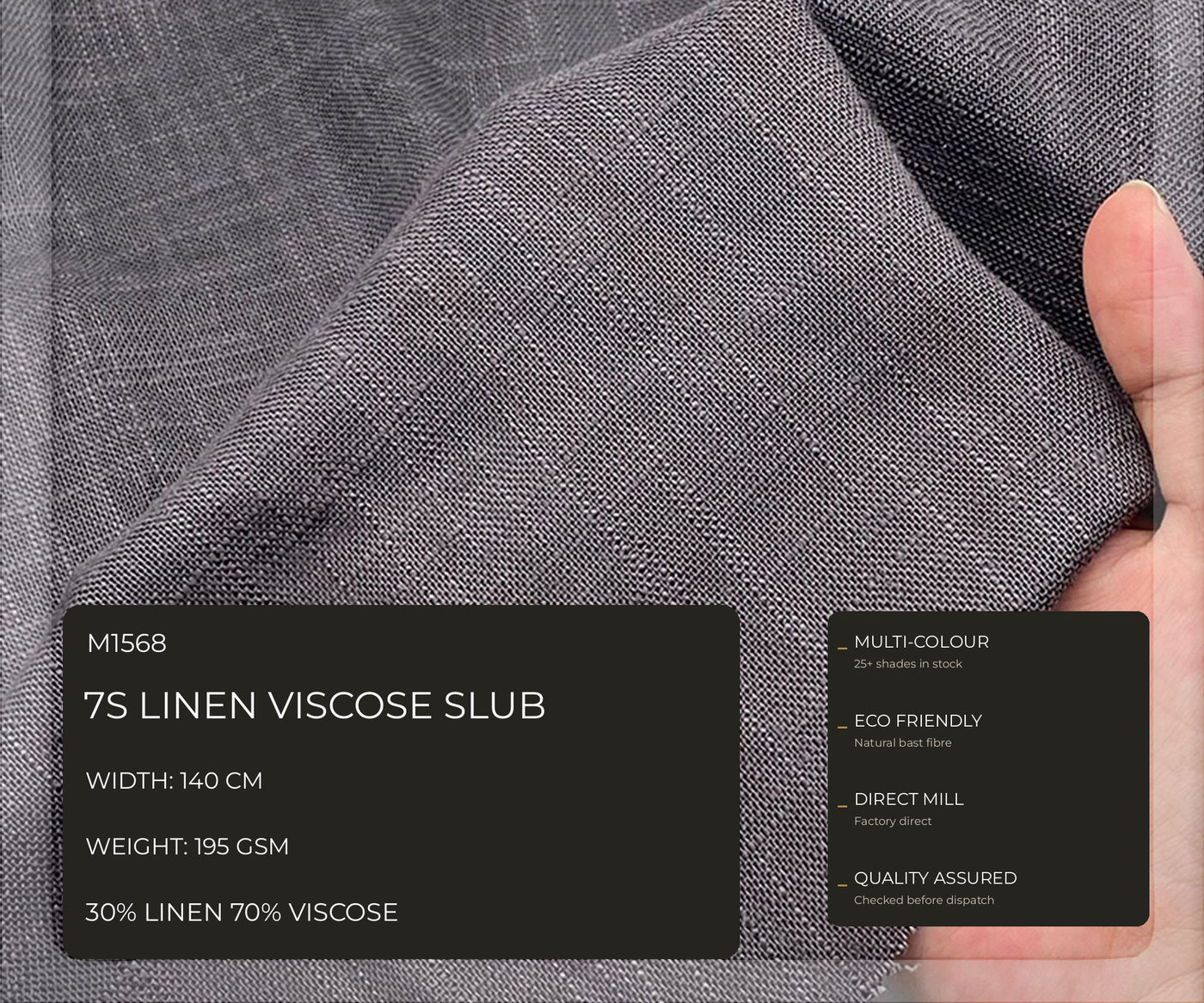
M1568 Linen Viscose Slub Fabric 7S 195 GSM 140cm – for Dresses, Skirts, Trousers and Unlined Jackets
Quote required
Contact us for the latest price and availability.
- Composition
- 30% Linen / 70% Viscose
- Weight
- 195 GSM
- Width
- 55 inches
- Weave
- Plain weave
- Category
- Linen Fabric Wholesale / Linen Solid Color Dyed Fabric / Woven
- MOQ
- Negotiable
Sampling & delivery
Build your sample selection, then download a sourcing brief. Ordering, stock and delivery will be enabled after the store information is confirmed.
FABRIC STORY
Product details
| SHAOXING HENGHUI TEXTILE CO., LTD. | ITEM NO. M1568 LINEN-VISCOSE · 7S SLUB · 195 GSM · 140 CM |
Slub · 7S · 195 GSM
140 CM
7 x 7 SLUB
32 x 36 DENSITY
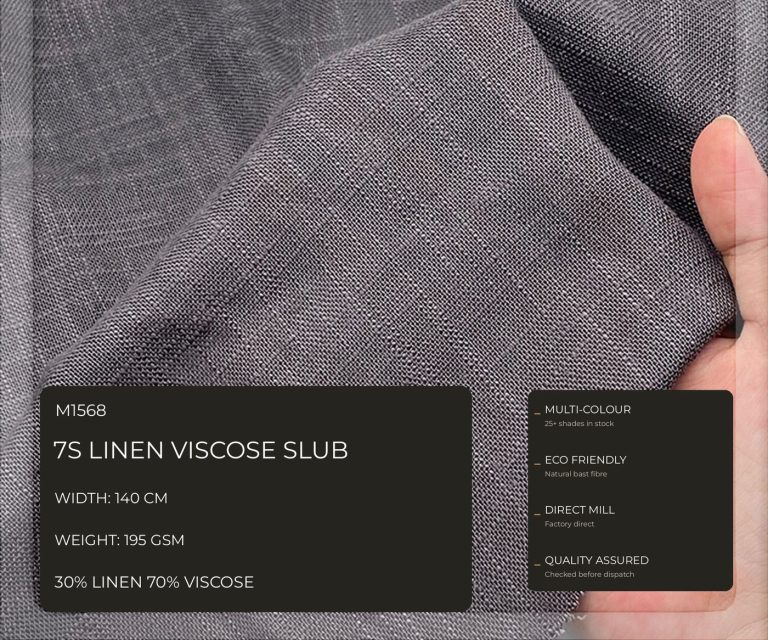
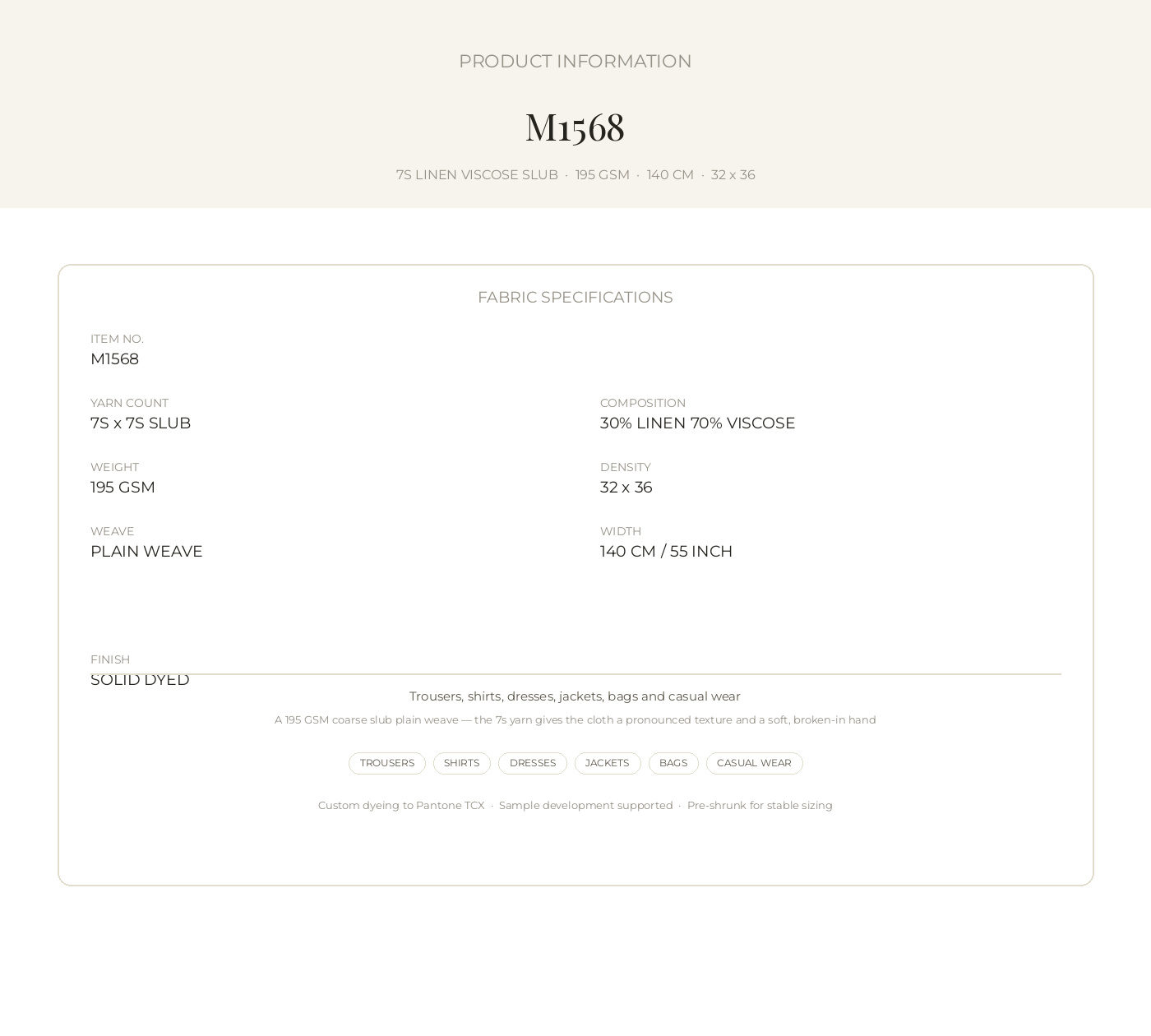
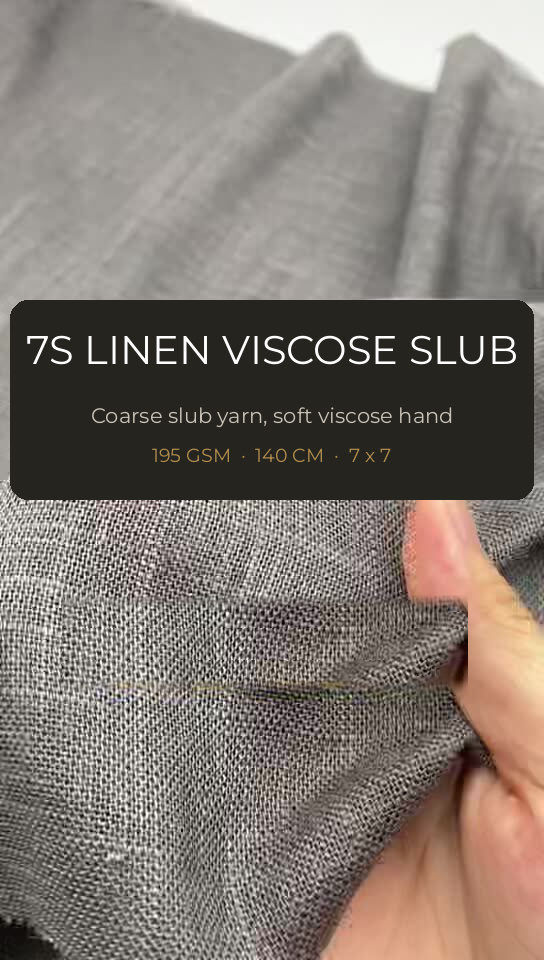
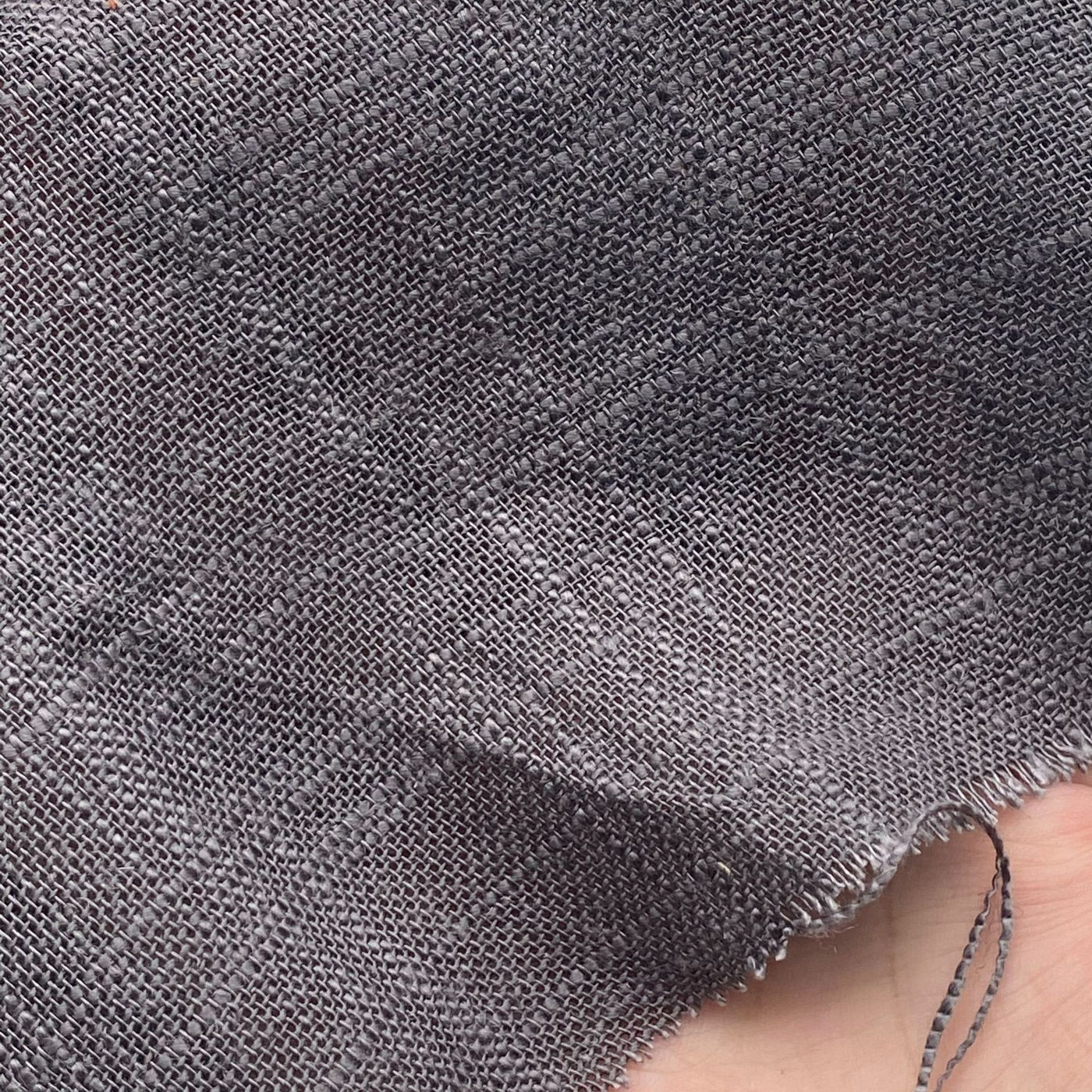
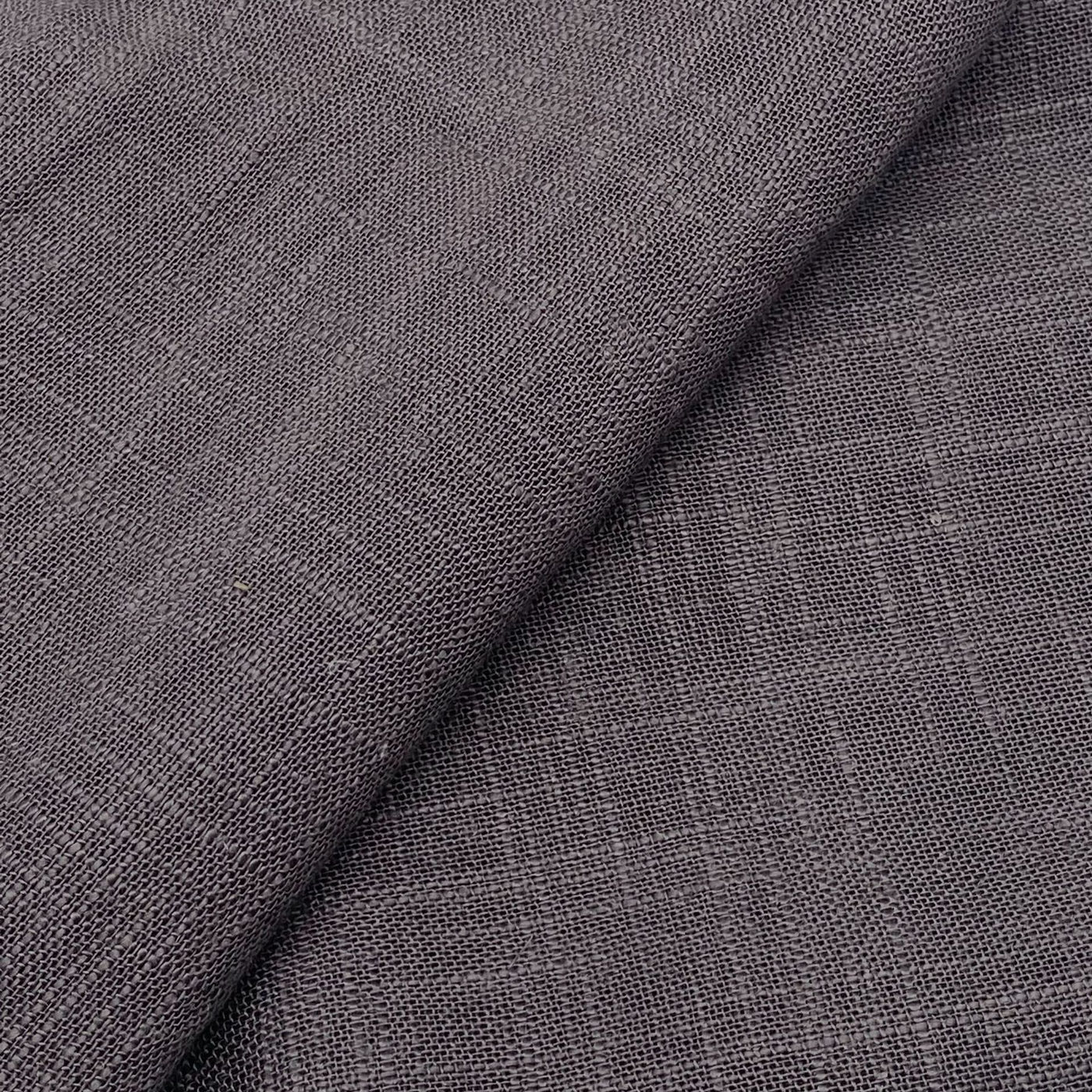
Item M1568 is a woven linen viscose slub in a 7s × 7s yarn, at a 32 × 36 density, finished at 195 GSM and 140 cm wide, supplied in solid dyed shades. The construction is defined by its yarn: 7s is a coarse count — heavier than the 12s and 14s yarns used elsewhere in this range, and the reason the cloth carries a visible slub, the thick-and-thin texture that reads across the surface and gives the fabric its depth and its irregular, natural-looking grain.
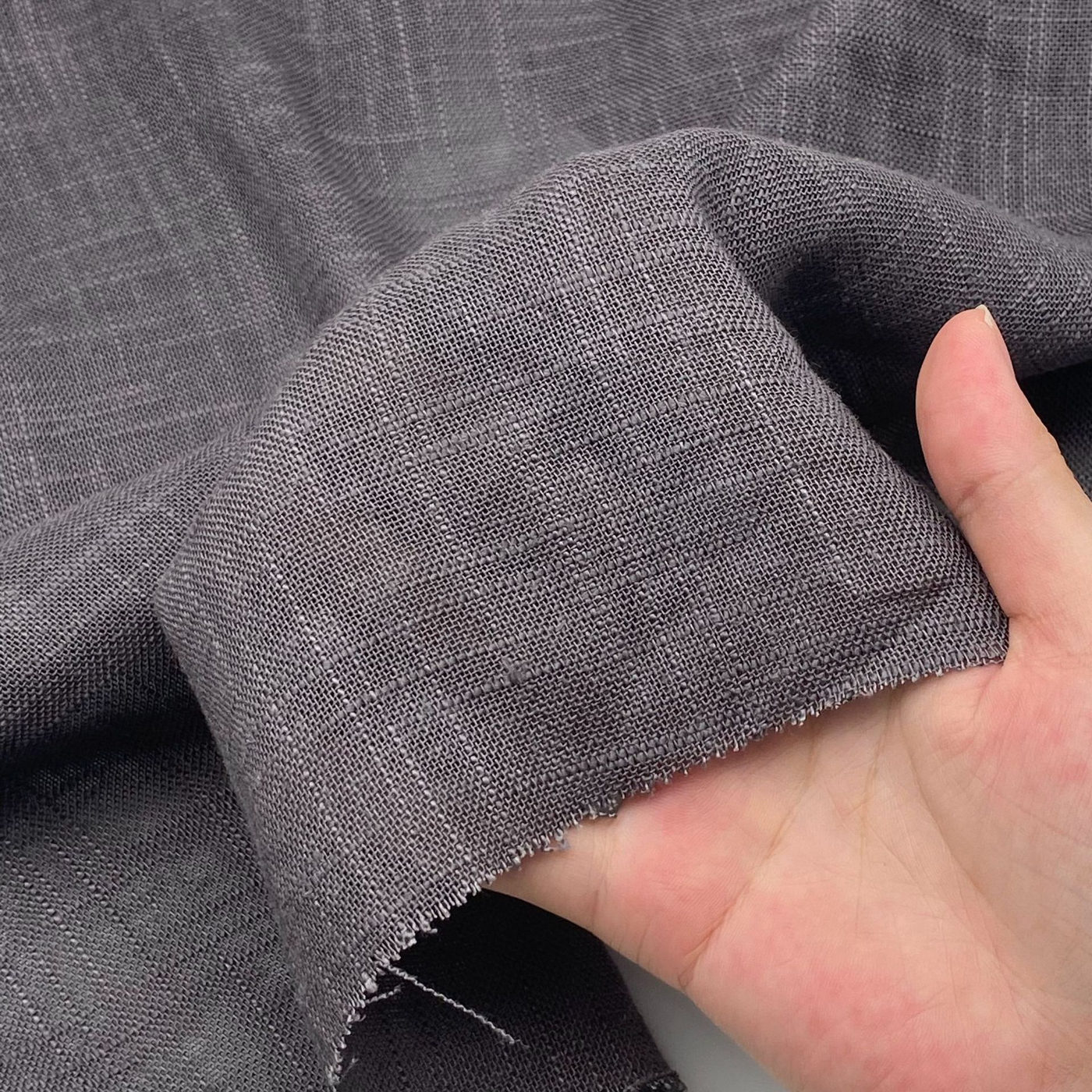
We want to be straight about the fibre ratio, because it matters for how this cloth should be labelled and how it behaves. The flax is the smaller half of the blend: 30% linen and 70% viscose. This is a viscose cloth that carries real flax — not a linen cloth, and it should be sold as linen viscose with the percentage stated. What the flax contributes is specific and not decorative: flax conducts heat and moisture faster than almost any other common fibre, which is why it feels cool in humidity and dries quickly, and it carries a natural resistance to bacteria and odour that comes from the fibre itself rather than from a finish. What the viscose contributes is what flax structurally cannot: drape, softness and the ability to fall in a long clean fold. The trade is body — this is a softer, more fluid cloth than pure linen, with less stand and less structure, which is exactly why it makes a better dress.
At 195 GSM the cloth stops being a shirting and starts being a garment fabric with structure. In practice this means a midi or maxi skirt that falls from the waistband in a straight line rather than clinging, a dress that works as a shirt-dress or a loose column, a wide trouser or culotte that hangs with weight, and an unlined jacket or overshirt as the practical ceiling. The 140 cm width is wide enough for a full dress panel or a trouser leg to be cut in one piece, which removes a seam from the most visible place on the garment and cuts waste off the cutting table.
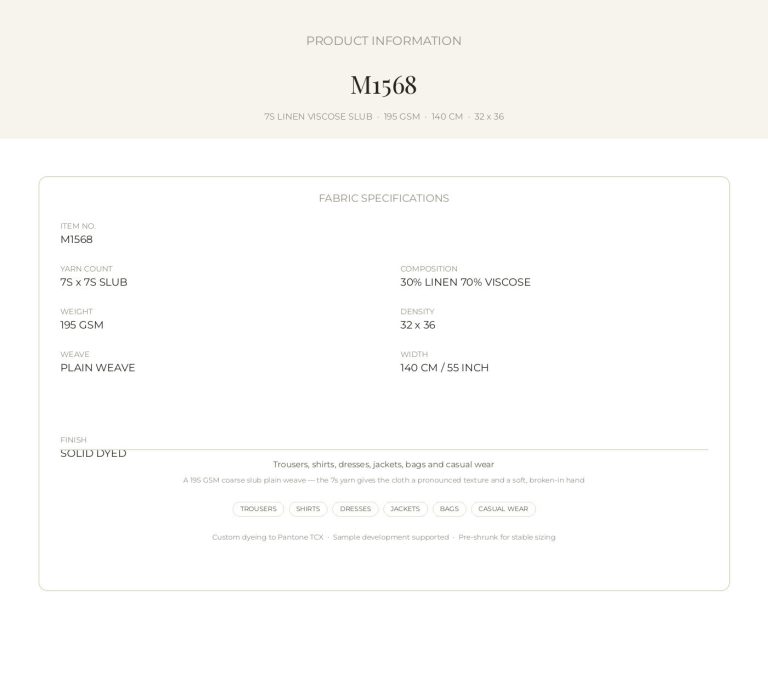
| Specification | Item M1568 |
| Item No. | M1568 |
| Construction | Linen viscose slub |
| Composition | 30% linen / 70% viscose |
| Yarn Count | 7S × 7S |
| Density | 32 × 36 |
| Weight | 195 GSM |
| Width | 140 cm / 55 inch |
| Weave | Plain weave |
| Finish | Solid dyed |
| Season | Autumn / Winter |
Five properties decide how this cloth behaves in wear. Because this construction is defined by a yarn count, a weight and a fibre ratio rather than by an unusual fibre on its own, the useful questions are what a 7s yarn does to the surface, what a 30/70 ratio actually buys, and where the limits of this weight sit.
Where this weight sits. At the heavy end of the range. There is enough body here to hold a line in a trouser or an unlined jacket, and enough weight for the cloth to hang rather than cling. That makes it the natural choice for trousers, jackets, structured dresses and tailoring — and the honest trade-off is that flax is only 30% of the blend, so it should be labelled and sold as linen viscose, not as linen — viscose loses roughly half its strength when wet, the cloth has less stand than pure flax, and slub yarn is measurably weaker at its thick points than plain yarn of the same count.
The count is the first thing to understand about this cloth. 7s × 7s is a genuinely coarse yarn — noticeably heavier than the 12s and 14s yarns used elsewhere in this range, though still well finer than the 4.5s furnishing yarn. Coarse yarn gives a cloth visible substance and a slightly irregular surface, because the spinning process leaves the yarn thicker in places and thinner in others. Those thick-and-thin sections are the slub, and they are what makes this fabric look like slub rather than like a plain weave. The practical consequences: the texture holds the light unevenly, which is what gives the cloth its depth; the slub reads clearly at close range and still registers from a distance, so it carries a garment rather than hiding in it; and because the yarn is coarse, the slub is pronounced rather than delicate — this is a texture you can design a whole collection around. One honest cost comes with it: slub yarn is measurably weaker at its thick points than plain yarn of the same count, so this cloth is better suited to dresses, skirts and trousers than to high-abrasion workwear.
Thirty per cent flax and seventy per cent viscose is not a linen fabric, and we would rather say that plainly than let the fibre content imply otherwise. This is a viscose cloth that carries real flax. What the flax does is specific and not decorative: flax is one of the fastest conductors of heat and water among common fibres, which is why it feels cool against the skin and dries quickly in humidity — a property that comes from the fibre, not from a chemical finish. Flax also carries a natural resistance to bacteria and odour that survives washing. What the viscose does is supply what flax structurally cannot: drape, softness and the ability to fall in a long clean fold. Pure flax at this weight would read as a different, crisper and more creased cloth. The trade is body and stand — viscose-heavy cloth is softer and more fluid than pure linen, so it drapes beautifully and holds a soft crease. If your requirement is a crisp, structured linen, this is not it; if it is a fluid, cool cloth with real flax in it and a pronounced slub, this is exactly what it is. We would rather sell you the correct cloth than the impressive label.
At 195 GSM in a 32 × 36 plain weave across 140 cm, this sits in the weight band where a cloth stops being a shirting and becomes a garment fabric with structure. What that weight buys you in practice: a midi or maxi skirt falls from the waistband in a straight line rather than clinging, because there is enough body in the cloth to hang clear of the leg; a dress works as a shirt-dress or a loose column and reads as relaxed tailoring rather than as a beach cover-up; a wide trouser or culotte hangs with weight and stays clean through the leg; and an unlined jacket or overshirt is possible, though it is the ceiling here rather than the middle of the range. Two limits worth stating: below about 220 GSM this cloth will not hold a lapel roll without fusing, and fusing a slub cloth flattens the very texture you are buying, so a lined or structured coat is the wrong specification. At 140 cm the width is generous for the weight — wide enough for a full dress panel or a trouser leg in one piece, which removes a seam from the most visible place on the garment and cuts waste off the cutting table.
Five practical points. First, viscose loses roughly half its strength when wet, so this cloth should not be machine washed hard, wrung, or line-dried in full sun; the flax share helps, but the blend is still more vulnerable wet than a cotton-linen of the same weight. Second, expect shrinkage in the region of 3 to 6% on the first wash unless the cloth has been pre-shrunk, and confirm this on a washed sample before you commit a bulk order. Third, the slub is the weak point of the yarn, which is why abrasion-prone applications — workwear, heavy duty bags, upholstery that sees daily contact — are the wrong place for this cloth. Fourth, viscose-heavy cloth holds a soft crease rather than a sharp one, which is an advantage for travel and for packing, and a disadvantage if your customer expects a crisp pressed finish. Fifth, because the flax share is 30%, the label should read linen viscose and the percentage should be stated, because in most markets a garment labelled simply “linen” with a 30% flax content would not pass a fibre-content test. What it is, in one line: a coarse slub yarn with a pronounced texture, in a weight that makes real garments, with the drape of viscose and the cooling behaviour of flax.
Two practical points that come up in almost every order. On the surface: a 32 × 36 plain weave at 7s will show a slightly uneven face, and that is not a fault to be corrected but the effect the yarn produces. If your specification requires a flat, optically even surface, ask for a plain-woven sample from the greige before ordering — and if you need the surface to read as even on a large panel, the correct answer is a finer yarn count rather than a different finish. On the width: 140 cm is genuinely useful at this weight, because a midi skirt panel, a long dress front or a wide trouser leg can be cut in a single width, and the saving is not only fabric but the seam that would otherwise sit where the eye goes first. The corollary is worth stating too: at 140 cm, cutting efficiency depends on your marker, and a slub cloth with a directional texture will want your lays aligned consistently across the panel, otherwise the slub will read unevenly from one side to the other. Both of these are answered by a handloom sample — tell us what you are making and we will send the right weight in the right width with a washed and unwashed pair so you can judge before cutting.
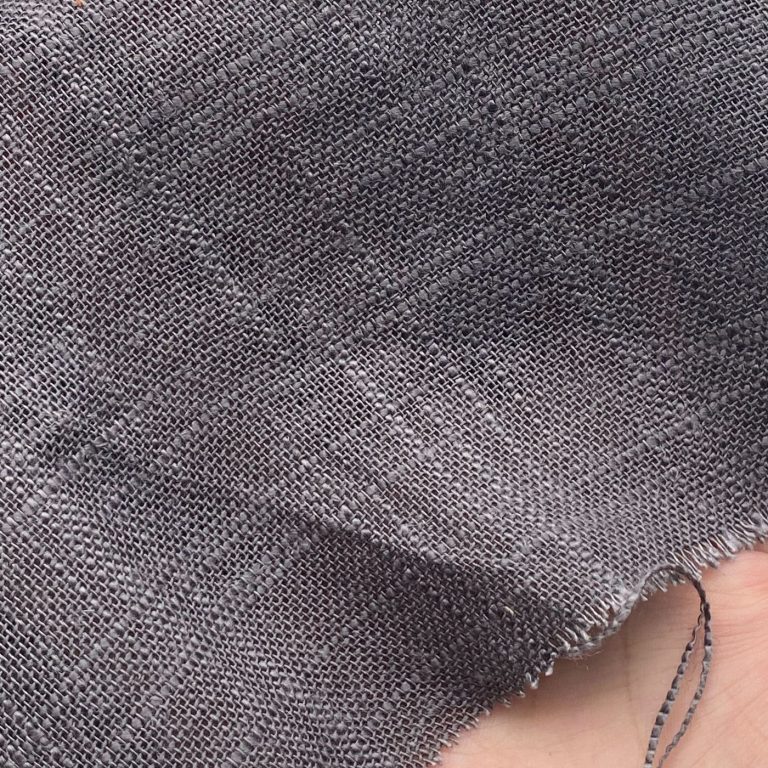
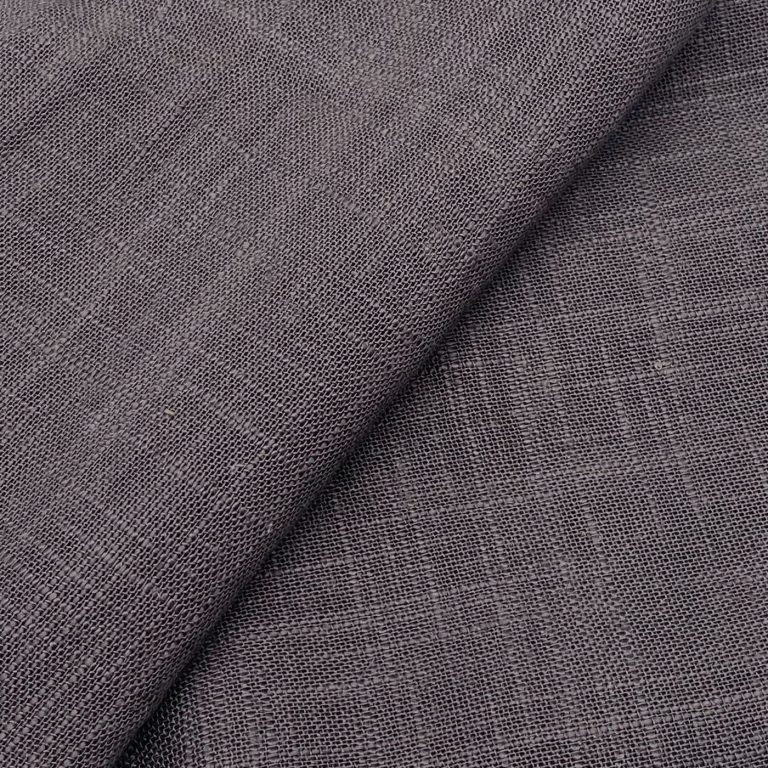
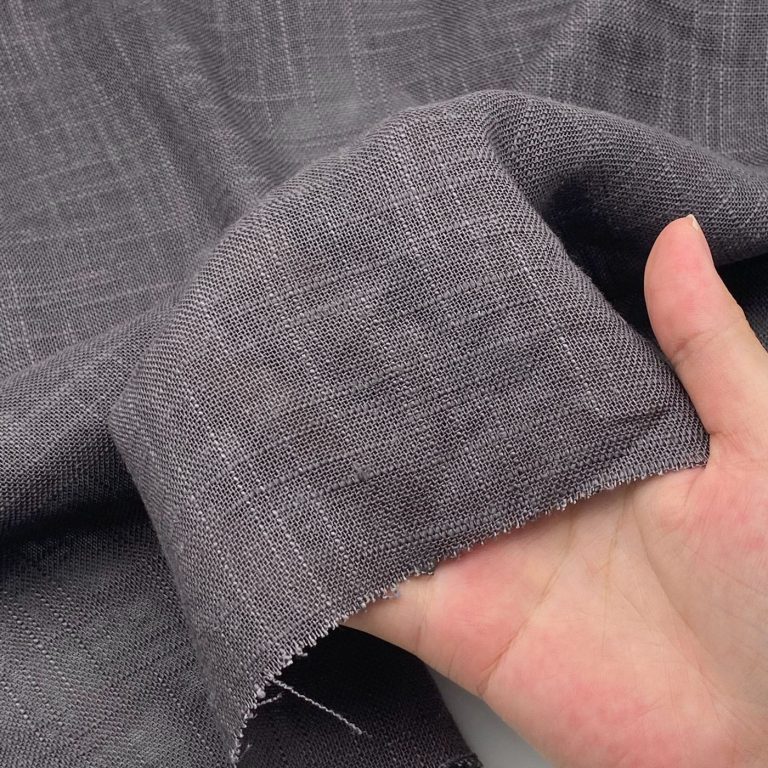
At 195 GSM this is a heavy-weight linen viscose, and weight — not the fibre ratio — is what decides whether a cloth works as a blouse or as a skirt. Below about 150 GSM the cloth is a shirt and cannot hold a collar; above about 220 GSM it becomes a coat and stops being a dress fabric. At 195 GSM it hangs as a dress, holds as a trouser and stands as an unlined jacket, with the slub giving the surface a texture that does the work of a print.
This is the core use and the reason for the viscose share. A dress needs cloth that falls rather than clings, and that is exactly what a viscose-heavy construction does: it moves with the body and hangs in a long clean fold. The flax share keeps it cool and dry against the skin, so the comfort is there as well as the shape. A maxi dress in this cloth reads as fluid and relaxed rather than as heavy, which is the look this weight is usually bought for. The shirt-dress works too, and the slub gives it a surface interest that a plain weave at this weight would not have on its own.
At 195 GSM the cloth works as a skirt because it has enough substance to hang properly — a tiered, shirred or A-line silhouette all work, and the softness of the viscose gives the fold a rounder, more fluid fall than a crisp cloth would. The culotte or wide-leg skirt is the other natural use: there is enough body to hold the leg line without bagging at the knee, which is the failure mode of anything lighter, and the viscose keeps the fabric from sitting stiffly away from the leg.
This weight carries a trouser well, and the wide-leg or straight-leg cut is the one that suits it: enough weight in the cloth to hang cleanly down the leg, enough drape in the fibre to avoid the stiff, papery look that a heavy plain weave can have. The co-ord set — a shirt or overshirt with a matching trouser or skirt — is a category where this cloth works particularly well commercially, because the viscose share means the garments survive travel and packing better than pure linen does.
At 195 GSM the cloth can carry an unlined jacket or overshirt, and this is where the slub earns its place — the texture reads as intentional in a soft tailoring piece. One honest boundary: below about 220 GSM this cloth will not hold a lapel roll without fusing, and fusing a slub cloth flattens the texture that is the whole point of specifying it. If the garment is a structured jacket with a lapel, specify a heavier construction instead. A shacket — a shirt-jacket hybrid — sits comfortably inside this specification.
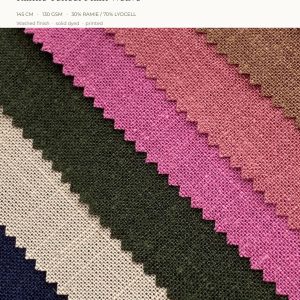
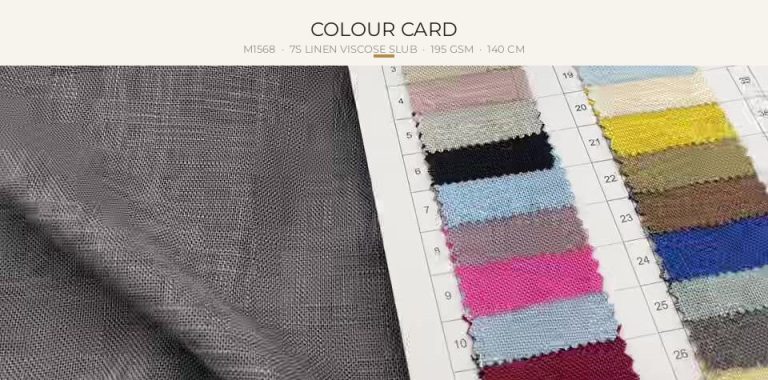
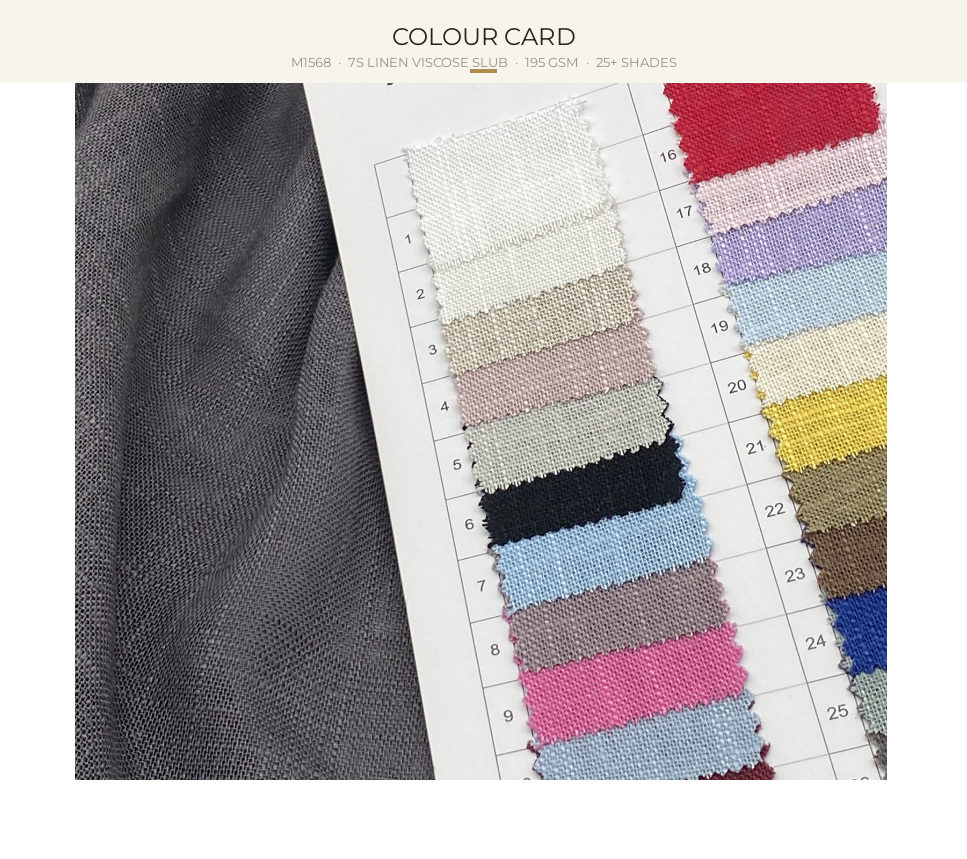
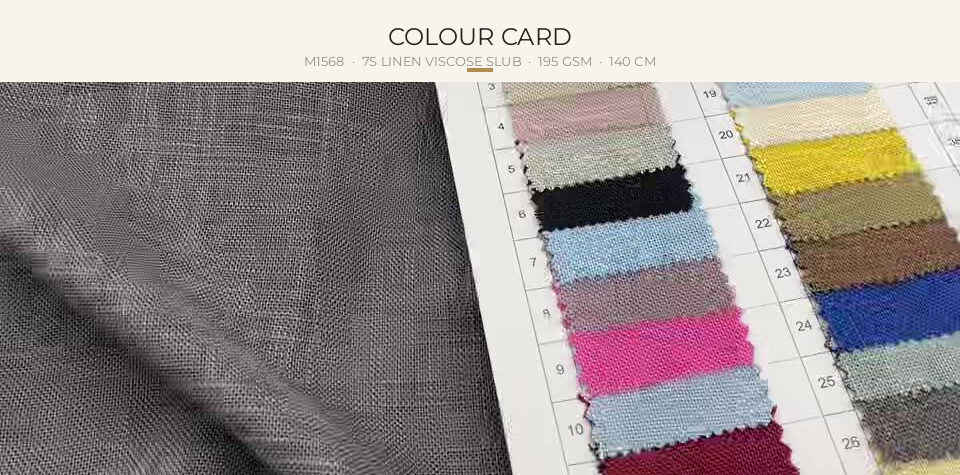
Two full color card pages are held for this construction — 26 shades in total, running from naturals, creams and greys through pastels, mid tones, olives, terracottas, deep blues and reds. The slub yarn takes dye unevenly on purpose: the thick sections of the yarn read slightly lighter than the thin ones, which is what gives the finished cloth its depth and prevents it from looking flat at close range. Custom solid dyeing to Pantone TCX is available for development orders, and we confirm the shade on a lab dip before bulk is scheduled.
Hand samples and cutting samples are supplied before bulk production, either from stock greige or from a lab dip matched to your shade. For a linen viscose we recommend approving the sample washed: the fabric typically shrinks 3 to 6% on the first wash unless it has been pre-shrunk, and viscose-heavy cloth also loses strength when wet, so the greige hand is not the hand the customer will receive. Cut samples are supplied so the drape can be checked on the body, which matters more here than on a crisp cloth.
Development runs around three points: the yarn count and density, the shade matched to Pantone TCX, and the weight confirmed against the end use. On a slub construction we also recommend checking how the marker lays the panels out, because a slub has a direction and the texture will read unevenly if alternate panels are turned. We confirm shrinkage and color fastness on a washed sample before bulk is scheduled, and we specify a cold or warm wash with a line dry, because high heat weakens viscose. On a 140 cm cloth we also recommend checking the marker efficiency against the actual pattern. Full-width greige and finished samples, small trial orders and custom development are supported for new customers.
| Service | Detail |
| Sampling | Hand sample and cutting sample before bulk |
| Lab dip | 3–5 shades against Pantone TCX or our own library |
| Greige | Full-width greige available on request |
| Development | Custom yarn count, density, weight, width and dyeing |
| Stock range | 26 shades held across two color cards |
| MOQ | Negotiable |
The answers below state the specification directly, so that the construction can be identified quickly and quoted accurately.
FABRIC ENQUIRY
Ask about this fabric
Share your requirements and our team will reply within 24 hours.