FAB-361256427
M1572 Ramie Lyocell Plain Weave Fabric 30% Ramie 70% Lyocell 130 GSM 145cm – for Trousers, Dresses and Shirts
Quote required
Contact us for the latest price and availability.
- Composition
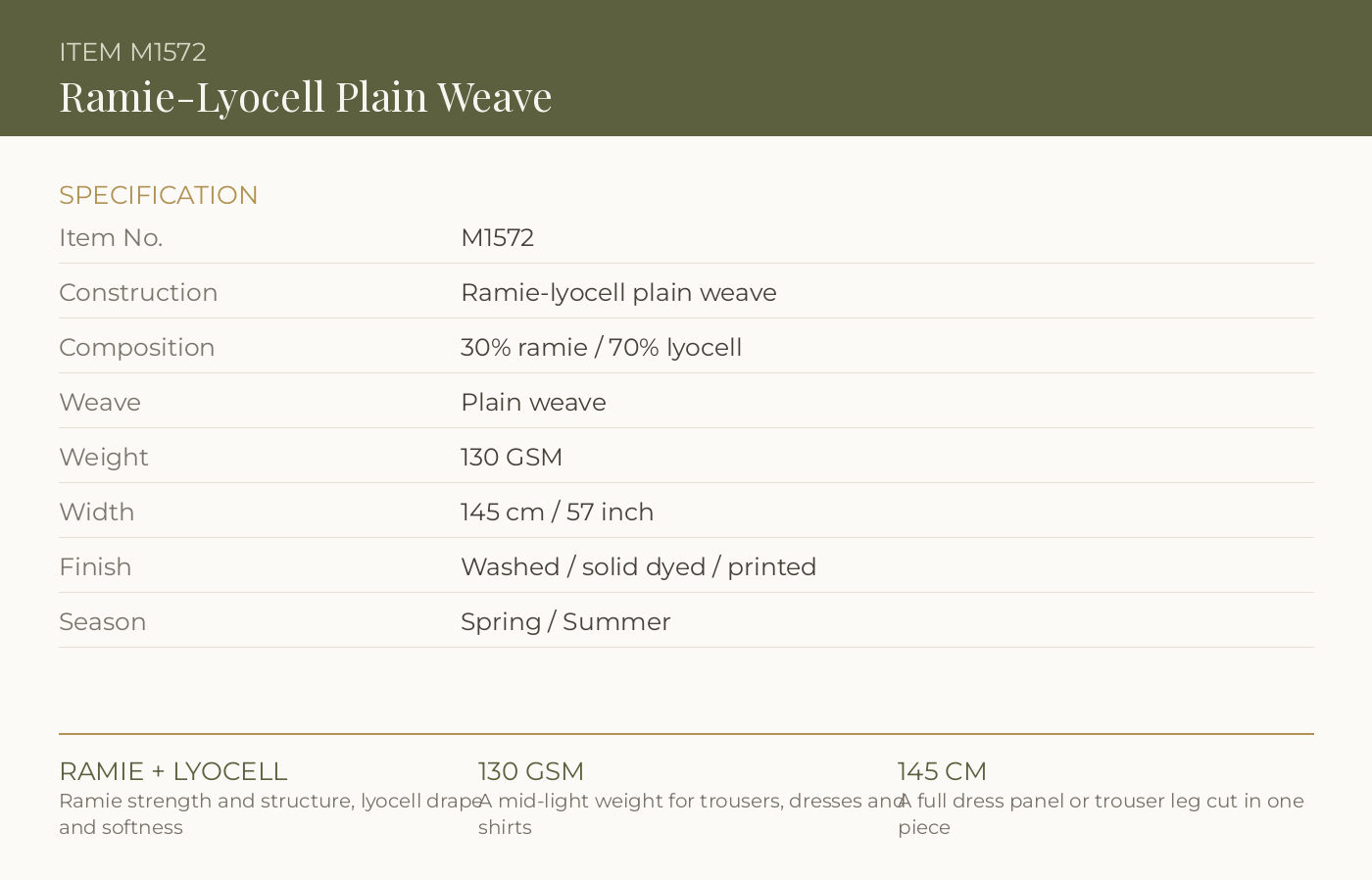
- 30% Ramie / 70% Lyocell
- Weight
- 130 GSM
- Width
- 57 inches
- Weave
- Plain weave
- Category
- Lenzing Fabric / Linen Fabric Wholesale / Linen Solid Color Dyed Fabric / Woven
- MOQ
- Negotiable
Sampling & delivery
Build your sample selection, then download a sourcing brief. Ordering, stock and delivery will be enabled after the store information is confirmed.
FABRIC STORY
Product details
| SHAOXING HENGHUI TEXTILE | ITEM NO. M1572 RAMIE-LYOCELL · 130 GSM · 145 CM |
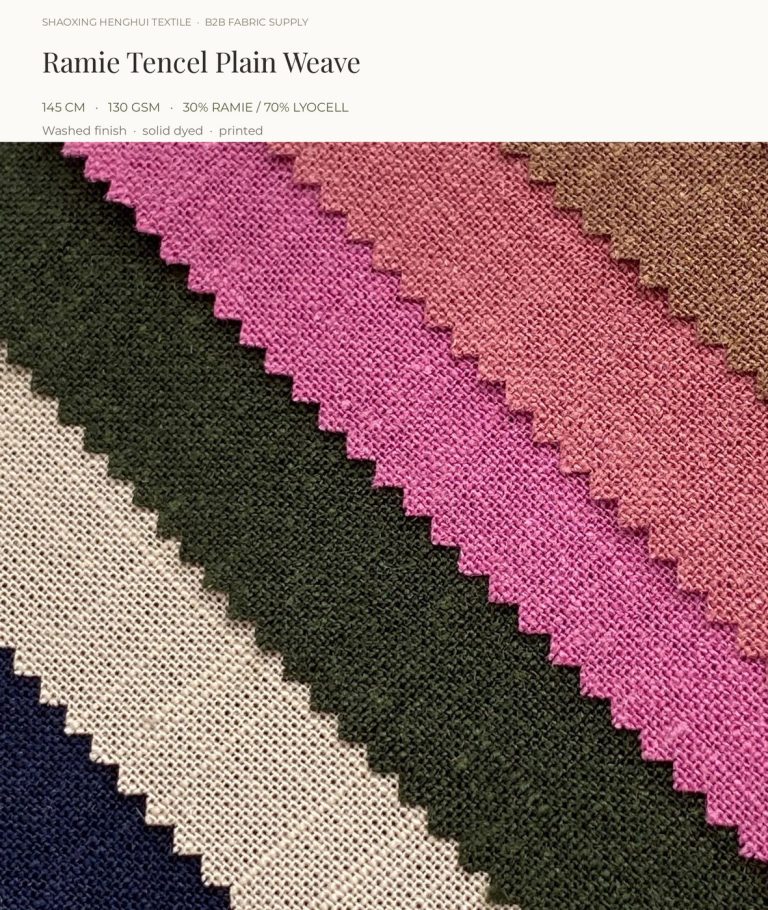
Item M1572 is a ramie-lyocell plain weave at 30% ramie and 70% lyocell, finished at 130 GSM and 145 cm wide, in a washed finish. The two fibres are not mixed for price — each one fixes a weakness of the other. Ramie brings strength and structure; lyocell brings drape and softness. The result is a cloth that wears like a good summer fabric and answers the three complaints buyers raise about pure ramie every time: too coarse, too scratchy and too creasy.
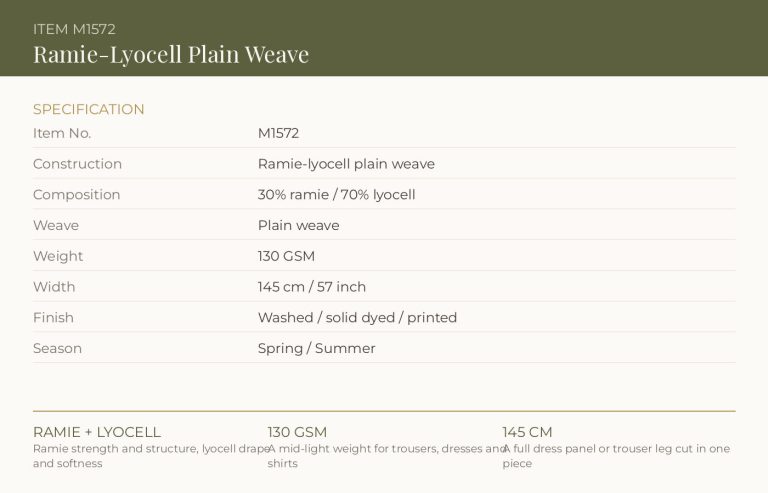
Where this weight sits. At 130 GSM this is a mid-light cloth — between a shirt cloth and a dress cloth — for wide-leg trousers, shirts, shirt-dresses, dresses and light skirts. The 145 cm width takes a full dress panel or a trouser leg in one piece, which removes a seam from the most visible place on the garment. One honest note: because the lyocell share dominates, this cloth is softer and closer to the skin than pure ramie — it is not the maximum-ventilation option, it is the maximum-wearability one.
This is 30% ramie and 70% lyocell — the lyocell being Tencel, a regenerated cellulose fibre spun from wood pulp by a solvent process. The two fibres are not mixed for price; each one fixes a weakness of the other. Ramie brings strength and structure — its fibre runs 6 to 60 centimetres, longer than any other bast fibre, and it is about seven to eight times stronger than cotton.
Lyocell brings what ramie lacks: drape and softness. Its cross-section is round or oval, which gives a smooth luster, a soft hand and a clean fall, and its washed dimensional stability is excellent, with a shrinkage rate of only about 2%.
Together the two give a cloth that is more abrasion-resistant, less prone to creasing, harder to tear and less prone to deformation than pure ramie, while keeping the ramie texture and the cool dry hand no synthetic reproduces. It also answers the three complaints buyers raise about pure ramie every time: too coarse, too scratchy and too creasy.
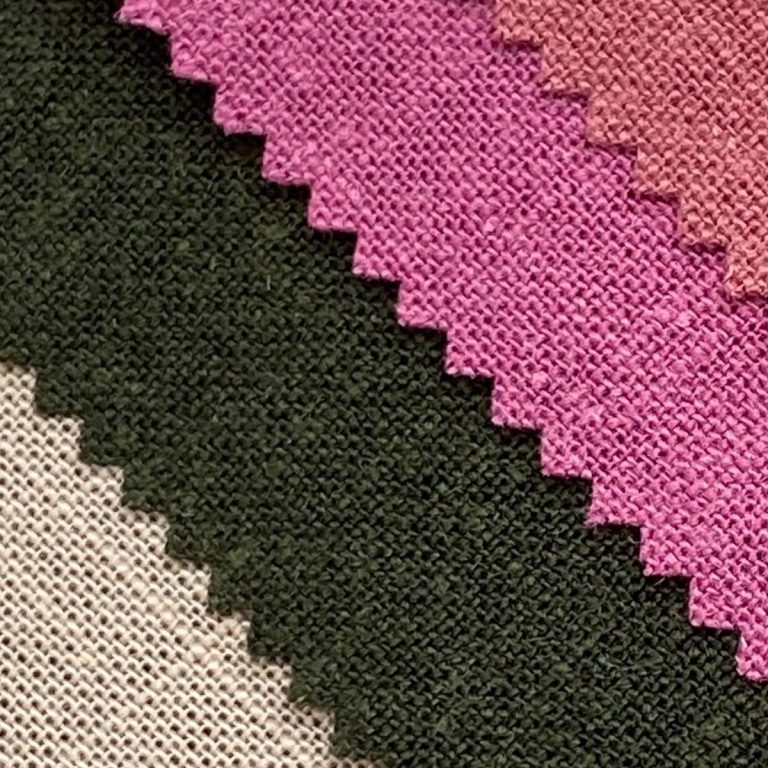
The finish matters here, and this construction is sold as washed. A washed ramie-lyocell has a soft rounded surface rather than the raw fibre you feel on pure ramie, which is what makes it comfortable against the skin and safe for sensitive skin. In wear it behaves like a good summer cloth: it moves, it breathes, and it holds its shape.
Lyocell is hygroscopic and wicks moisture away from the skin, while ramie’s hollow fibre structure handles heat and ventilation — together the combination buyers call a “walking air conditioner”.
One characteristic of the lyocell share is worth knowing before you order: in the wet state the fibre is prone to fibrillation, meaning surface fuzz and, in the worst case, small pills where the cloth has been rubbed hard while wet. That is a care issue rather than a quality one, and it is managed the same way as any Tencel: do not scrub hard when wet, wash cold on a gentle cycle, do not soak or tumble dry, and wash dark shades separately. Approve a washed sample and wash it once before you commit.
At 130 GSM this is a mid-light weight, which puts it between a shirt cloth and a dress cloth: wide-leg trousers, shirts, shirt-dresses, dresses and light skirts. The 145 cm width takes a full dress panel or a trouser leg in one piece, which removes a seam from the most visible place on the garment.
Three limits, stated plainly. The ramie share still sets sharp creases — low elasticity is a property of the fibre, and 30% is enough to keep it — so this is not a cloth that stays pressed on its own. Ramie also hardens when it is wet, the opposite of flax, so press from the reverse.
And because the lyocell share dominates, this cloth is not as cool or as breathable as pure ramie — it feels softer and closer to the skin, which is exactly what this construction is for, but if your buyer wants maximum ventilation, the pure ramie at a similar weight is the better choice.
The 1688 factory lists this construction for trousers and dresses, and at 130 GSM those are the two natural uses: a wide-leg trouser that falls clean, and a dress with enough body to hang in a line rather than cling. The washed finish is what makes it wearable against the skin without the scratch that buyers associate with raw ramie.
This is where the ramie share earns its place. At 130 GSM there is enough body in the cloth to hold a line down the leg and hang a skirt without clinging, and the ramie gives the fabric a dry, cool hand that stays comfortable through a warm day. The lyocell share is what stops it creasing into hard folds and makes it survive a day in a bag.
A washed ramie-lyocell shirt is the easiest thing in this range to wear every day: it is soft, breathable and does not crease badly, which is exactly what a summer shirt needs to survive being packed. It also washes at 2% shrinkage, so the size you approve stays the size that arrives.
The printed version of this construction is the one to look at for cover-ups and resort pieces: the same plain weave and the same washed hand, with the color doing the work instead of the texture. Because the cloth drapes rather than holds a shape, a printed version reads as deliberate rather than as a print on a sack.
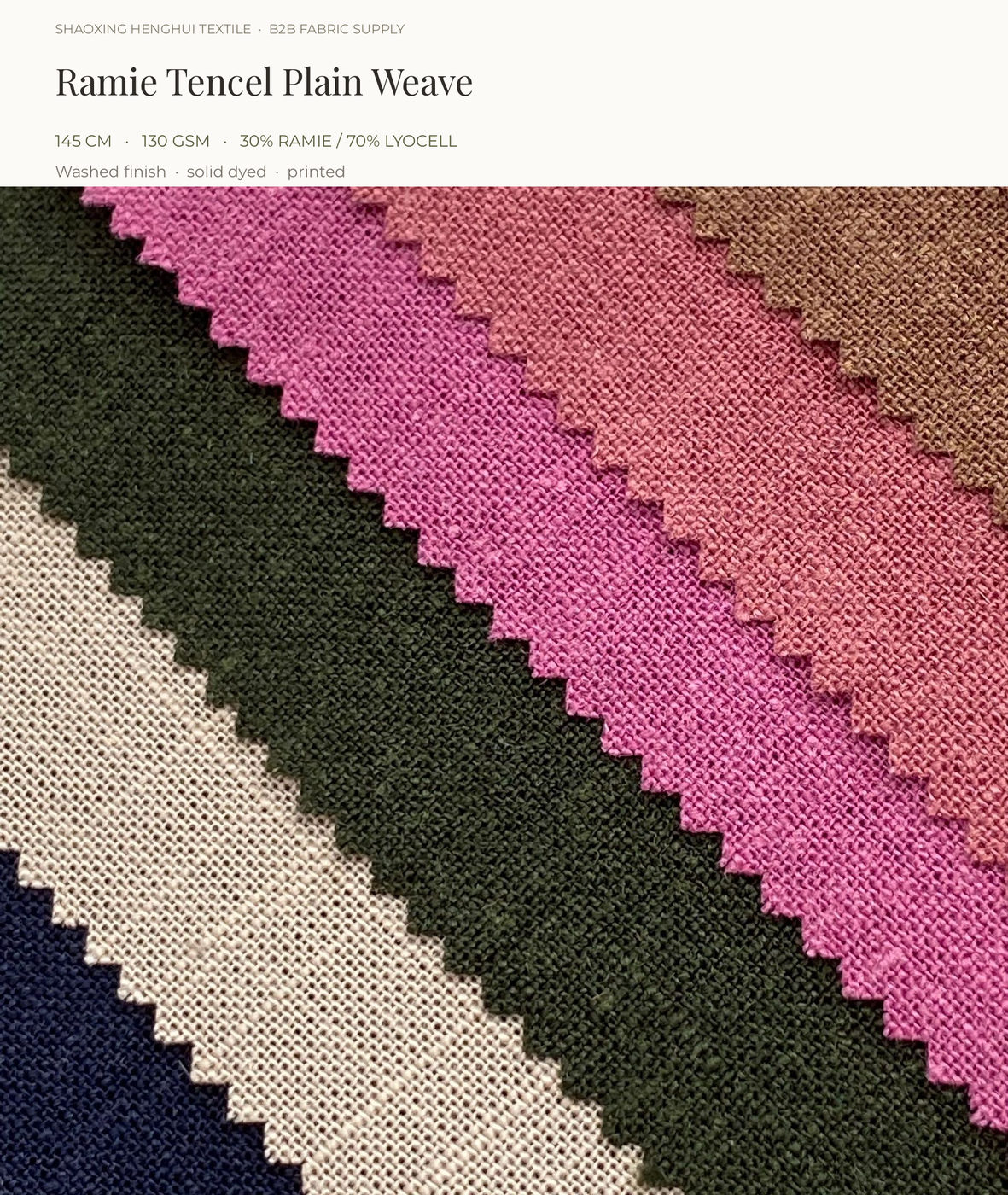
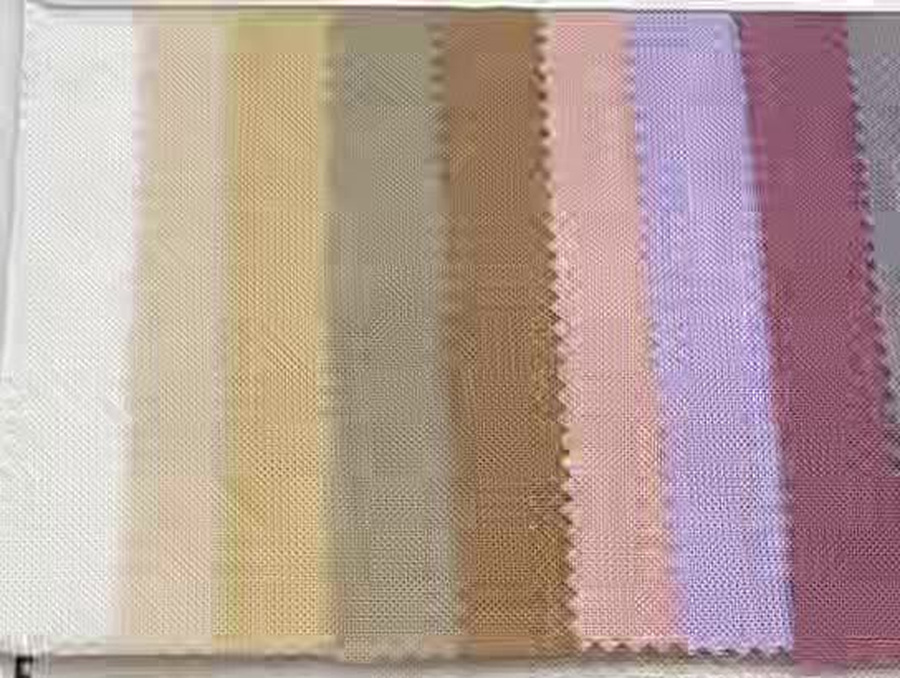
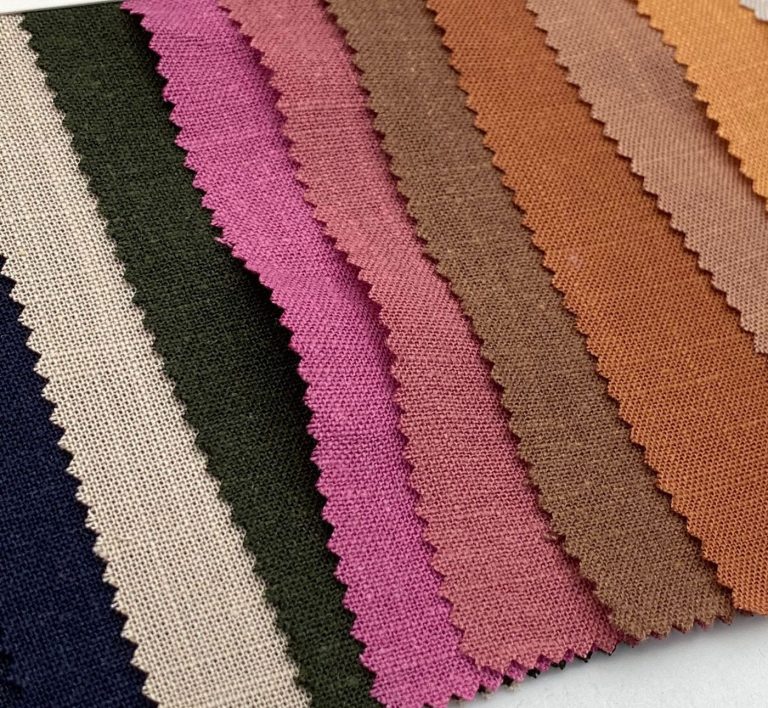
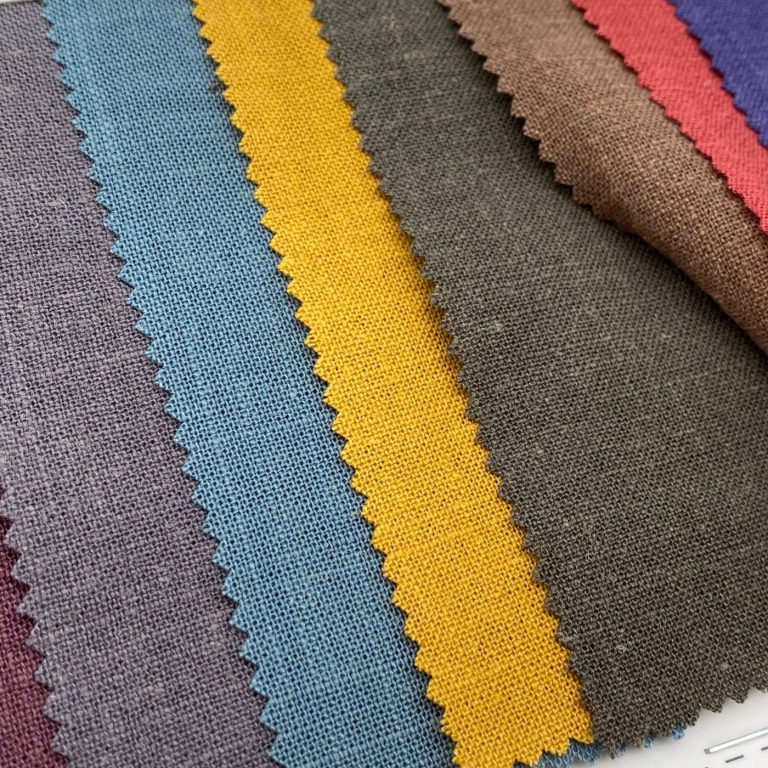
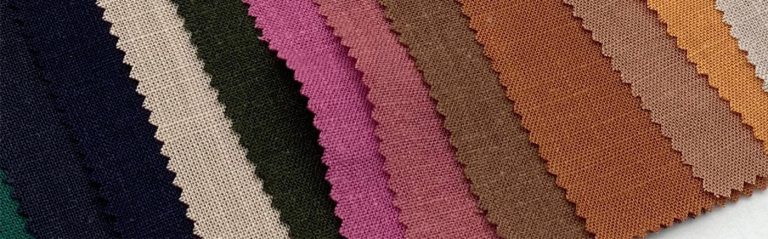
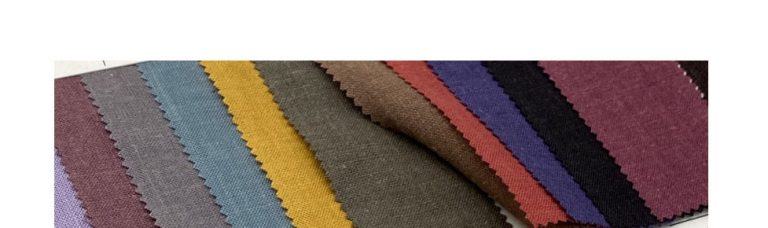
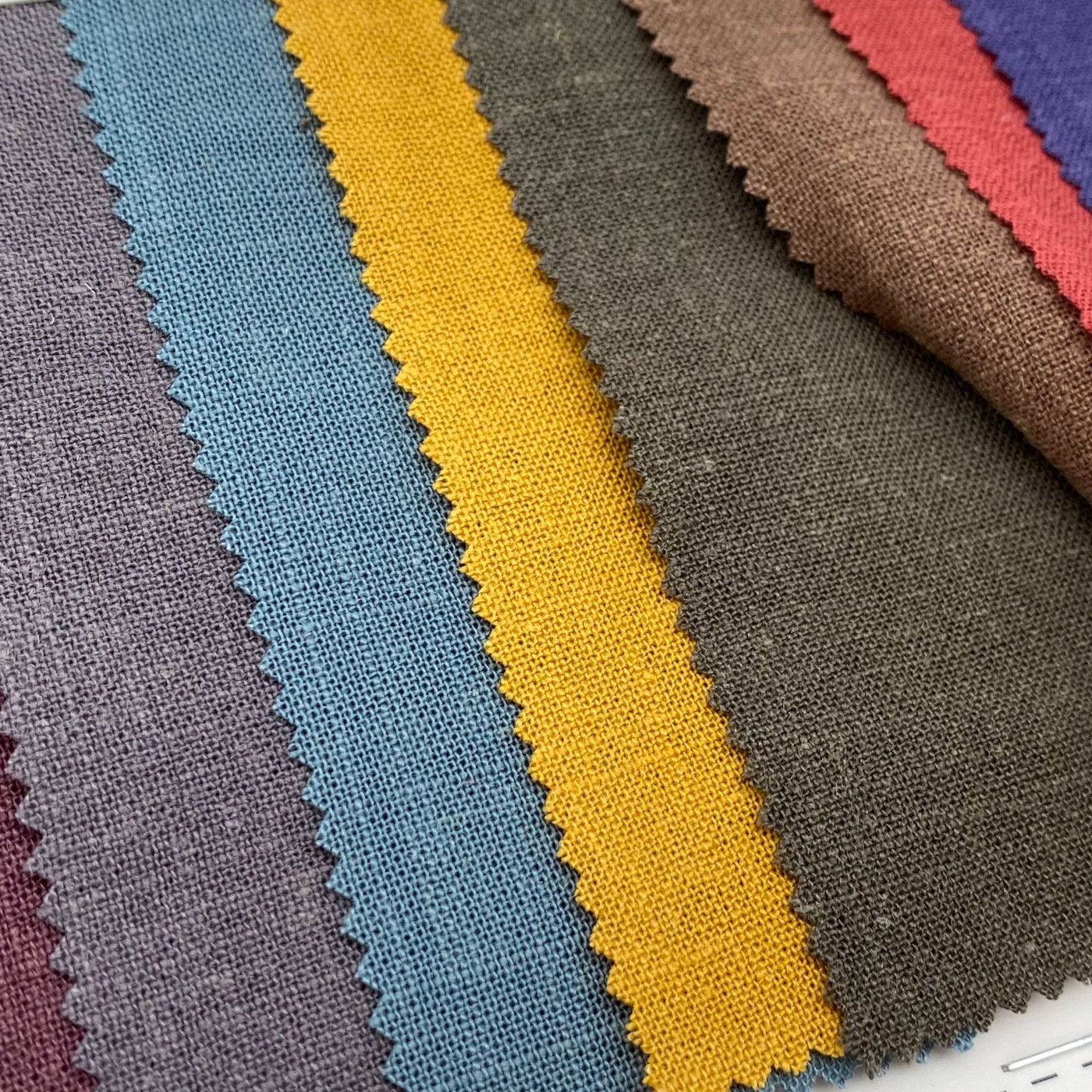
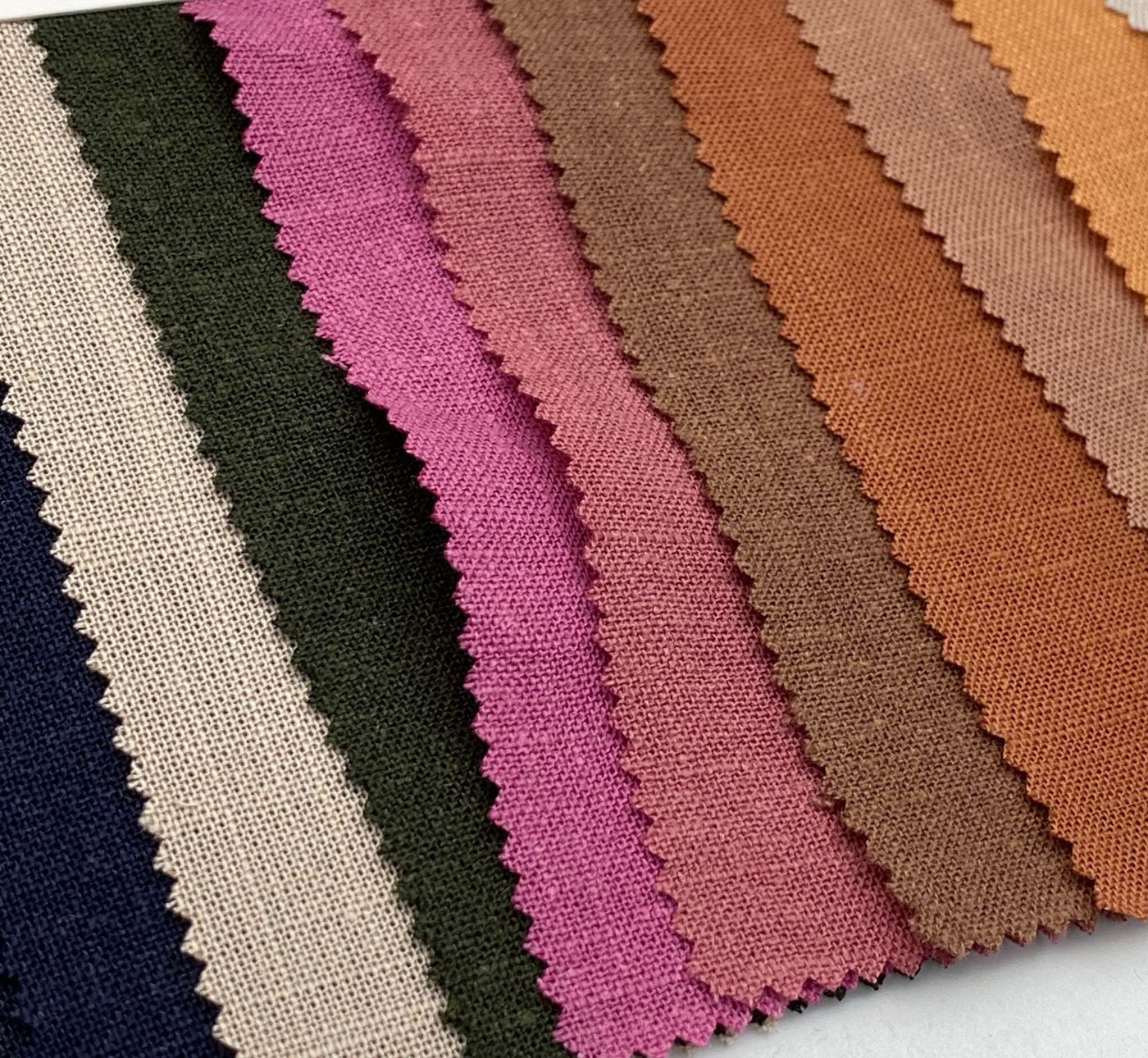
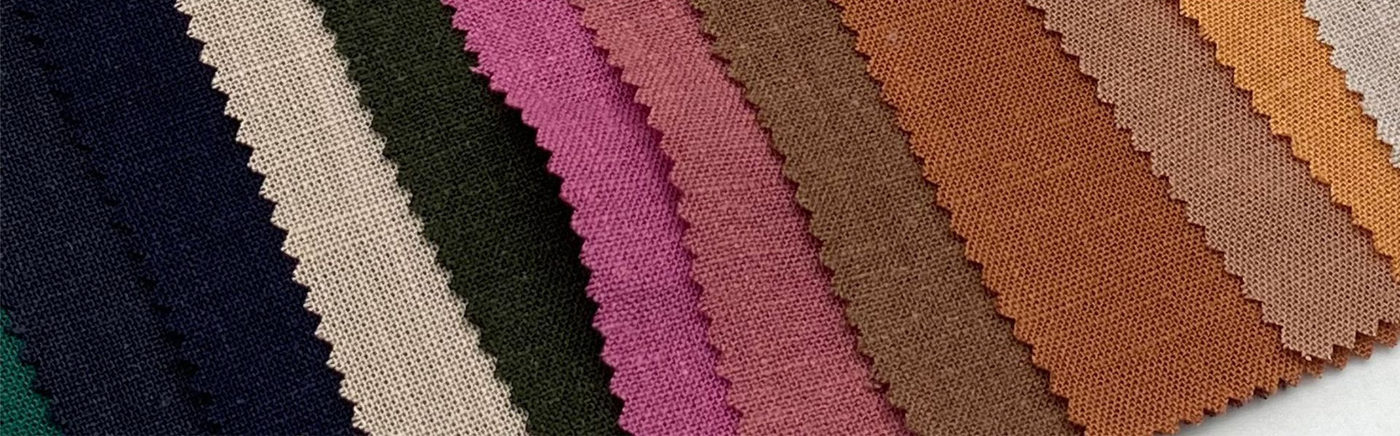
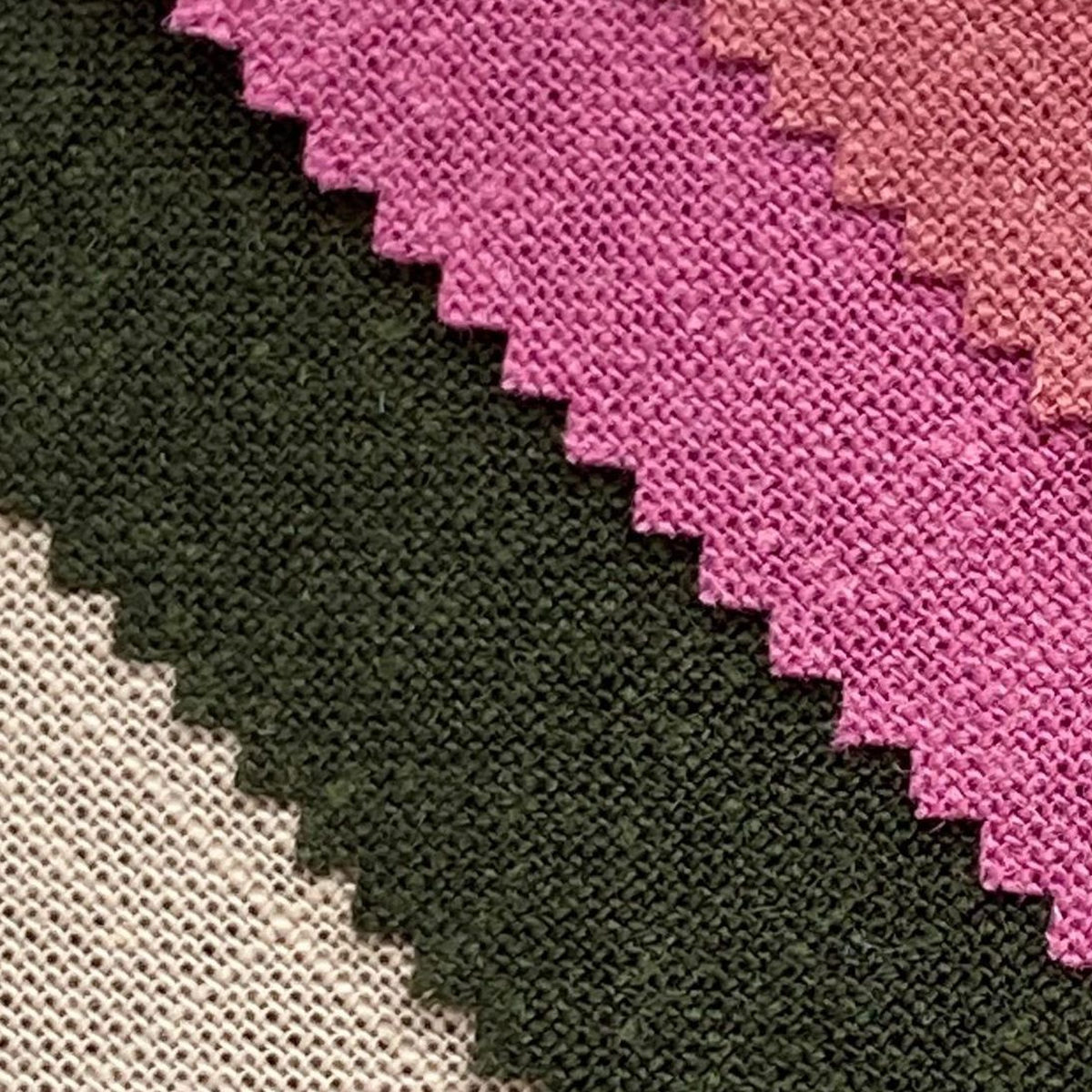
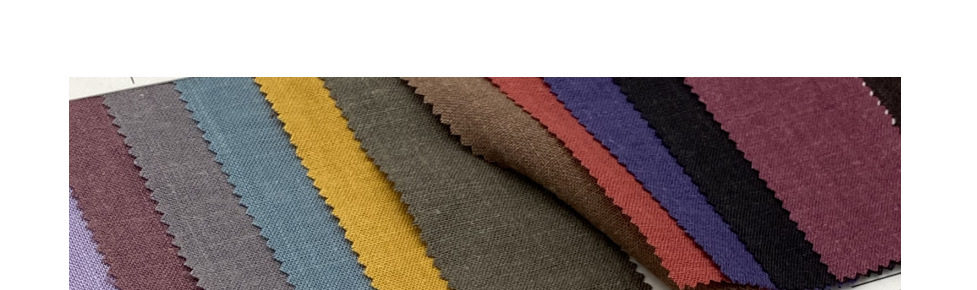
The card runs through the naturals, pastels, brights and deep tones, and the swatches below are the actual cloth rather than a print of it — every one shows the same washed plain weave and the same pinking edge, so you are approving the real surface. This construction is available solid dyed and in black and white print, and custom Pantone dyeing can be run against a lab dip confirmed before bulk.
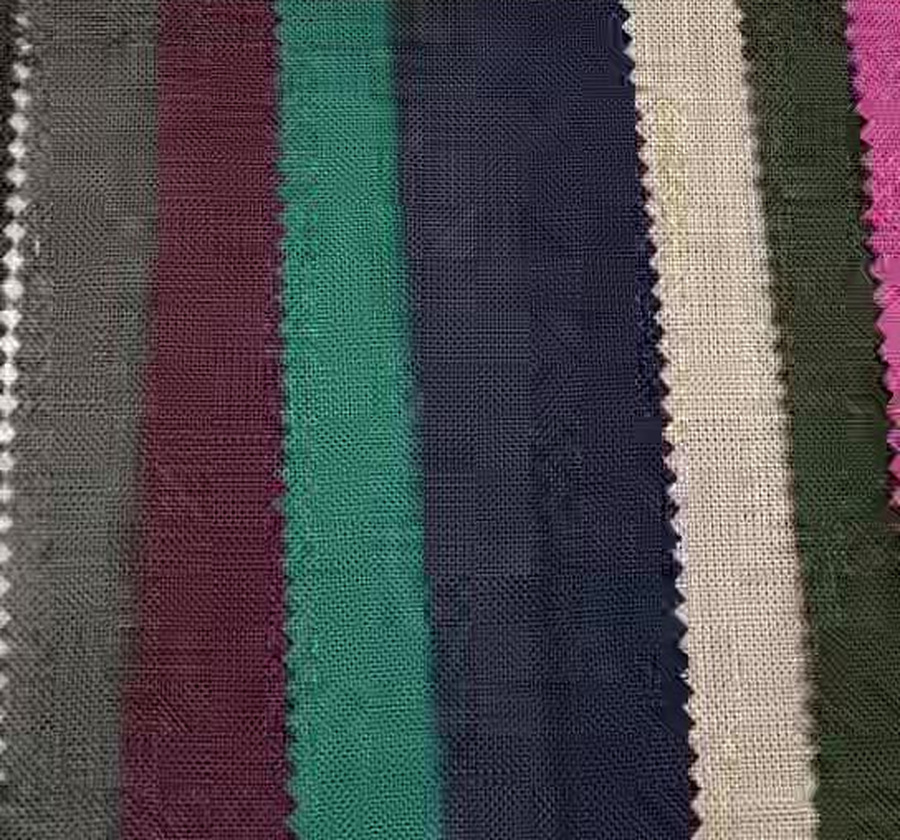
Ask for a washed sample on this one, and wash it once before you approve it. Two things to check. First the hand: it should feel soft and rounded against the skin, with none of the raw-fibre scratch of pure ramie — if it feels papery, the wash has not been done properly. Second, wash it and rub it: lyocell fibrillates if it is rubbed hard while wet, so this is the one thing a card photo cannot tell you.
Custom density, weight, width and dyeing are available on this construction, and digital print development can be run from your own design files. If you need more body than 130 GSM gives, ask for a heavier version of the same washed hand rather than a different finish — the wash is what makes this cloth work, and it is worth carrying across to a heavier weight.
| Service | Detail |
| Sampling | Hand sample and cutting sample before bulk |
| Lab dip | 3–5 shades against Pantone TCX or our own library |
| Greige | Full-width greige available on request |
| Development | Custom density, weight, width and dyeing |
| Digital print development from your design files | |
| Stock range | Shades held on one full color card |
| MOQ | Negotiable |
FABRIC ENQUIRY
Ask about this fabric
Share your requirements and our team will reply within 24 hours.