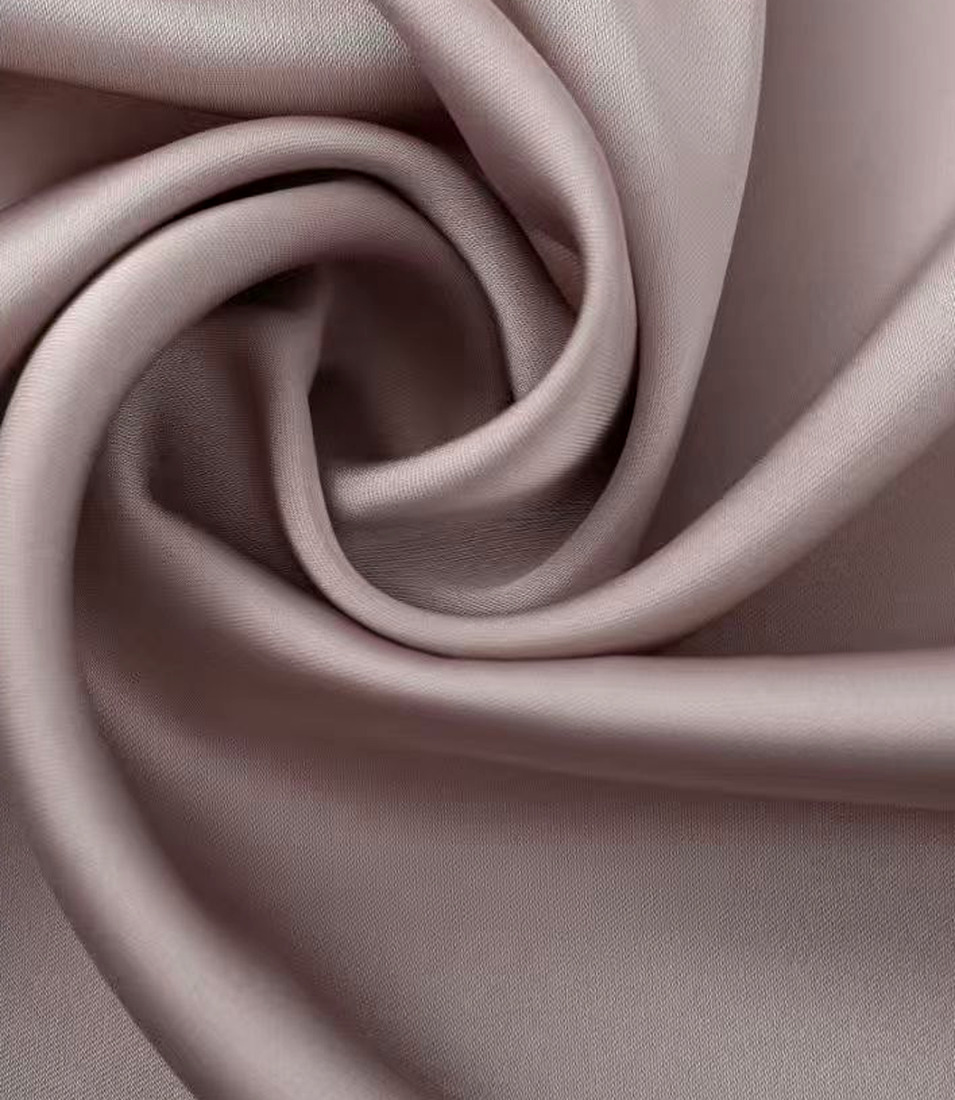
8079-DRAPE-SATIN
Drape Satin Fabric 100% Polyester 180GSM – for Abaya & Hijab | Henghui Textile
Quote required
Contact us for the latest price and availability.
- Composition
- 100% Polyester
- Weight
- 180-200 GSM
- Width
- 59 inches
- Weave
- Double-Faced Drape Satin (two satin faces, double-beam construction)
- Category
- Polyester Fabric Wholesale Supplier / Polyester Solid Color Dyed Fabric / Woven
- MOQ
- TBC
Sampling & delivery
Build your sample selection, then download a sourcing brief. Ordering, stock and delivery will be enabled after the store information is confirmed.
FABRIC STORY
Product details
| SHAOXING HENGHUI TEXTILE CO., LTD. | ITEM NO. 8079 DOUBLE-FACED DRAPE SATIN · 100% POLYESTER · SERIES PES-79 |
Double-Faced Drape Satin Fabric
150 CM
DOUBLE-FACED DRAPE SATIN WEAVE
100% POLYESTER
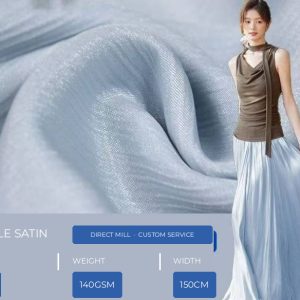
This woven double-faced drape satin fabric is 100% polyester in an double-beam double-faced satin construction. The dense, dry matte surface has a soft, smooth hand with a low-shine finish that stays cool and comfortable against the skin, and a fluid drape that moves without clinging
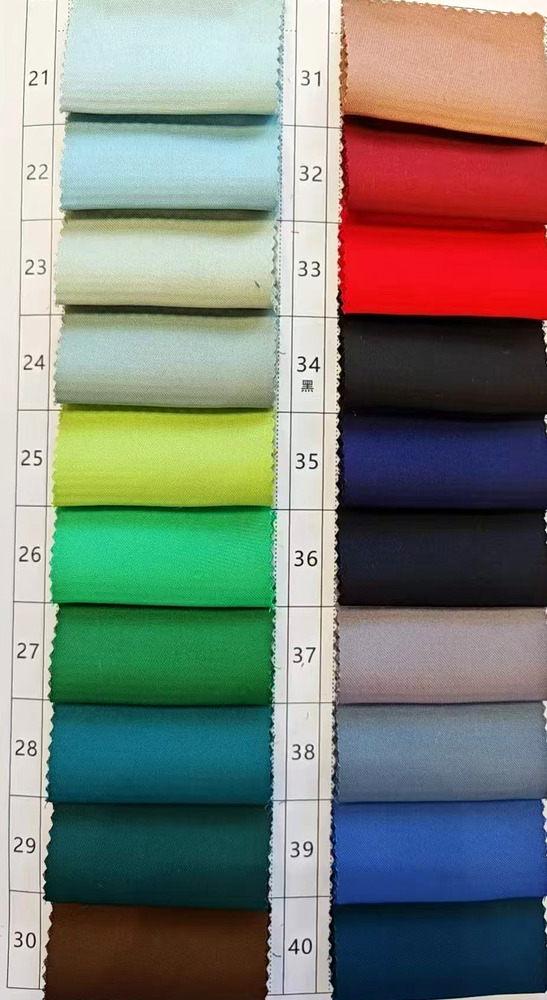
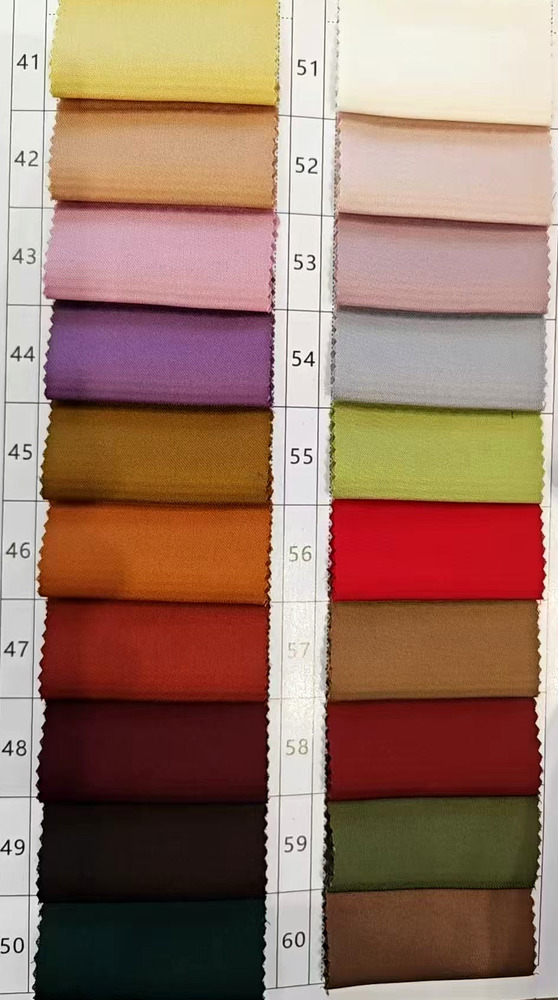
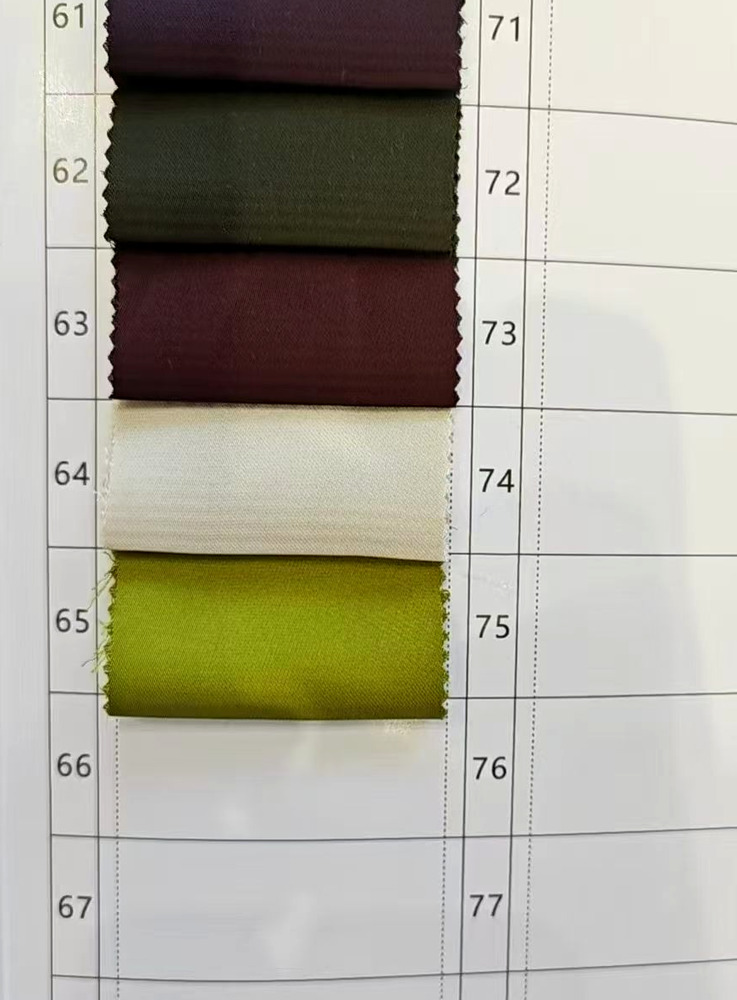
At 180 GSM this sits in the light-to-midweight range — light on the body with an easy, flowing drape and confident opacity, while the matte finish keeps it looking calm rather than shiny. It is a go-to fabric for modest fashion and dressmaking: flowing maxi dresses, abayas and kaftans, plus headscarves, hijabs, shawls and evening gowns — styles in steady demand across the Middle East, North Africa and Europe & America. The 150 cm width allows efficient marker making for long dress panels and generous scarf blanks alike Available in 65 in-stock dyed colors, with custom solid dyeing or printing in our 55-color morandi tone library or your own Pantone references.
| ITEM | SPECIFICATION |
|---|---|
| Item No. | 8079 Double-Faced Drape Satin (piece dyed) |
| Construction | Double-Faced Drape Satin — 45-degree diagonal ribs, 45-degree diagonal ribs, dense matte surface (double-beam double-faced satin), soft cool hand |
| Composition | 100% Polyester |
| Surface | 100% Polyester — 45-degree diagonal ribs, dense matte surface, soft cool low-shine hand |
| Hand Feel | Soft matte hand, cool fluid drape |
| Width | 150 cm (59 inch) |
| Weight | 180 GSM |
| Technics | Woven · piece-dyed / print ready |
| Color | Lilac shown — 65 stock colors + custom dyeing / Pantone matching |
| MOQ | Flexible — discussed per color & production requirement |
| Sample | Fabric samples available for quality evaluation before bulk |
|
FEATURE 01
Consistent Quality
Clear texture on both sides, anti-pilling and anti-snag. Woven from quality polyester filament with a stable, even surface that keeps its shape in every garment.
|
FEATURE 02
Healthy Material
Woven from quality raw materials — soft drape, easy to wash and quick to dry. Tight construction, good flexibility and less pilling, gentle on sensitive skin.
|
|
FEATURE 03
Skin-Friendly & Breathable
Relaxed drape and breathable comfort. Like a gentle companion, the smooth face feels gentle on the skin and helps reduce stuffiness and sticky feelings.
|
FEATURE 04
Vibrant Color
Bright, vibrant color with high color fastness. Wash-resistant and fade-resistant — the lustrous morandi shades stay true wash after wash.
|
|
ZIGZAG FOLDS · DEFINED 3D TEXTURE
|
ITEM INFORMATION · 8079 SERIES
|
| 100% POLYESTER — DOUBLE-FACED DRAPE SATIN |
|
VIVID MORANDI SHADES · WASH-FAST
|
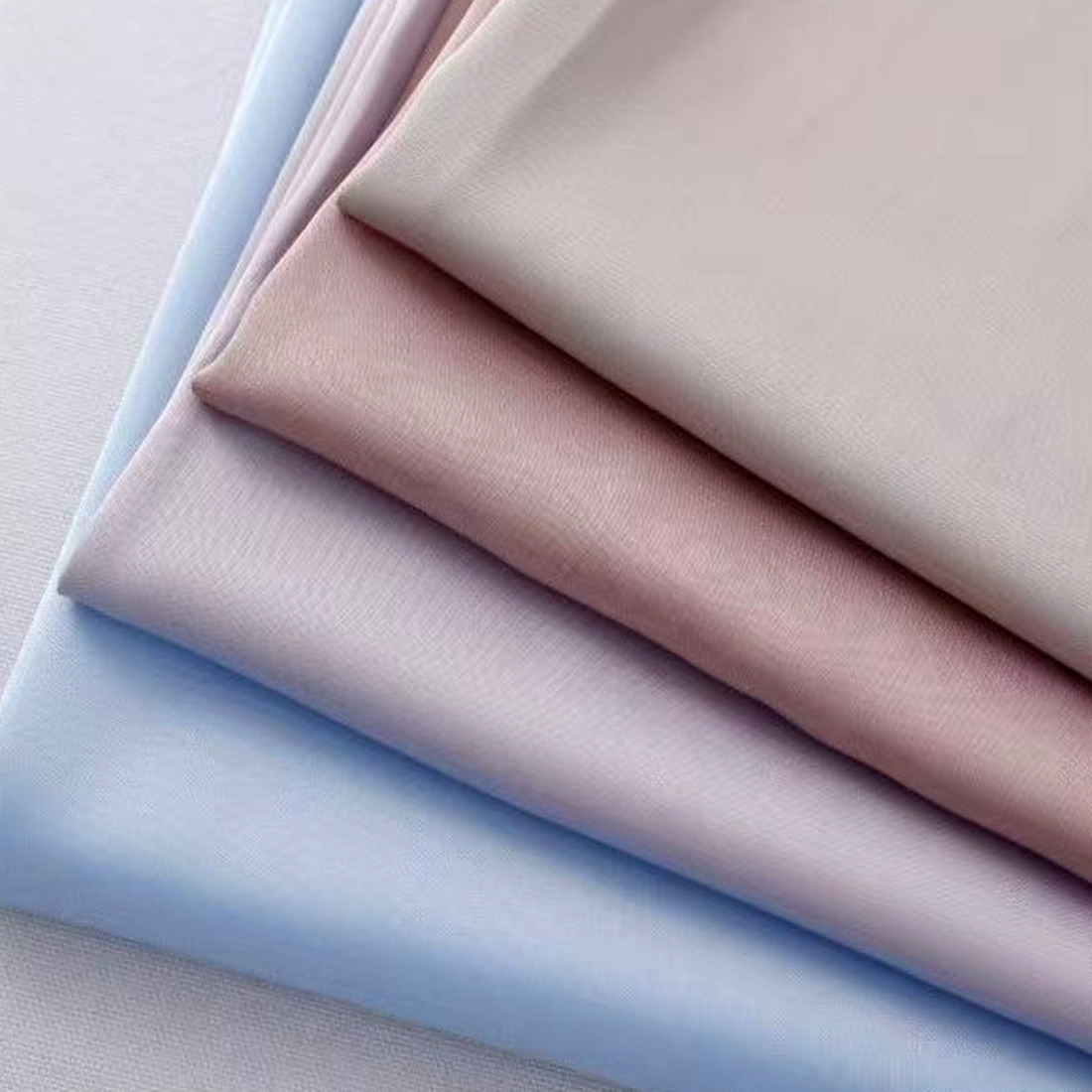
FABRIC STACK · FOUR COLORWAYS
|
BLUSH · SOFT DRAPE
|
|
MATTE FACE · SOFT DRAPE
|
More morandi tones available from our 55-color morandi tone library — see the Pantone TCX matched color card in Customization below. Lab dip approval before bulk dyeing.
|
|
PLAIN WEAVE — FLAT FILAMENT CROSSING
Light cell = warp yarn over weft · Dark cell = interlacing point
The dry matte surface comes from the double-beam double-faced satin construction — dense low-shine finish, soft cool hand, fluid drape.
|
WHY DOUBLE-FACED DRAPE SATIN WEAVE
|
| Headscarves & Hijabs | Shawls & Scarves | Maxi Dresses | Abayas & Kaftans |
| Evening Gowns | Home Decor | Bridal & Occasion | Flowy Dresses |
Fashion Brands
Fabric Wholesalers
Apparel Sourcing Companies
Boutique Clothing Producers
|
DRESS & ABAYA · LILAC DOUBLE-FACED DRAPE SATIN
|
MODEST STYLING · MADE-UP SAMPLES
|
|
ITEM INFORMATION · STYLING REFERENCE
|
MADE-UP GARMENT SAMPLE
Modest Styling in Double-Faced Drape Satin
Cut from this 180 GSM polyester Matte twill fabric after piece dyeing — the 45-degree diagonal ribs, dense matte surface and soft drape remain clearly visible in the finished garment.
Buyer color references are welcome: we keep a 55-color morandi tone library for the coming season and can match any Pantone TCX with a lab dip before bulk.
Garment Sample Available
|
|
Color Options
Printing Service
Custom Development
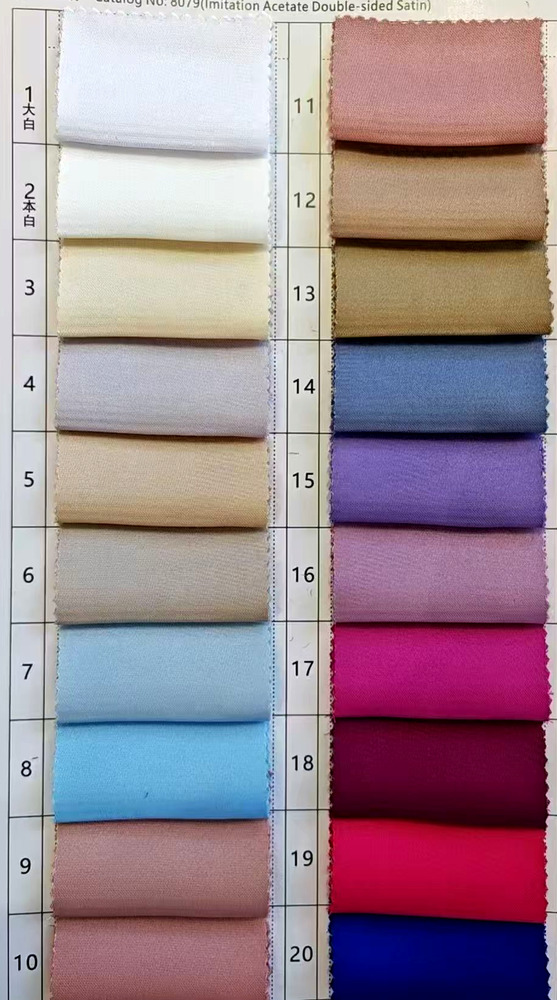
STOCK COLOR CHART — 65 IN-STOCK COLORS
Craft Differentiation: Similar Touch, Fundamentally Different ConstructionDOUBLE-FACED WEAVING · DOUBLE-SIDE COLOR MATCHING
How double-face weaving, controlled warp tension and a matched finishing route protect the quality of a two-faced satin.
Two drape satins can look similar in the hand. Both may show a cool, fluid touch and a soft low-shine lustre. However, their appearance alone does not tell the whole story. The real difference often lies in how the cloth is woven and finished. For this construction, the fabric quality is decided before color ever reaches the cloth. Yarn tension, warp density and how the two satin faces are built determine whether the fabric keeps its fluid drape after washing or turns stiff and papery. A fabric that looks correct in the hand can still fail at garment stage if the construction was not controlled. At Shaoxing Henghui Textile Co., Ltd., we control the construction stage with the same care we apply to dyeing and finishing. Our double-faced drape satin development focuses on three points: double-faced weaving, controlled warp tension and a matched double-side finishing route. Hand feel similar to acetate satin. The drape is fluid and cool with a soft low-shine surface. 1. Why Double-Faced Constructions Behave DifferentlyA double-faced satin is woven so that both sides present a satin surface. Compared with a single-faced satin, this doubles the surface area that must be protected during weaving, dyeing and finishing. At sample stage two fabrics may feel almost identical, but differences become clearer during bulk production and garment making. Potential problems include:
For garment manufacturers these problems affect more than appearance. They increase inspection requirements, complicate cutting and create additional production cost. This is why quality should be judged not only by the hand at sample stage, but also by the construction and finishing route used to achieve it. 2. Double-Faced Weaving and Warp Tension ControlOur double-faced satin is woven on a double-beam arrangement that builds two satin faces at the same time. Holding both faces to the same pick-up means the cloth leaves the loom with an even thickness and a stable internal structure, which is the basis of the soft drape satin-like touch. Two Matching Satin Faces
Both sides are woven as satin, so the same face quality is available on either side of the garment.
Even Thickness
Building both faces together keeps the cloth even, avoiding the thin-and-heavy imbalance that causes unstable drape.
Controlled Warp Tension
Stable warp tension limits internal stress, so the fabric keeps its fluid fall after washing instead of going stiff.
No Lining Required
Because both faces are usable, the same cloth serves as shell and lining, simplifying construction and reducing lay-up layers.
3. Dyeing and Double-Side Color MatchingThe fabric is dyed with polyester disperse dye under a controlled high-temperature cycle. Because both faces are visible in the finished garment, the shade on each side must be checked as a pair rather than judged on a single surface. How the Process Works
Step 1 — Controlled high-temperature dyeing. The disperse dye is fixed under a defined temperature curve so the shade builds evenly across the full width and through the full thickness of the double construction.
Step 2 — Face-to-face shade matching. Both satin faces are compared side by side under the same light so any difference between the two sides is detected at the dyeing stage, not by the garment factory.
Step 3 — Careful reduction and rinsing. Reduction and rinsing are managed so surface color is removed cleanly without disturbing the yarn structure, keeping the hand soft rather than harsh.
Why This Matters On a double-faced cloth a shade difference is visible from both sides of the garment and cannot be hidden. Detecting it at the dyeing stage means it can be corrected before the fabric reaches cutting. Suppliers who check only one face may deliver fabric that looks acceptable on the table but is rejected at the sewing stage, or requires an extra lining to hide the difference. 4. Heat Setting and drape satin Hand FinishingThe character of this fabric is created in finishing, not in the yarn. Heat setting at a controlled temperature stabilises the dimensions, and the finishing route is kept deliberately light so the surface stays cool and fluid rather than becoming glossy and stiff. Fluid Drape That Survives Washing. Stabilisation is set so the cloth keeps its movement through repeated laundering instead of stiffening. Low-Shine Cool Surface. A restrained finishing route keeps the soft, non-plastic lustre associated with drape satin rather than a high-gloss film. Stable Width and Flat Edge. Balanced tension and heat setting reduce edge curl, which improves marker efficiency and reduces cutting waste. Washing Color Fastness Color fastness is an important consideration for a fabric sold in both face and reverse. The actual washing color fastness grade should be confirmed through testing under the applicable standard and test conditions. Where supported by laboratory results, a grade of 4 or above can be specified in the product documentation. For bulk orders, we recommend confirming the required color fastness, shade tolerance across both faces, width tolerance and other quality parameters before production. This helps define quality expectations clearly between the fabric supplier and the garment manufacturer. 5. Why Construction Quality Matters to Garment ManufacturersWhen purchasing fabric, the initial price is only one part of the total production cost. A lower-priced drape satin may appear attractive at the sourcing stage, but if the double-face construction or finishing route is not controlled, the savings on fabric can be offset by losses during garment making. Potential consequences include:
By contrast, a controlled double-face construction with a matched finishing route helps reduce avoidable quality risks. At Henghui Textile, we believe reliable fabric quality begins with the making process, not with the final inspection alone. Our approach emphasises stable weaving, matched double-side dyeing and a restrained finishing route, communicated clearly with customers about the requirements of their intended applications. 6. Applications of This Double-Faced SatinWith a cool fluid hand, a soft low-shine surface and two usable faces, this double-faced satin can be considered for a range of apparel applications, depending on its actual composition, weight and construction. Potential applications include:
For buyers developing a new collection, the final suitability should be evaluated against the garment design, required drape, opacity, comfort and care instructions. Our team can work with buyers to confirm the relevant specifications and finishing requirements before bulk production. 7. Quality Begins with Process ControlAt Shaoxing Henghui Textile Co., Ltd., we understand that the difference between an acceptable fabric and a reliable production fabric often lies in details that are not immediately visible. Yarn tension, double-face weaving, dyeing temperature, reduction and finishing route all contribute to the final result. Rather than evaluating a double-faced satin only by its initial touch, we focus on the relationship between construction, dyeing and finishing, and between those processes and the requirements of garment production. For our customers, the goal is not simply to receive a fabric that feels pleasant in a sample. It is to obtain material that meets the agreed specifications and performs consistently throughout the manufacturing process — face to face, batch to batch. SHAOXING HENGHUI TEXTILE CO., LTD.
Woven Fabric Manufacturing · Dyeing · Printing · Finishing
We welcome inquiries from garment manufacturers, fabric importers and apparel sourcing teams looking for woven fabrics with clearly defined specifications and carefully controlled double-face construction.
Deux satins imitation acétate peuvent sembler similaires au toucher. L’un comme l’autre peuvent présenter un toucher frais et fluide, ainsi qu’un brillant doux et peu marqué. Toutefois, leur seule apparence ne révèle pas toute la vérité. La différence réside souvent dans la manière dont le tissu est tissé et fini. Pour cette construction, la qualité du tissu se joue avant même que la couleur n’atteigne le cloth. La tension des fils, la densité de chaîne et la façon dont les deux faces de satin sont construites déterminent si le tissu conserve son tombé fluide après lavage ou devient rigide et papery. Un tissu dont le toucher semble correct peut néanmoins échouer au stade de la confection si la construction n’a pas été maîtrisée. Chez Shaoxing Henghui Textile Co., Ltd., nous contrôlons l’étape de construction avec le même soin que nous appliquons à la teinture et à l’apprêt. Le développement de notre satin double face imitation acétate repose sur trois points : le tissage double face, le contrôle de la tension de chaîne et une route d’apprêt double face appariée. 1. Pourquoi les constructions double face se comportent différemmentUn satin double face est tissé de manière à présenter une surface satinée sur chaque côté. Par rapport à un satin simple face, la surface à protéger durant le tissage, la teinture et l’apprêt est deux fois plus importante. Au stade de l’échantillon, deux tissus peuvent sembler presque identiques, mais les différences deviennent plus manifestes en production série et en confection. Les problèmes potentiels sont les suivants :
Pour les confectionneurs, ces problèmes ne se limitent pas à l’aspect. Ils augmentent les exigences de contrôle, compliquent la coupe et engendrent des coûts supplémentaires. C’est pourquoi la qualité doit être appréciée non seulement par le toucher au stade de l’échantillon, mais aussi par la construction et la route d’apprêt employées pour l’obtenir. 2. Tissage double face et contrôle de la tension de chaîneNotre satin double face est tissé sur un dispositif à deux arbres qui construit simultanément deux faces satinées. Maintenir les deux faces au même picking permet au tissu de quitter le métier avec une épaisseur régulière et une structure interne stable, ce qui constitue la base du toucher doux proche de l’acétate. Deux faces satinées identiques
Les deux faces sont tissées en satin, ce qui offre la même qualité de surface de chaque côté du vêtement.
Épaisseur régulière
Construire les deux faces ensemble maintient un tissu régulier et évite le déséquilibre mince-lourd qui déstabilise le tombé.
Tension de chaîne contrôlée
Une tension de chaîne stable limite les contraintes internes, de sorte que le tissu conserve son tombé fluide après lavage.
Doublure inutile
Les deux faces étant utilisables, le même tissu sert d’extérieur et de doublure, ce qui simplifie la confection et réduit le nombre de couches.
3. Teinture et appariement des couleurs des deux facesLe tissu est teinté au colorant dispersé pour polyester, selon un cycle à température contrôlée. Comme les deux faces sont visibles sur le vêtement fini, la teinte de chaque côté doit être vérifiée par paire et non jugée sur une seule surface. Fonctionnement du procédé
Étape 1 — Teinture à température contrôlée. Le colorant dispersé est fixé selon une courbe de température définie afin que la teinte se construise de façon homogène sur toute la largeur et dans toute l’épaisseur de la construction double.
Étape 2 — Appariement des teintes face à face. Les deux faces satinées sont comparées côte à côte sous le même éclairage afin que tout écart entre elles soit détecté à l’étape de teinture et non par l’atelier de confection.
Étape 3 — Réduction et rinçage maîtrisés. La réduction et le rinçage sont gérés de manière à éliminer proprement la couleur de surface sans altérer la structure du fil, afin de conserver un toucher souple plutôt que rugueux.
Pourquoi c’est important Sur un tissu double face, un écart de teinte est visible des deux côtés du vêtement et ne peut être dissimulé. Le détecter à l’étape de teinture permet de le corriger avant que le tissu ne parvienne à la coupe. Les fournisseurs qui ne contrôlent qu’une seule face peuvent livrer un tissu acceptable sur table mais refusé au stade de la couture, ou nécessitant une doublure supplémentaire pour masquer l’écart. 4. Stabilisation thermique et finition du toucher acétateLe caractère proche de l’acétate de ce tissu est obtenu en finissage, et non dans le fil. La stabilisation thermique à température contrôlée stabilise les dimensions, et la route de finition est délibérément légère afin que la surface reste fraîche et fluide plutôt que brillante et rigide. Un tombé fluide qui résiste au lavage. La stabilisation est réglée pour que le tissu conserve son mouvement lors des lavages successifs au lieu de durcir. Surface fraîche peu brillante. Une route de finition mesurée conserve le brillant doux et non plastique caractéristique de l’acétate, plutôt qu’un film brillant. Largeur stable et bord plat. Une tension équilibrée et une stabilisation thermique réduisent les ondulations de bord, ce qui améliore le rendement du marqueur et limite les pertes à la coupe. Solidité des couleurs au lavage La solidité des couleurs est un critère important pour un tissu vendu à face et envers. Le niveau réel de solidité des couleurs au lavage doit être confirmé par un essai réalisé selon la norme et les conditions d’essai applicables. Lorsqu’il est étayé par des résultats de laboratoire, un niveau 4 ou supérieur peut être mentionné dans la documentation produit. Pour les commandes en série, nous recommandons de confirmer avant la production la solidité des couleurs requise, la tolérance de teinte sur les deux faces, la tolérance de largeur et les autres paramètres de qualité. Cela permet de définir clairement les attentes qualité entre le fournisseur de tissu et le confectionneur. 5. Pourquoi la qualité de construction compte pour les confectionneursLors de l’achat de tissu, le prix initial ne constitue qu’une part du coût total de production. Une imitation acétate moins chère peut sembler attractive au stade de l’approvisionnement. Toutefois, si la construction double face ou la route d’apprêt n’est pas maîtrisée, les économies réalisées sur le tissu peuvent être compensées par des pertes au cours de la confection. Les conséquences possibles sont les suivantes :
À l’inverse, une construction double face maîtrisée et une route d’apprêt appariée permettent de réduire les risques de qualité évitables. Chez Henghui Textile, nous sommes convaincus qu’une qualité de tissu fiable commence par le procédé de fabrication, et non par le seul contrôle final. Notre approche privilégie un tissage stable, une teinture appariée sur les deux faces et une route de finition mesurée, en dialogue clair avec les clients sur les exigences de leurs applications. 6. Applications de ce satin double faceGrâce à un toucher frais et fluide, une surface douce peu brillante et deux faces utilisables, ce satin double face peut être envisagé pour un large éventail d’applications vestimentaires, selon sa composition, son grammage et sa construction réelles. Les applications potentielles comprennent :
Pour les acheteurs qui développent une nouvelle collection, l’adéquation finale doit être évaluée au regard du modèle du vêtement, du tombé recherché, de l’opacité, du confort et des consignes d’entretien. Notre équipe peut accompagner les acheteurs afin de confirmer les spécifications et les exigences d’apprêt pertinentes avant la production en série. 7. La qualité commence par le contrôle du procédéChez Shaoxing Henghui Textile Co., Ltd., nous comprenons que la différence entre un tissu acceptable et un tissu réellement fiable pour la production se joue souvent dans des détails qui ne sont pas immédiatement visibles. La tension des fils, le tissage double face, la température de teinture, la réduction et la route d’apprêt contribuent tous au résultat final. Plutôt que d’évaluer un satin double face uniquement d’après son toucher initial, nous nous concentrons sur la relation entre construction, teinture et apprêt, et entre ces procédés et les exigences de la confection. Pour nos clients, l’objectif n’est pas simplement de recevoir un tissu dont le toucher est agréable sur échantillon. Il s’agit d’obtenir une matière qui respecte les spécifications convenues et conserve des performances homogènes tout au long du processus de fabrication — face à face, lot après lot. SHAOXING HENGHUI TEXTILE CO., LTD.
Fabrication de tissus tissés · Teinture · Impression · Apprêt
Nous accueillons les demandes des confectionneurs, importateurs de tissus et équipes d’achat recherchant des tissus tissés aux caractéristiques clairement définies et à la construction double face rigoureusement contrôlée.
Different colors, finishing and hand feel can be developed to your requirements — sample development and small trial orders supported for new customers.
|
ALABASTER MIST
Pantone TCX11-0608
PEARL ASH
Pantone TCX11-4301
OAT MILK
Pantone TCX12-0104
COTTON SILT
Pantone TCX13-0905
BONE CHINA
Pantone TCX11-0701
FOG ROSE
Pantone TCX14-3803
DUSTY BLUSH
Pantone TCX14-1309
MAUVE SMOKE
Pantone TCX15-1607
ROSE ASH
Pantone TCX14-1506
CLAY BLUE
Pantone TCX16-1508
TERRACOTTA HAZE
Pantone TCX16-1422
BRICK DUST
Pantone TCX17-1518
CORAL ASH
Pantone TCX16-1330
ROSEWOOD FOG
Pantone TCX17-1518
COCOA ROSE
Pantone TCX17-1516
AMBER FOG
Pantone TCX15-1220
SAND HAZE
Pantone TCX15-1214
WHEAT SMOKE
Pantone TCX15-1220
SOFT LILAC DUST
Pantone TCX17-1320
TOFFEE GRAY
Pantone TCX17-1115
SAGE MIST
Pantone TCX14-6007
EUCALYPTUS
Pantone TCX15-6315
FERN FOG
Pantone TCX16-6216
MOSS GRAY
Pantone TCX17-6323
JADE SMOKE
Pantone TCX15-5706
DUSTY TEAL
Pantone TCX16-5106
FOG BLUE
Pantone TCX14-4307
POWDER SKY
Pantone TCX12-4609
SLATE BLUE
Pantone TCX15-4008
STORM BLUE
Pantone TCX17-4021
LILAC HAZE
Pantone TCX15-3807
WISTERIA GRAY
Pantone TCX16-3911
GRAPE SMOKE
Pantone TCX17-3810
PLUM ASH
Pantone TCX18-3712
ORCHID FOG
Pantone TCX15-3508
STONE GRAY
Pantone TCX15-0000
ASH BEIGE
Pantone TCX14-1106
GREIGE MIST
Pantone TCX13-5304
GRAPHITE FOG
Pantone TCX18-0510
CHARCOAL MIST
Pantone TCX19-0810
Family 01 — Ivory & Sand Neutrals — light to deep · elegant everyday
IVORY VEIL
Pantone TCX11-0104
CHAMPAGNE MIST
Pantone TCX12-1007
NUDE SAND
Pantone TCX13-1015
TAUPE FAWN
Pantone TCX16-1214
DEEP UMBER
Pantone TCX19-1116
Family 02 — Dusty Blue Gradient — light to deep · modest wear
ICE MIST
Pantone TCX11-4802
MORNING HAZE
Pantone TCX13-4309
DUSTY DENIM
Pantone TCX17-4412
INDIGO FOG
Pantone TCX18-4022
MIDNIGHT NAVY
Pantone TCX19-4126
Family 03 — Sage & Pine Greens — light to deep · soft botanical
MIST JADE
Pantone TCX12-5808
PISTACHIO GRAY
Pantone TCX13-6209
OLIVE SAGE
Pantone TCX16-0421
CYPRESS DUSK
Pantone TCX18-0521
DEEP PINE
Pantone TCX19-5920
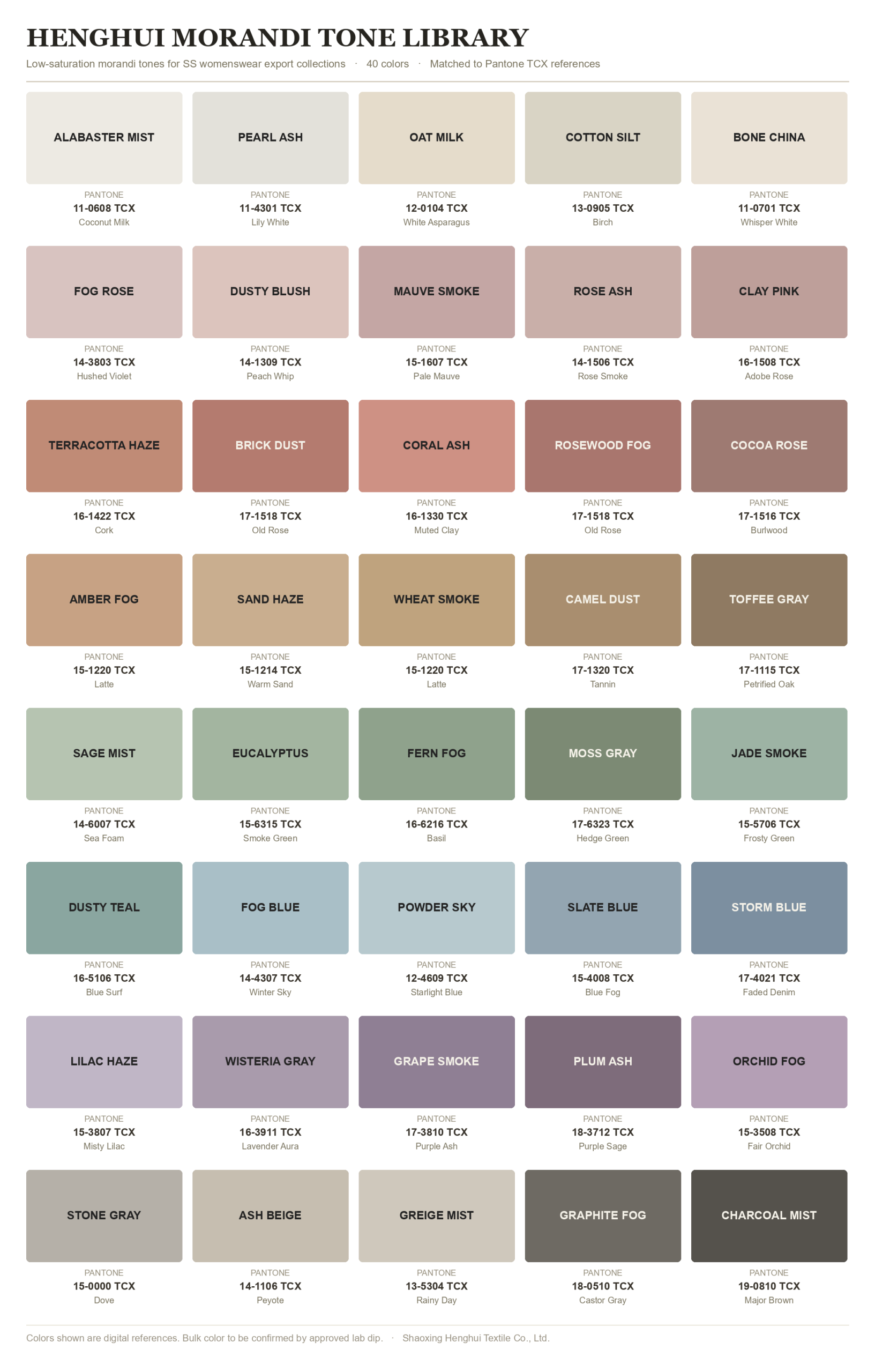
Morandi Tone Library — 55 Colors · Matched to Pantone TCX References
This group of Morandi colors is for reference only, available for custom dyeing. We can also match any Pantone TCX provided by buyers.
Custom Reference Colors — Not In-Stock · Lab Dip Lead Time 5–8 Days
|
| ✓ Fabric appearance | ✓ Width checking | ✓ GSM checking |
| ✓ Color shade checking | ✓ Hand feel checking | ✓ Packing inspection |
| ✓ | Factory direct supply — stable pricing & lead time | ✓ | Flexible MOQ for development & bulk |
| ✓ | Fast sample development | ✓ | Professional woven fabric production |
|
Q: What is the composition and construction of this fabric?
This is item 8079 Double-Faced Drape Satin: 100% polyester woven in a double-beam double-faced satin construction, with clear 45-degree diagonal ribs and a dense matte surface that resists pilling and snagging, a soft cool hand and a light breathable drape. Weight is 180 GSM with a 150 cm width
|
|
Q: Is 180 GSM suitable for abayas and hijabs?
Yes. At 180 GSM the double-faced drape satin is light and breathable while staying opaque, and the dry matte hand sits cool and comfortable against the skin with no shine. The dense surface makes it ideal for abayas, kaftans, maxi dresses, headscarves and evening gowns.
|
|
Q: Can you dye this fabric to my own morandi or Pantone colors?
Yes. We keep 65 in-stock colors plus a 55-color morandi tone library (low-saturation shades for SS womenswear) and can match any Pantone TCX or buyer-supplied color reference with a lab dip for approval before bulk dyeing.
|
|
Q: What is your MOQ for this item?
Stock colors ship immediately with small-quantity sampling supported. Custom dyeing MOQ is flexible and discussed according to color and production requirements.
|
|
Q: Do you provide samples before bulk production?
Yes. Fabric samples, swatch cards and lab dips are available for hand feel, weight and color evaluation before bulk production.
|
|
Q: Do you offer printing as well as solid dyeing?
Yes. Digital printing and rotary printing are both available on this stretch base fabric; custom artwork in AI / PDF / TIFF files and Pantone references is accepted.
|
Applications: Abaya, Hijab & Lining
A double-faced drape satin in 100% polyester at 180 GSM, this fabric gives abaya and hijab a premium, fluid fall while also working as a garment lining. MOQ and custom dyeing available for wholesale buyers.
Why Choose This Fabric
The double-faced construction gives a consistent satin look on both sides, supporting clean abaya finishes and comfortable hijab layers at wholesale scale.





FABRIC ENQUIRY
Ask about this fabric
Share your requirements and our team will reply within 24 hours.