FAB-718986849
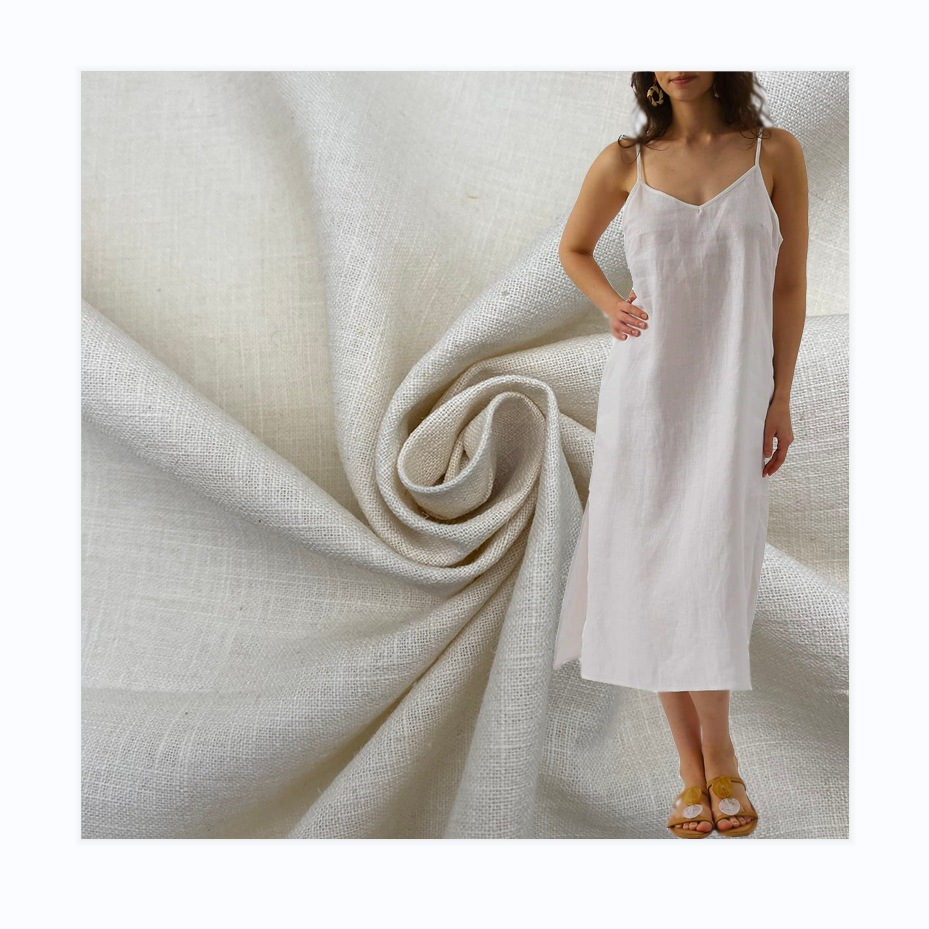
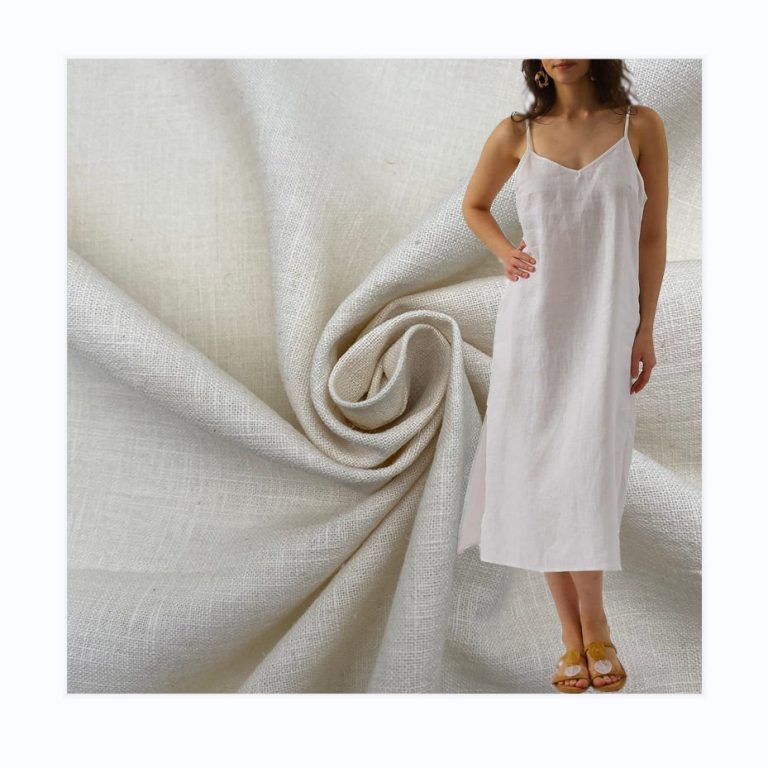
M1038 Linen Cotton Sand Washed Slub Fabric 12S x 12S 195 GSM 140cm – for Trousers, Jackets, Slip Dresses and Shirts
Quote required
Contact us for the latest price and availability.
- Composition
- Linen / cotton blend (composition to confirm)
- Weight
- 195 GSM
- Width
- 55 inches
- Weave
- Plain weave
- Category
- Linen Fabric Wholesale / Linen Solid Color Dyed Fabric / Woven
- MOQ
- Negotiable
Sampling & delivery
Build your sample selection, then download a sourcing brief. Ordering, stock and delivery will be enabled after the store information is confirmed.
FABRIC STORY
Product details
| SHAOXING HENGHUI TEXTILE CO., LTD. | ITEM NO. M1038 LINEN-COTTON · 12S x 12S · 195 GSM · 140 CM |
Sand Washed · 195 GSM
140 CM
12 x 12 YARN
SAND WASHED
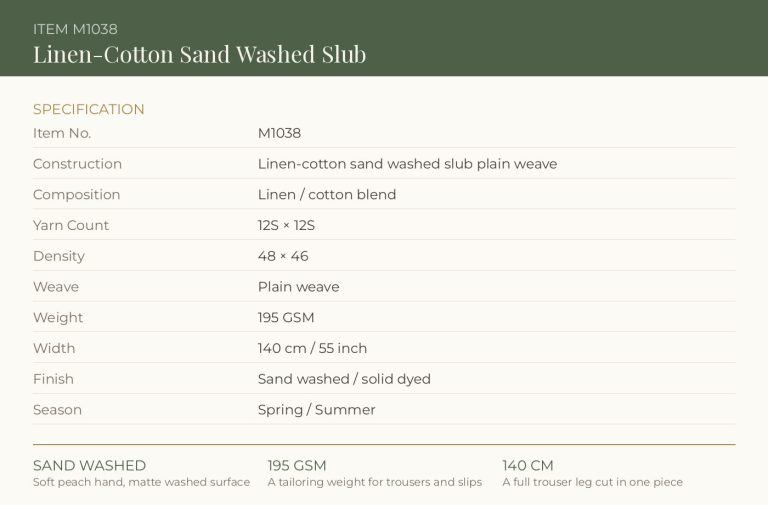
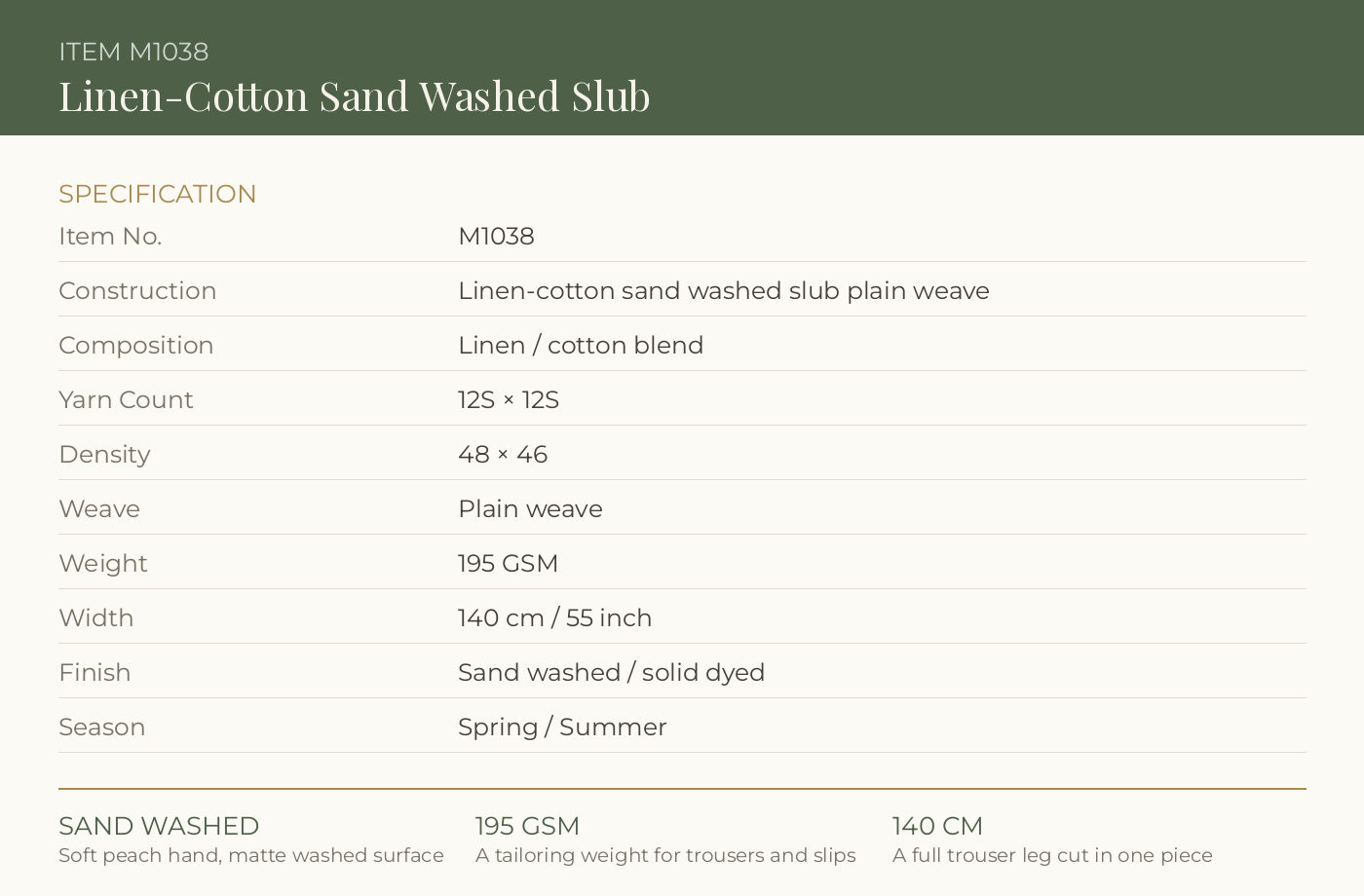
| Specification | Item M1038 |
| Item No. | M1038 |
| Construction | Linen-cotton slub plain weave |
| Composition | Linen / cotton blend |
| Yarn Count | 12S × 12S |
| Density | 48 × 46 |
| Weave | Plain weave |
| Weight | 195 GSM |
| Width | 140 cm / 55 inch |
| Finish | Sand washed / solid dyed |
| Season | Spring / Summer |
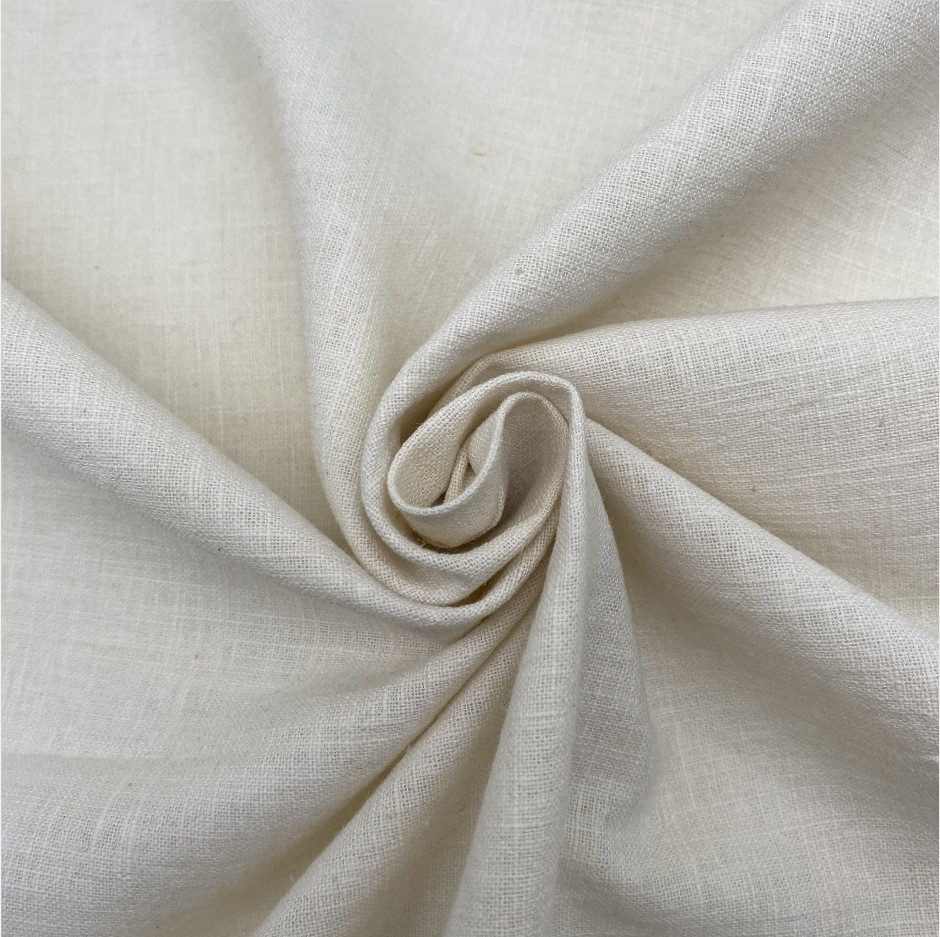
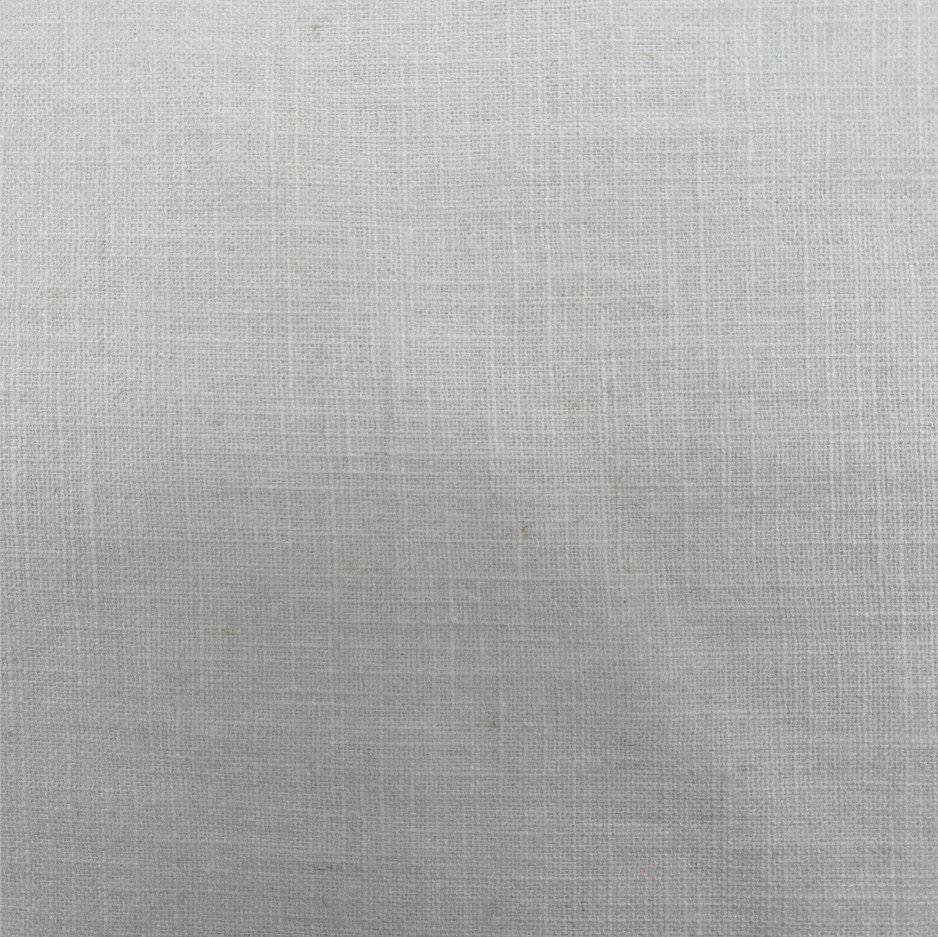
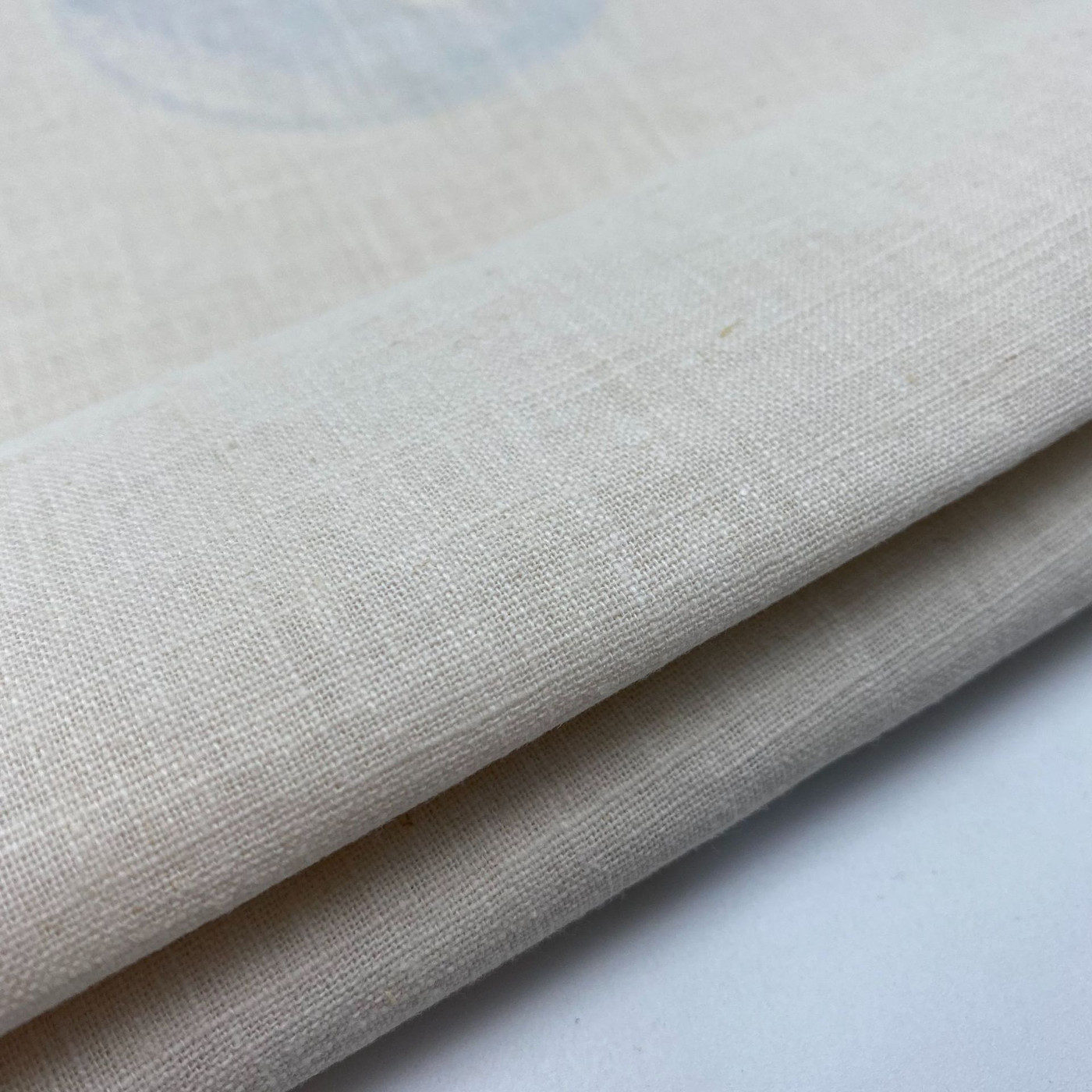
Item M1038 is a linen-cotton slub plain weave at 12s × 12s, sand washed, finished at 195 GSM and 140 cm wide, in solid dyed shades. The sand wash is the point: it is what takes the scratch out of raw flax and gives the cloth a soft, matte, already-washed hand on the first metre instead of the fifth wash.
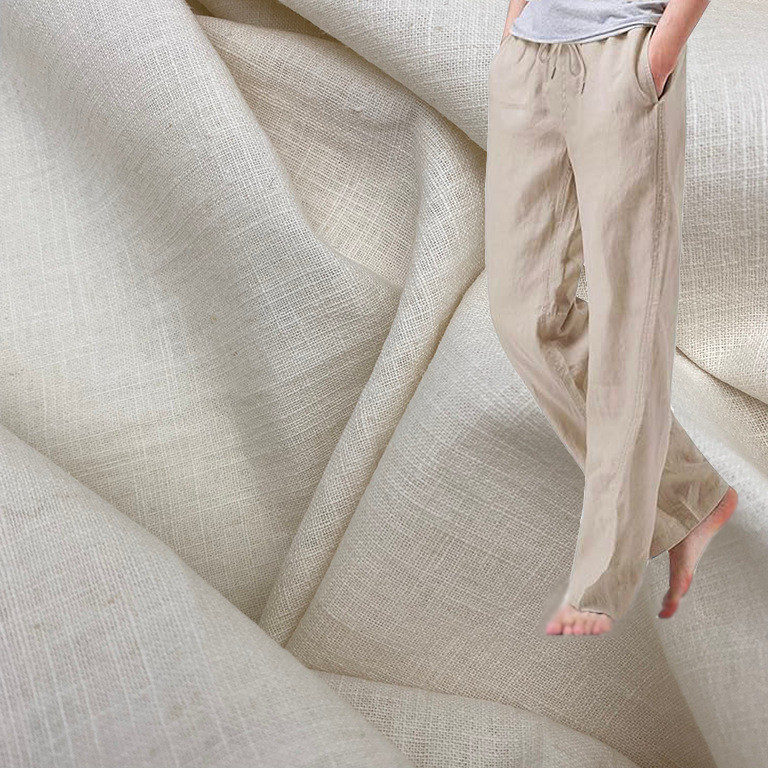
At 195 GSM this is a tailoring cloth, not a shirting cloth — trousers, jackets, slip dresses and shirts. The width takes a full dress panel or trouser leg in one piece, which removes a seam from the most visible place on the garment. One thing to confirm before you order: the flax/cotton ratio is not stated on the supplier listing, so we confirm it in writing before bulk rather than guess it.
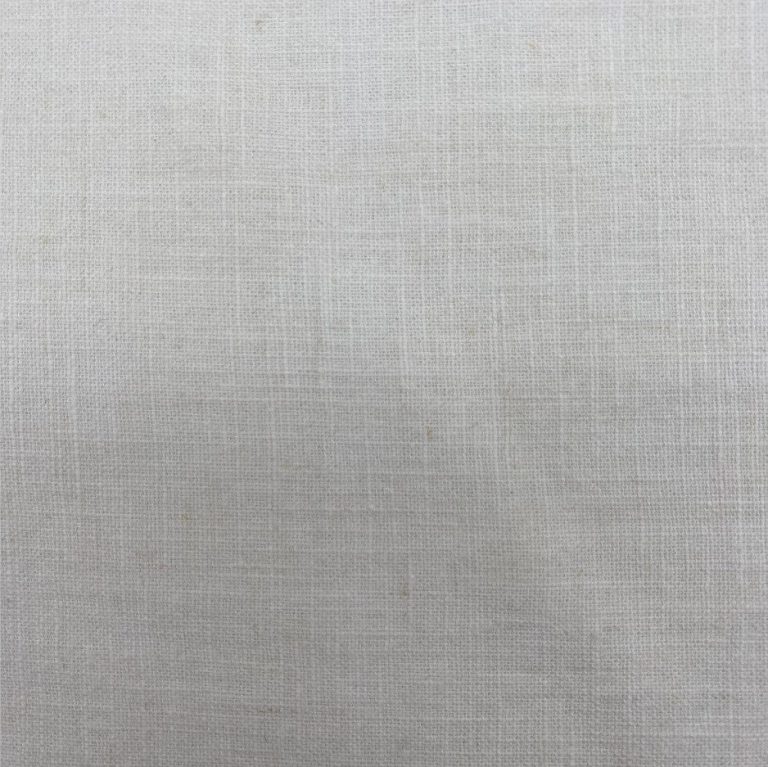
Where this weight sits. At 195 GSM this is the bottom of the heavy band and the top of the middle band — light enough for summer, heavy enough to hold a line. The honest trade-offs of a sand-washed cloth are that the abraded nap can rub off with long wear, the raised surface traps dirt more easily than a smooth finish, and the nap must never be ironed hot. We set those out in full below.
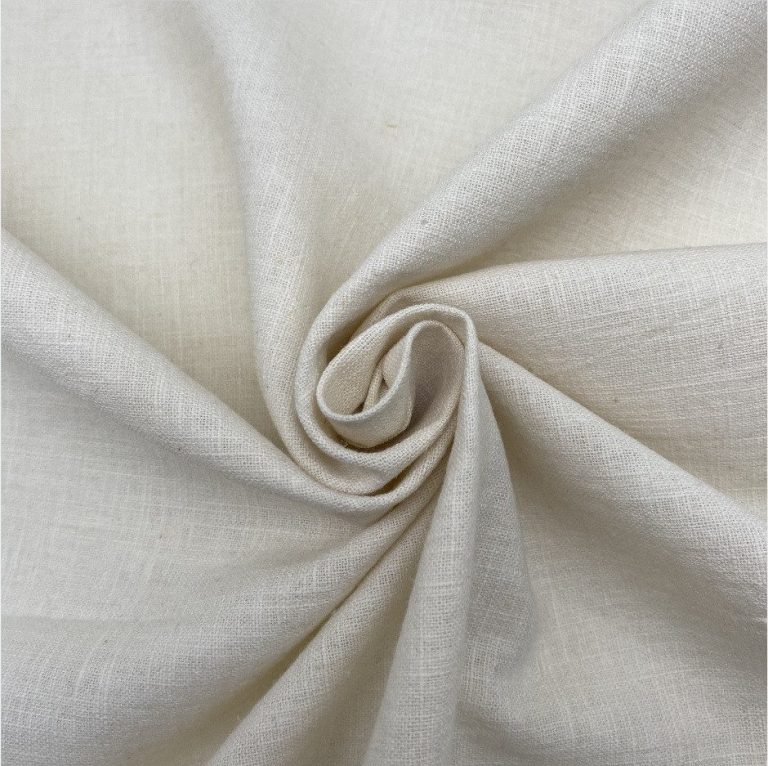
Raw flax is stiff, and the usual way to fix that is to wash the garment a few times. Sand washing does it in the factory instead. The cloth goes into an industrial washer with an expanding agent that swells and loosens the fibre, then with sand that abrades the surface, then with a softener that leaves a short, even nap.
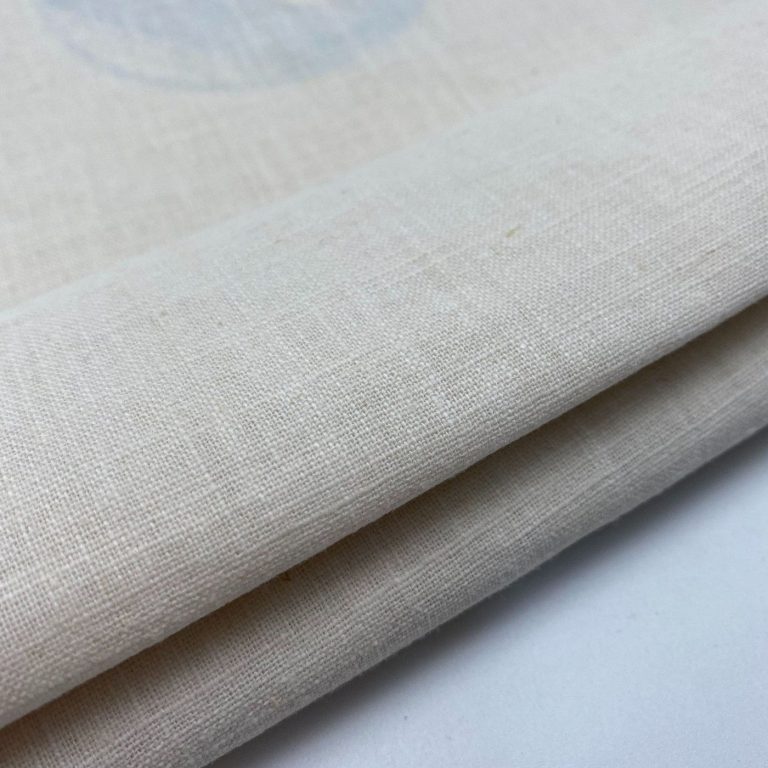
What that buys you is a cloth that feels like a peach skin rather than paper from the first metre — around 30% more comfortable against the skin than greige — and a matte, faded surface that reads as washed and vintage rather than new and stiff. That short nap also improves moisture management by around 20% and measurably improves crease resistance. Roughest yarns and the lowest-twist constructions sand-wash best, which is why this 12s count suits the process.
This is a linen-cotton blend on a 12s × 12s yarn, at 195 GSM and 140 cm wide. The cotton share does something flax cannot: it adds recovery. Pure linen has only about 35% immediate elasticity, so it creases hard and stays creased; cotton lifts that, and the abraded surface flexes more readily again.
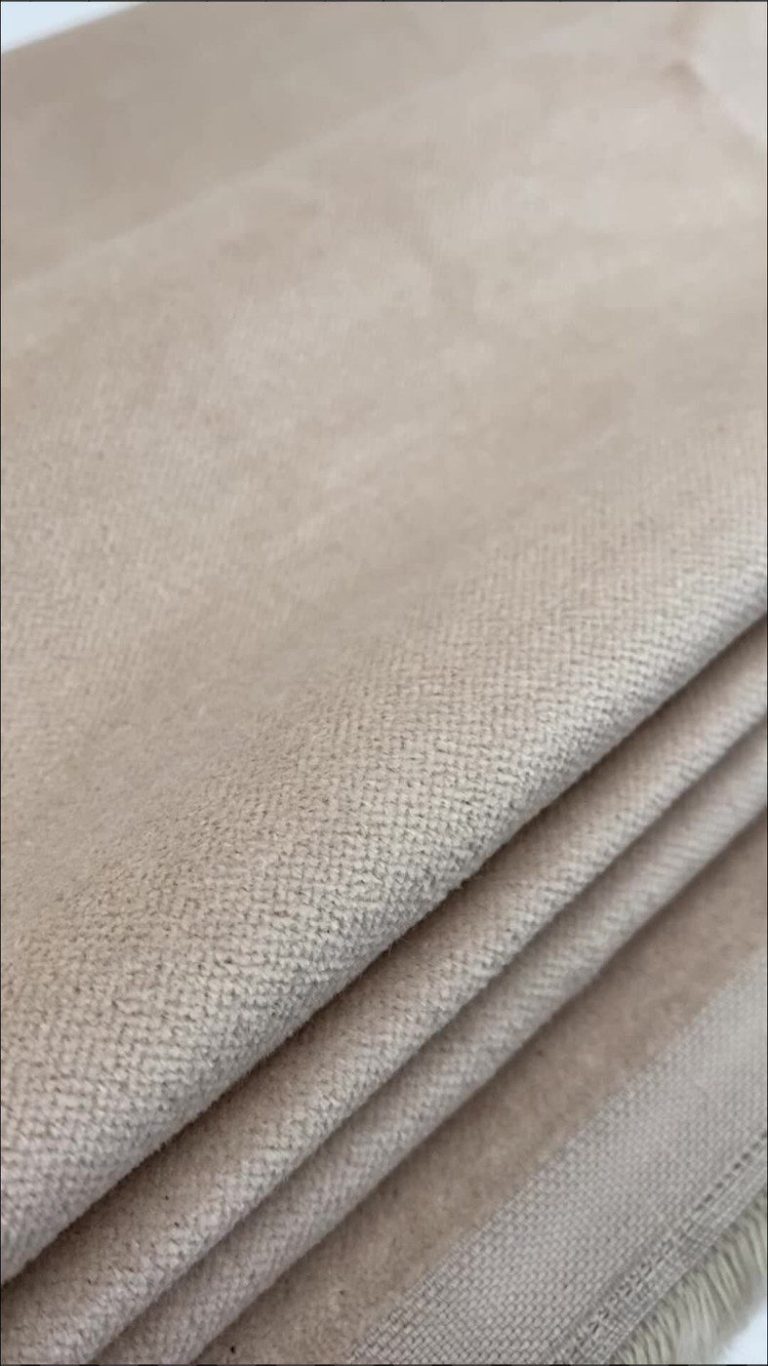
The flax still does what flax does — it moves heat away from the skin faster than cotton and absorbs moisture without holding it against the body. The result is a cloth that handles like a washed linen but wears like a cotton, which is why this construction has become the workhorse of relaxed tailoring. At 195 GSM and 140 cm it is trouser, jacket and slip-dress territory, not shirting. The flax/cotton ratio is not stated on the supplier listing — we confirm it in writing before bulk rather than guess it.
Three things it genuinely improves. It softens the cloth and removes the scratch of raw flax. It reduces first-wash shrinkage and makes the dimensions more stable. And it gives a matte, slightly faded surface that reads as washed and vintage rather than new and stiff.
One thing it does not do is make the cloth stronger. Sand washing is an abrasive process, and the short nap it creates can rub off with long wear; the raised surface also traps dirt more easily than a smooth finish, which matters if you are buying a pale color. Sand washing costs 15 to 20% more than ordinary finishing, and that is reflected in the price. Finally, never iron it hot — heat flattens the nap and it does not come back. Wash it cool, dry it in the shade, and the surface stays soft for the life of the garment.
The 1688 factory lists this construction for trousers, jackets, slip dresses, dresses, casualwear and fashion, and the 195 GSM weight and 140 cm width put it squarely in the tailoring half of the range. This is not a summer shirting cloth and not a furnishing cloth.
This is the weight at which a trouser hangs clean. The sand-washed surface flexes rather than creases sharply, and the cotton share adds the recovery that pure flax lacks — so a wide leg stays clean through a day rather than folding at the knee.
At 140 cm a full dress panel cuts in one piece. The sand wash gives the soft peach hand that lets the cloth sit against skin without the scratch of raw flax — which is why this construction keeps appearing in slip-dress and relaxed dress programmes.
At 195 GSM the cloth has enough body to stand as an unlined jacket or overshirt, and the sand-washed matte finish reads as deliberately relaxed tailoring rather than a formal suit cloth. One honest boundary: it is a soft, fluid jacket, not a structured one.
It works as a shirt, but at 195 GSM you are getting a heavy shirt — the kind that stands away from the body and holds its shape through the day. If you want a light summer shirt, this is not the weight; ask us for the 135 GSM pure linen instead.
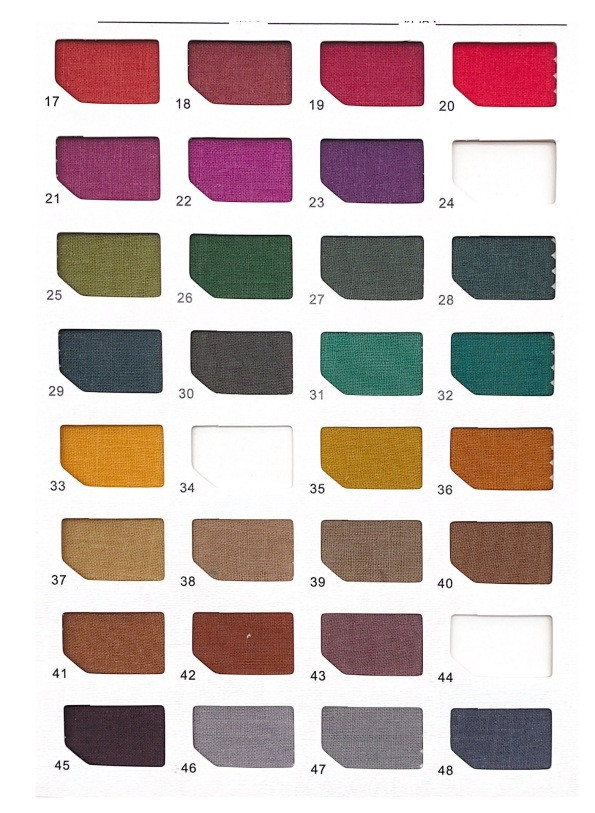
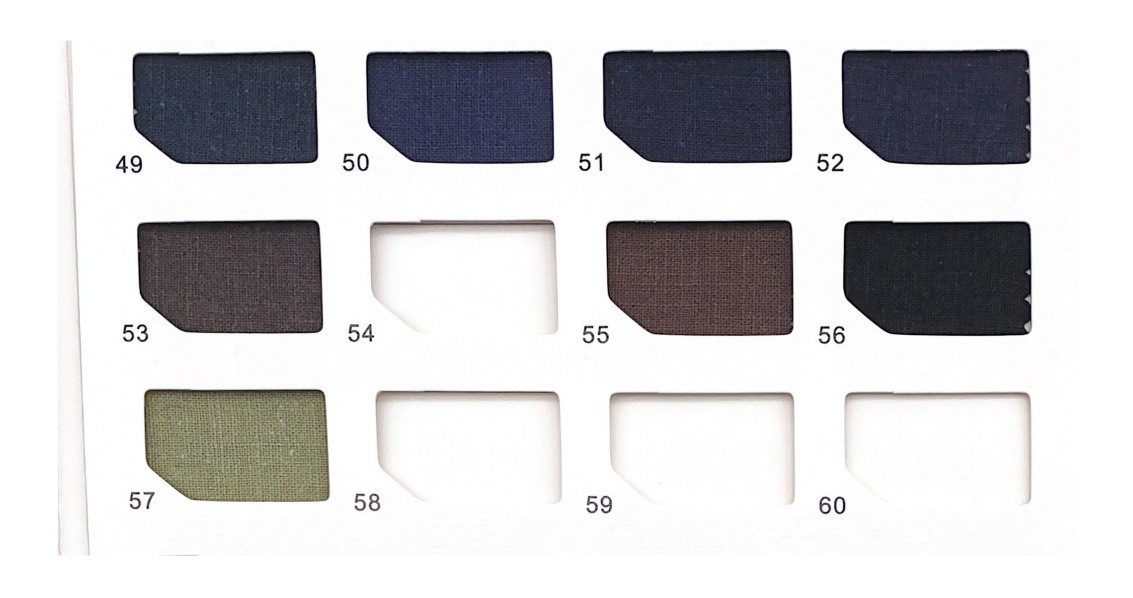
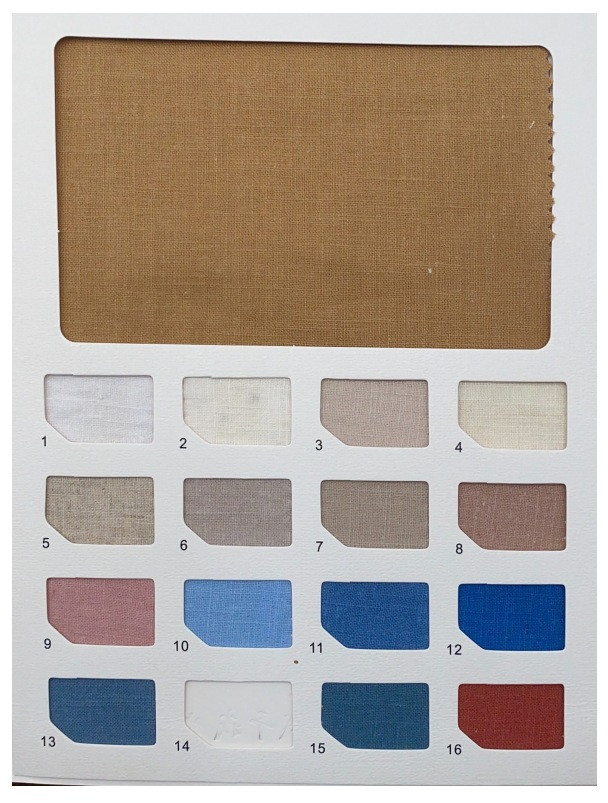
A full color card is held for this construction — 84 shades running from naturals, whites and creams through pastels, mid tones, olives, terracottas, deep blues and reds. Sand-washed cloth takes dye unevenly across the abraded surface, so each shade carries a soft washed variation rather than a flat tone. Custom dyeing to Pantone TCX is available for development orders.
Hand samples and cutting samples are supplied before bulk, either from stock greige or from a lab dip matched to your shade. For a sand-washed cloth we strongly recommend approving the sample washed — the nap develops and softens across the first few washes, so greige is not the hand your customer receives. Ask for the washed pair alongside the greige.
Development runs around three points: the yarn count and density, the shade matched to Pantone TCX, and the weight confirmed against the end use. This construction is also available in digital print, so we support print development from your own design files. Full-width greige and finished samples, small trial orders and custom development are supported for new customers.
| Service | Detail |
| Sampling | Hand sample and cutting sample before bulk |
| Lab dip | 3–5 shades against Pantone TCX or our own library |
| Greige | Full-width greige available on request |
| Finish | Sand washing parameters adjustable on request |
| Composition | Flax/cotton ratio confirmed in writing before bulk |
| Digital print development from your design files | |
| Stock range | 84 shades held on one full color card |
| MOQ | Negotiable |
FABRIC ENQUIRY
Ask about this fabric
Share your requirements and our team will reply within 24 hours.