FAB-972699659
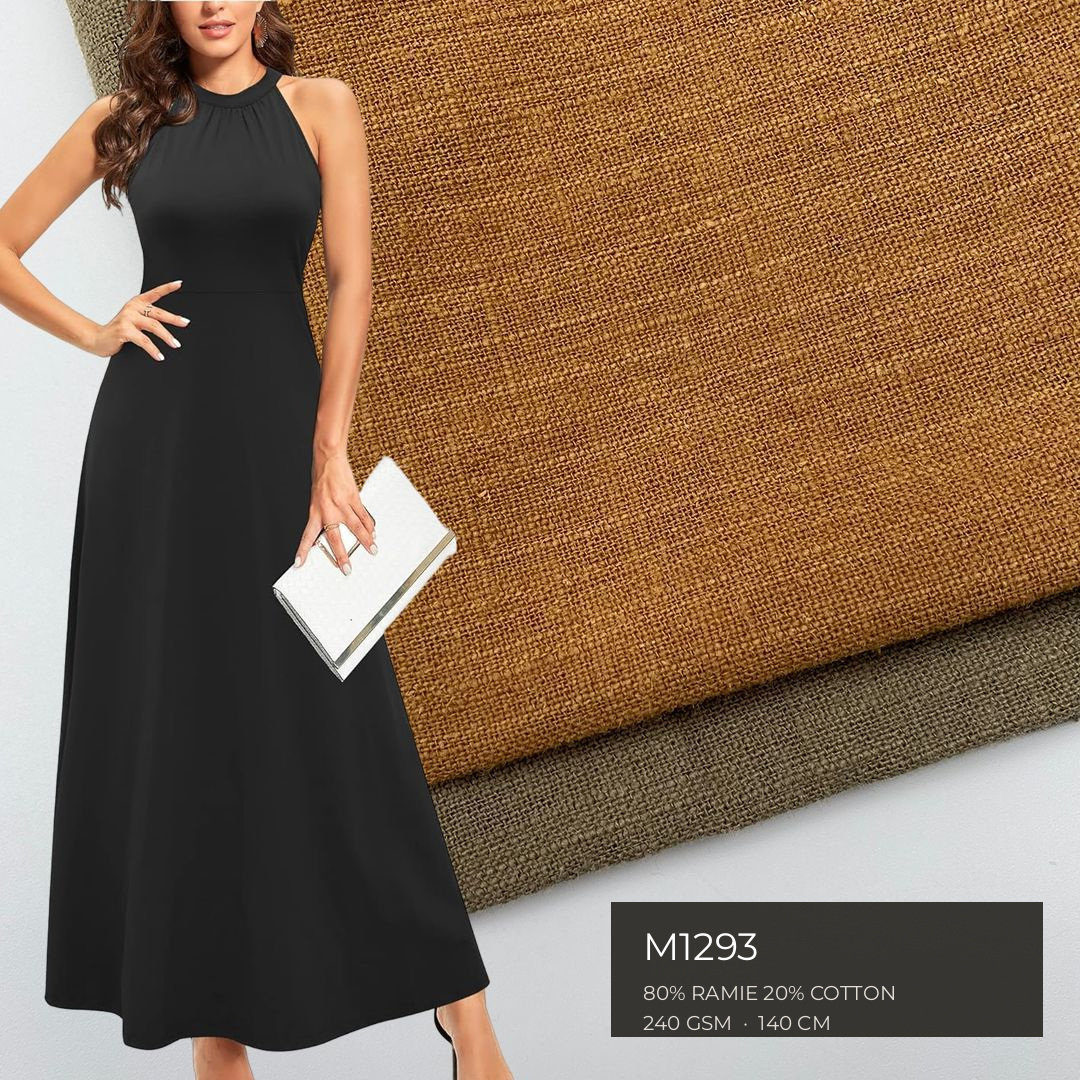
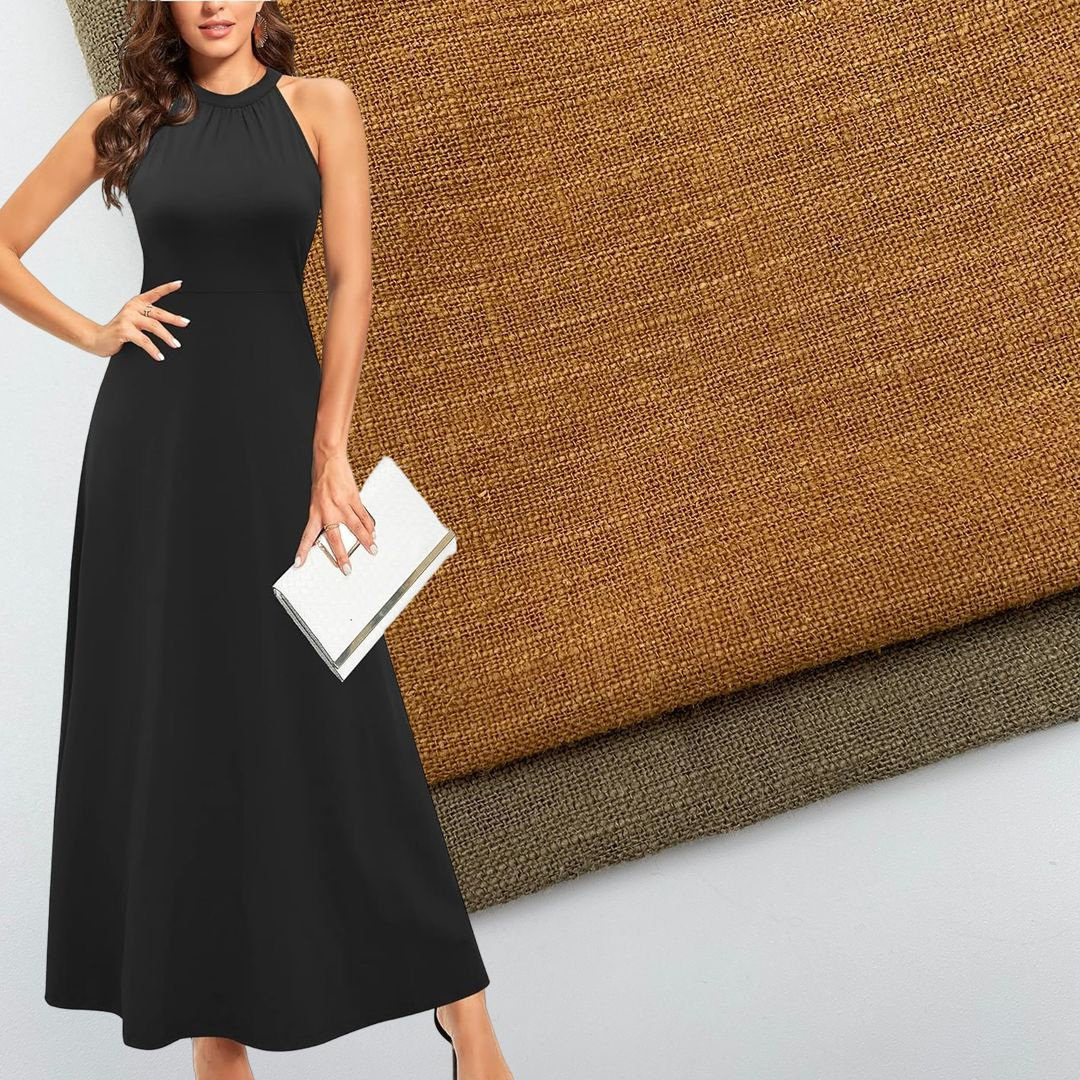
M1293 80% Ramie 20% Cotton Heavy Fabric 8S 240 GSM 140cm Width – for Trousers, Jackets and Suits
Quote required
Contact us for the latest price and availability.
- Composition
- 80% Ramie 20% Cotton
- Weight
- 240 GSM
- Width
- 55 inches
- Weave
- TBC
- Category
- Linen Fabric Wholesale / Linen Solid Color Dyed Fabric / Woven
- MOQ
- Negotiable
Sampling & delivery
Build your sample selection, then download a sourcing brief. Ordering, stock and delivery will be enabled after the store information is confirmed.
FABRIC STORY
Product details
| SHAOXING HENGHUI TEXTILE CO., LTD. | ITEM NO. M1293 RAMIE-COTTON · 80% RAMIE 20% COTTON · 8S · 240 GSM |
Heavy Ramie Cotton Fabric 8S
140 CM
8S YARN
80% RAMIE / 20% COTTON
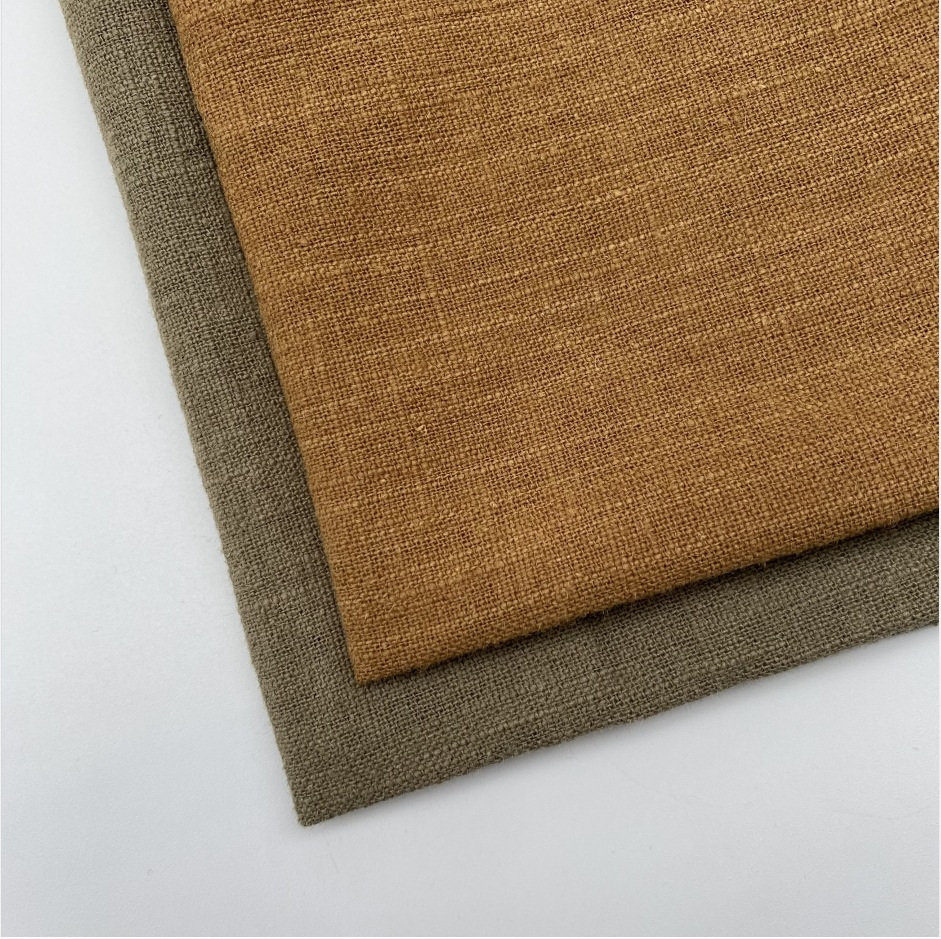
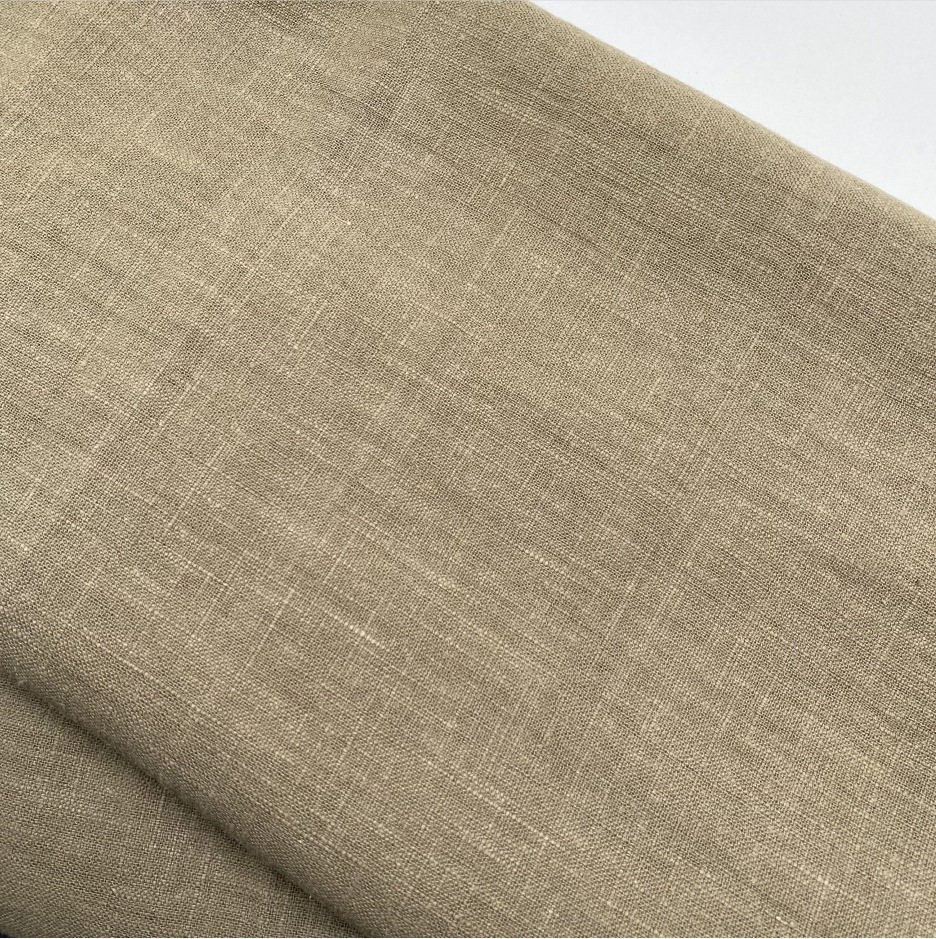
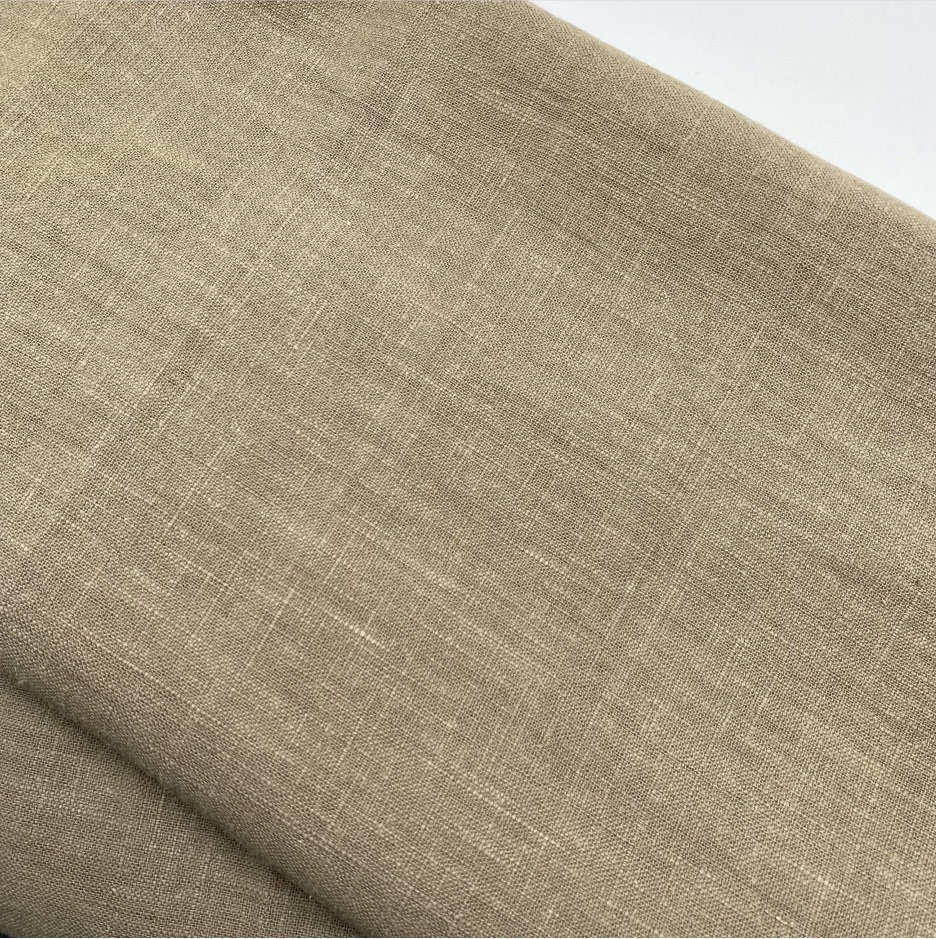
Item M1293 is a woven 80% ramie / 20% cotton heavy fabric — the 8s ramie-cotton sand-washed construction, spun at 8s × 8s in a 46 × 36 density, finished at 240 GSM and 140 cm wide. At this weight it is outerweight cloth: the kind of construction that holds a wide-leg trouser away from the leg and keeps an unlined jacket from collapsing at the seam. The visible cross-hatch texture of the ramie slub is the point of the fabric, not a by-product of it.
The ramie content does the structural work. Ramie is the stronger of the two bast fibres — in the trade it is regularly described as stronger than flax and considerably stronger than cotton — and it is also the fibre that does not shrink. At 240 GSM that is not a small point: a heavy natural cloth is a production commitment, and a fibre that holds its dimensions through washing removes one of the biggest variables in sizing it. The cotton is there to make the weight wearable — it softens the ramie to the touch, absorbs better, and gives the yarn system enough elasticity to soften a fold, which is why a ramie-cotton blend creases less than a comparable pure linen.
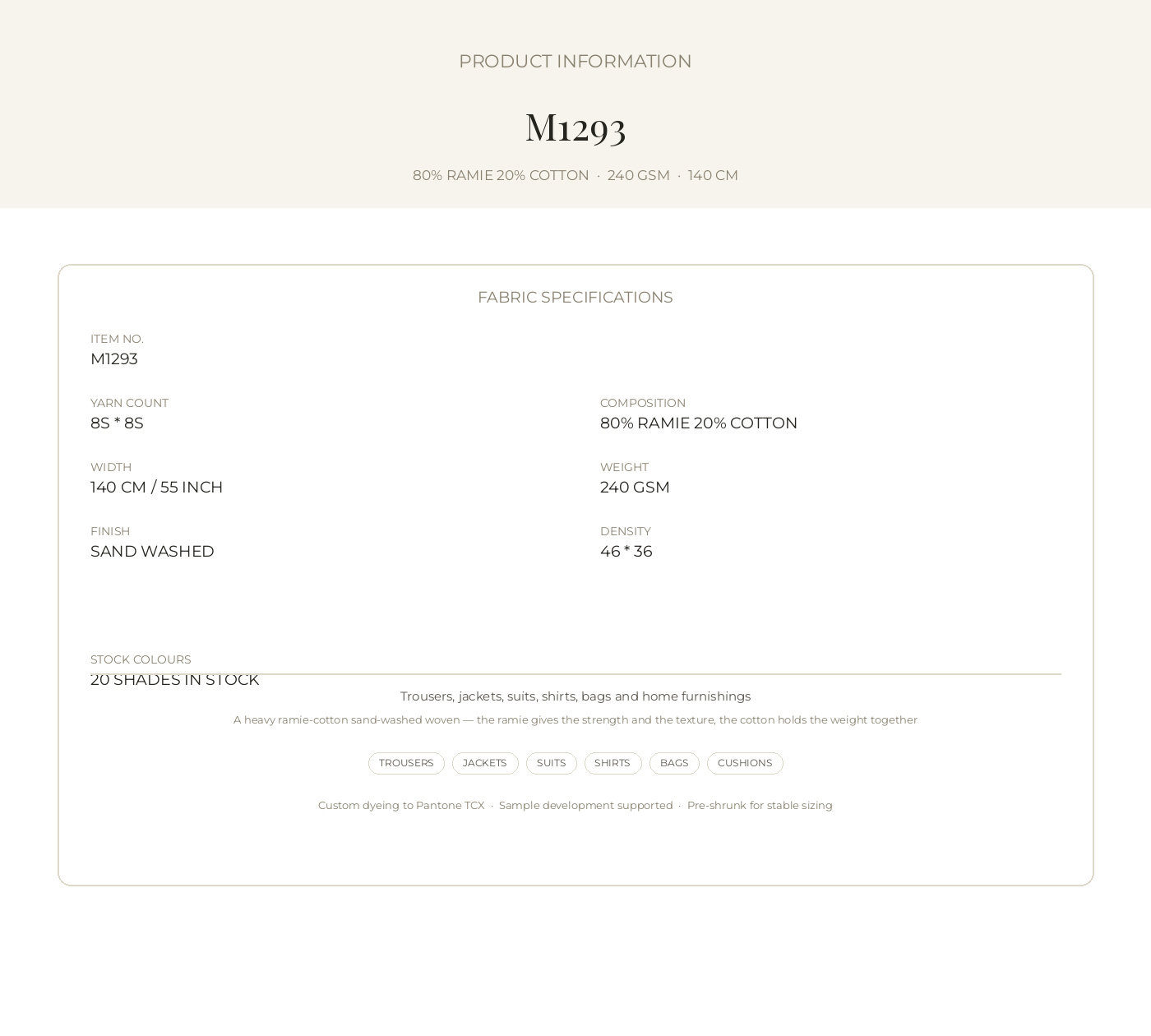
| Specification | Item M1293 |
| Item No. | M1293 |
| Composition | 80% Ramie, 20% Cotton |
| Yarn Count | 8S × 8S |
| Density | 46 × 36 |
| Weight | 240 GSM |
| Width | 140 cm / 55 inch |
| Finish | Sand washed |
| Season | Spring / Summer |
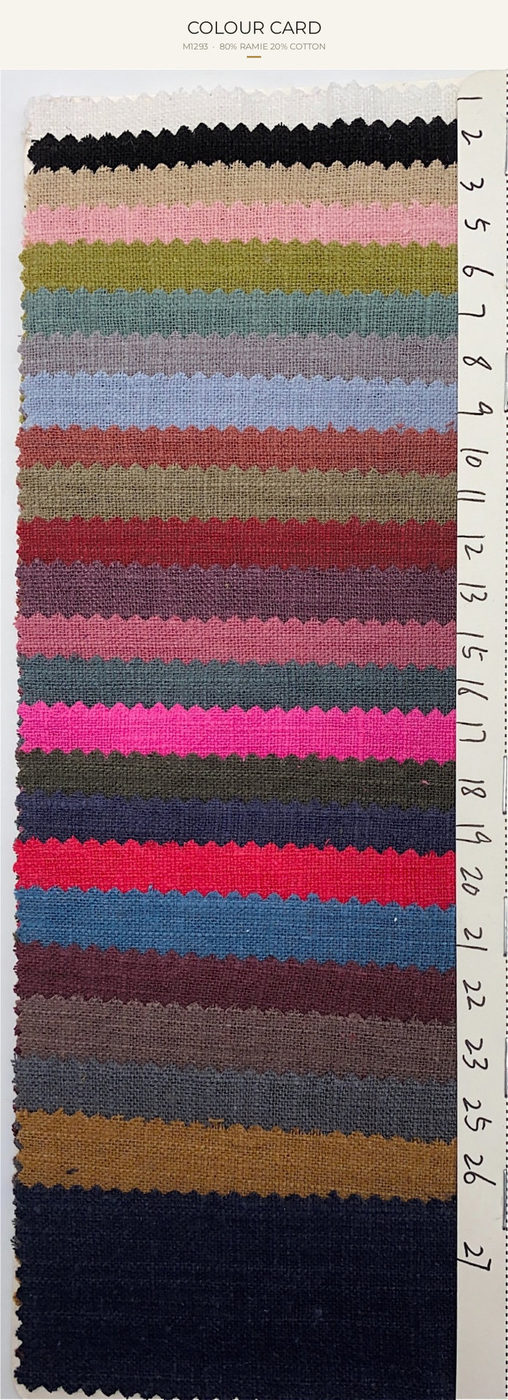
| Stock Colors | 20 shades in stock |
Five properties decide how this cloth behaves in wear. Together they are the reason a ramie-cotton blend is specified instead of a pure fibre or a cheaper look-alike.
Where this weight sits. At the heavy end of the range. There is enough body here to hold a line in a trouser or an unlined jacket, and enough weight for the cloth to hang rather than cling. That makes it the natural choice for trousers, jackets, structured dresses and tailoring — and the honest trade-off is that at 240 GSM it is a suiting and outerweight cloth, not a summer shirting, and the coarse yarn means it is not a layering fabric.
Ramie is the stronger of the two bast fibres — in the trade it is regularly described as stronger than flax and considerably stronger than cotton — and the practical advantage in a blend is that it also does not shrink. That matters at this weight: a 240 GSM cloth is a production commitment, and a fibre that holds its dimensions through washing removes one of the biggest variables in sizing a heavy natural fabric.
The slubs in the ramie yarn give the weave a distinctive cross-hatch texture, and at 8s that cross-hatch is a good deal more visible than in a fine shirting yarn. This is the surface that makes the fabric read as a considered choice rather than a basic — it looks deliberate from across the room, and the sand-wash has softened the fibre without sanding that character away.
At 240 GSM this is outerweight. It is the weight that holds a wide-leg trouser away from the leg, keeps an unlined jacket from collapsing at the seam, and gives a bag or a cushion cover the body it needs. It is not a summer shirting and it is not a layering fabric — it is the construction a brand reaches for when the garment needs to stand on its own.
Clothes made from ramie-cotton blends are more resistant to creasing than linen, which is a practical advantage for a heavy cloth that will be carried and packed. The cotton content gives the yarn system enough elasticity to soften a fold, and at this weight that difference is visible after a day of wear rather than theoretical.
Despite the weight, the ramie half keeps the cloth breathable: it is resistant to bacteria and fungi, slightly stiff in the hand rather than limp, and it moves air through the weave. Blended with cotton it also becomes softer to the touch than pure ramie and absorbs better, so the cloth can be worn against the skin in a lined or unlined garment without the papery feeling that heavy natural fabrics sometimes have.
At 240 GSM and 140 cm this is the heavy end of the natural-fabric range, and it is worth being clear about which end a buyer is buying. It is not a summer shirting and it is not a layering cloth — it is the construction a brand reaches for when the garment needs to stand on its own.
This is the core use and the reason for the weight. A 240 GSM ramie-cotton holds a wide-leg trouser away from the leg, keeps an unlined jacket from collapsing at the seam and gives a skirt a weight that reads as tailoring rather than as a shift dress. The 140 cm width gives efficient marker making for long panels, and because ramie does not shrink, the size approved on a washed sample is the size that ships.
The visible slub and the sand-washed surface are what make this work as a shirt rather than only as a trouser cloth. An 8s yarn reads as deliberate texture — closer to a heavy linen overshirt or a utility shirt than to a dress shirt — and it takes a casual shape well without looking unfinished. The cross-hatch surface also hides the marks that show on a smooth face.
The same properties that make the cloth hold a shape on the body make it useful off the body: bags and totes that keep their form, cushion covers with body, table cloth and runners, and curtain and blind cloth that hangs heavily enough to fall straight. At this weight it is upholstery-adjacent rather than true upholstery.
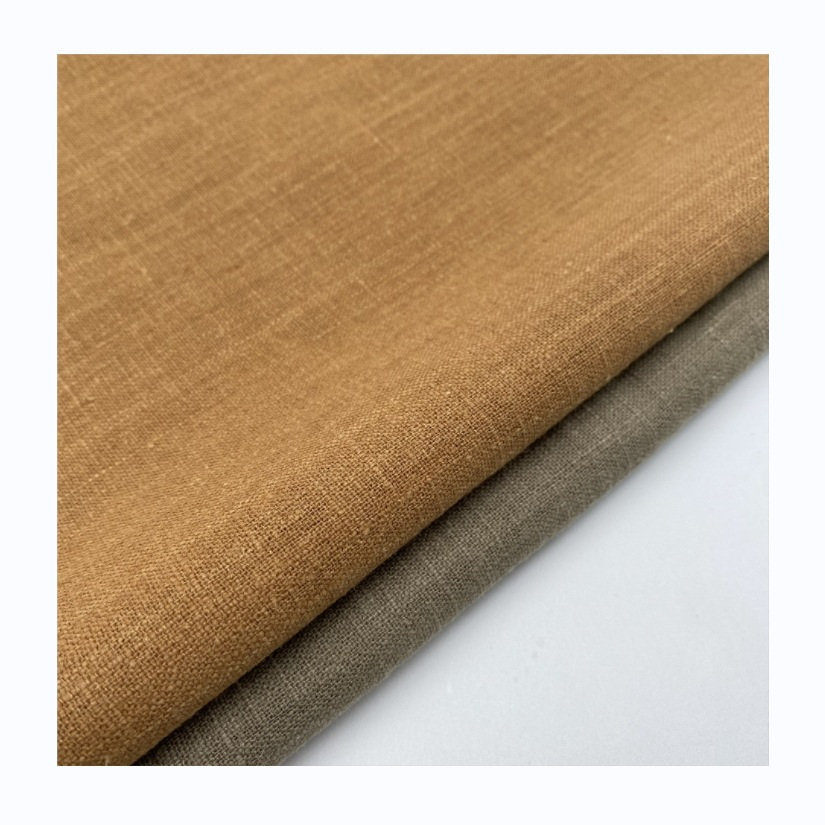
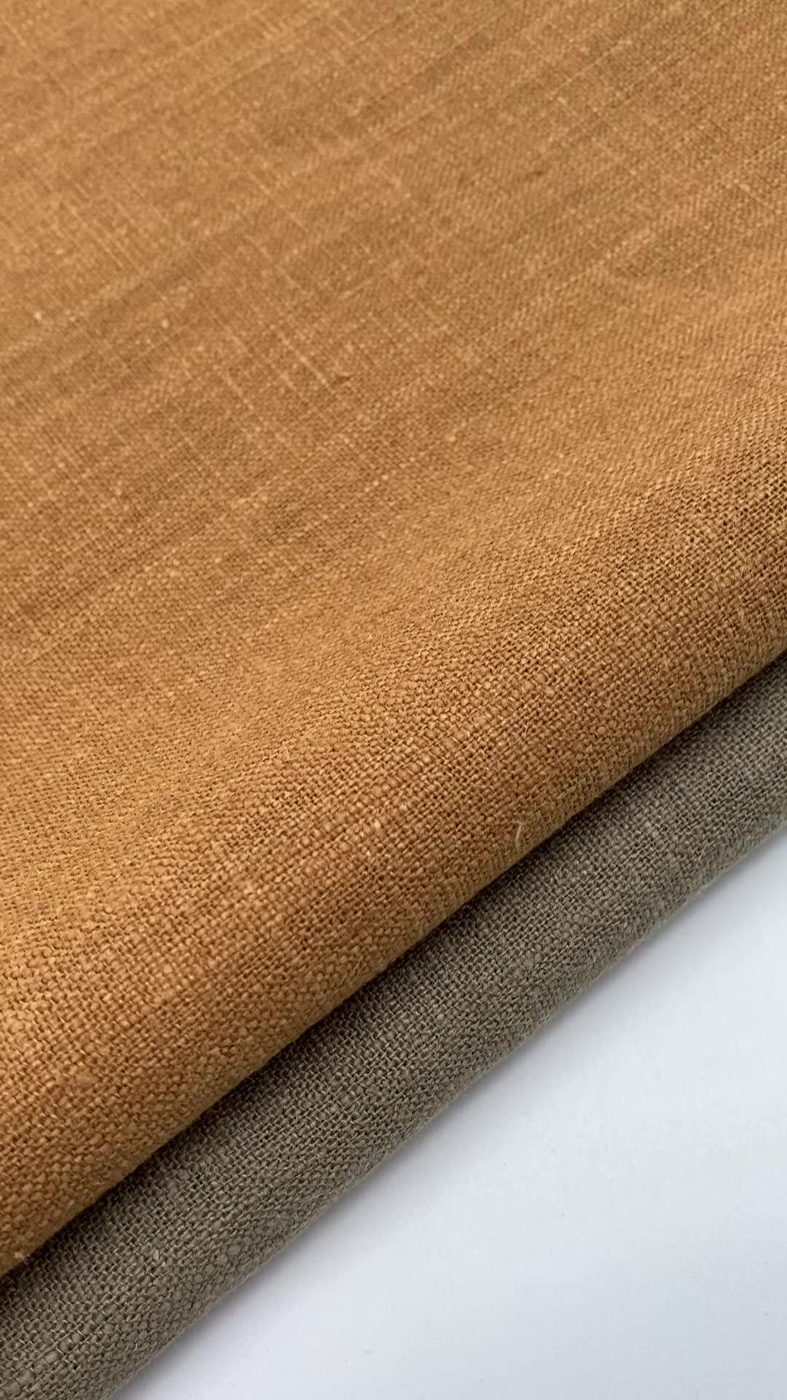
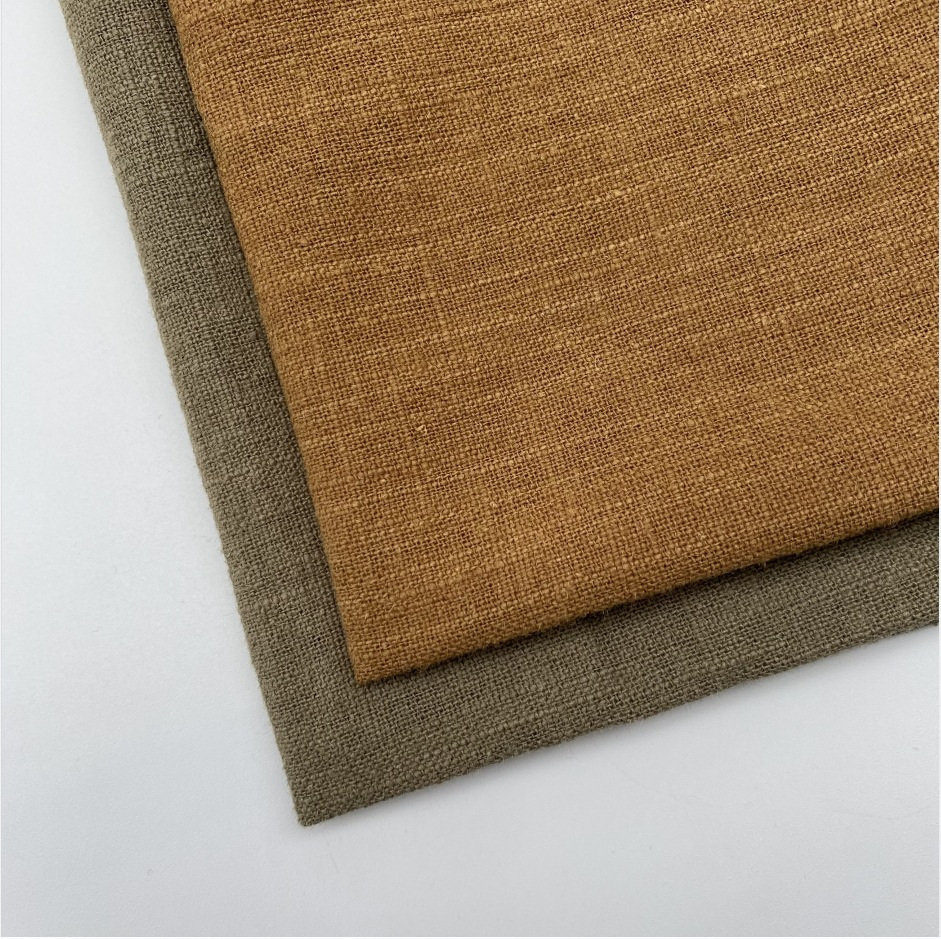
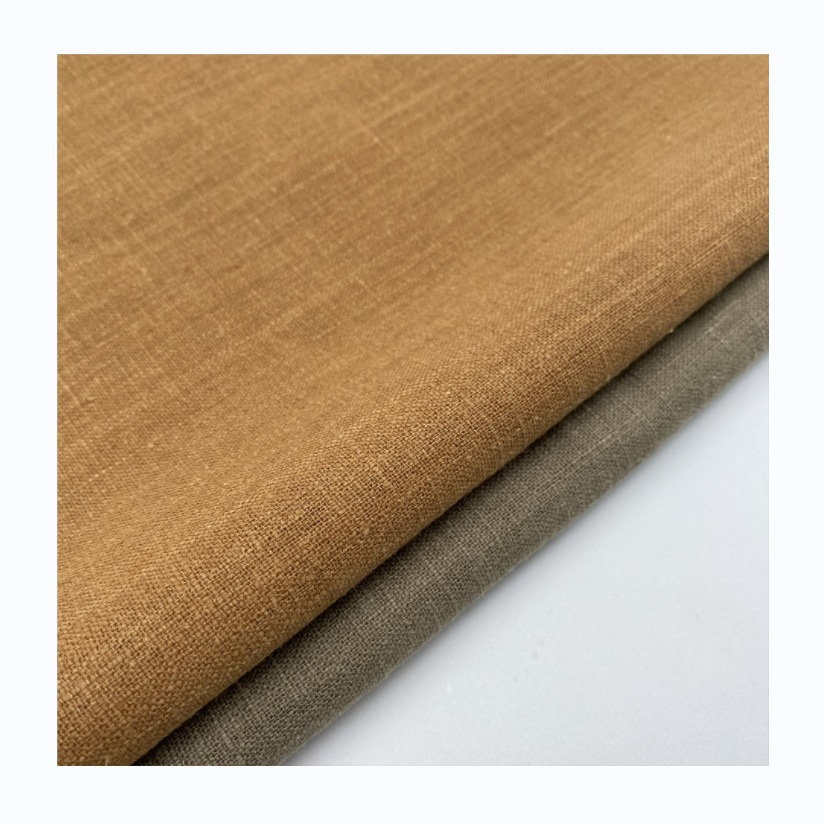
20 stock shades are held for immediate dispatch, covering naturals, olives, caramels and deeper tones. Custom solid dyeing to Pantone TCX is available for development orders.
Hand samples and cutting samples are supplied before bulk production, either from stock greige or from a lab dip matched to your shade. At 240 GSM the sample has to be handled as the real thing — a cloth this heavy behaves differently in the hand than a standard swatch allows, and the drape and the fold are part of the specification rather than a fault.
Development runs around three points: the fibre ratio and yarn count, the shade matched to Pantone TCX, and the weight confirmed against the end use. Because a heavy natural cloth is where sizing problems show up first, we confirm shrinkage, the washed hand and the crease behaviour on a washed sample before bulk is scheduled. Full-width greige and finished samples, small trial orders and custom development are supported for new customers.
| Service | Detail |
| Sampling | Hand sample or cutting sample before bulk |
| Lab dip | 3–5 shades against Pantone TCX or our own library |
| Greige | Full-width greige available on request |
| Development | Custom ratio, weight, width, finish and dyeing |
| Stock range | 20 shades held in stock |
| Production | Yongshun Dyeing & Finishing Plant |
| MOQ | Negotiable |
FABRIC ENQUIRY
Ask about this fabric
Share your requirements and our team will reply within 24 hours.