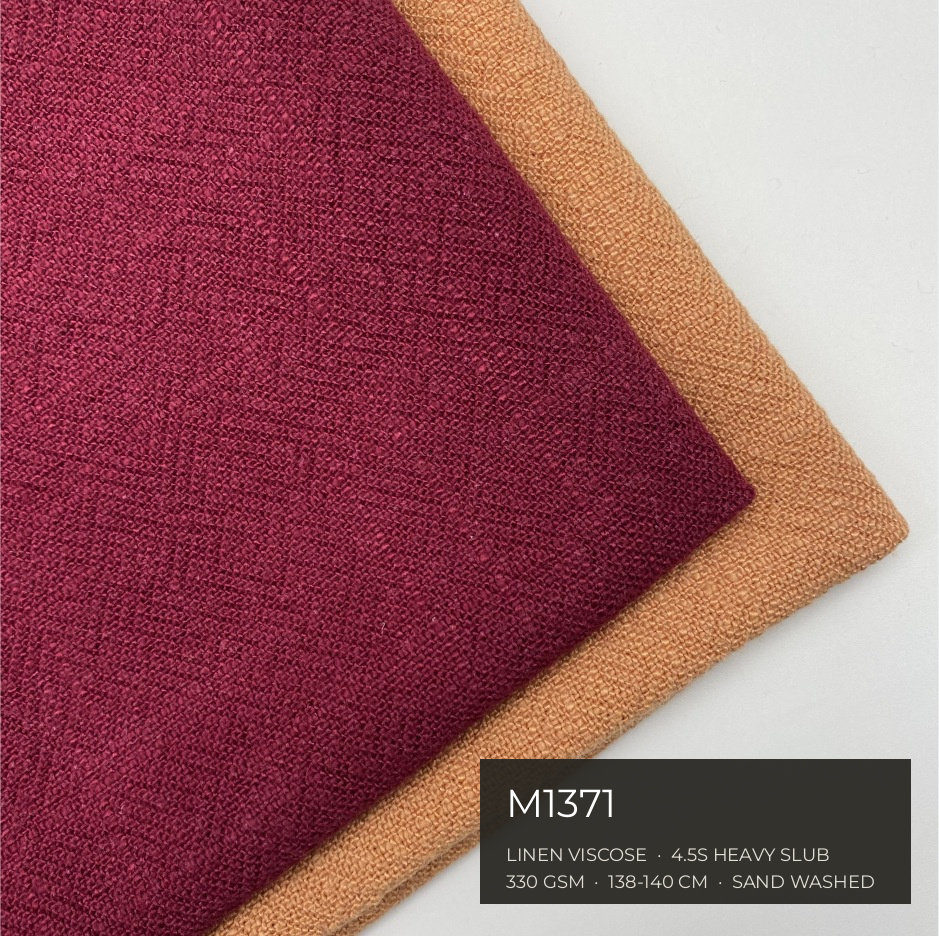
FAB-944976082
M1371 Heavy Slub Linen Viscose Fabric 4.5S 330 GSM 138-140cm Width – for Upholstery, Cushions and Curtains
Quote required
Contact us for the latest price and availability.
- Composition
- Linen Viscose Slub (composition to confirm)
- Weight
- 330 GSM
- Width
- 55 inches
- Weave
- Plain weave
- Category
- Linen Fabric Wholesale / Linen Solid Color Dyed Fabric / Woven
- MOQ
- Negotiable
Sampling & delivery
Build your sample selection, then download a sourcing brief. Ordering, stock and delivery will be enabled after the store information is confirmed.
FABRIC STORY
Product details
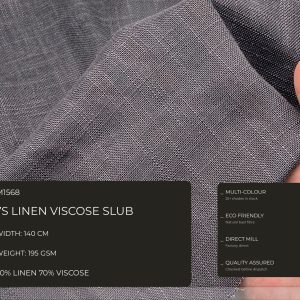
| SHAOXING HENGHUI TEXTILE CO., LTD. | ITEM NO. M1371 HEAVY SLUB · LINEN VISCOSE · 4.5S · 330 GSM |
Linen Viscose Fabric 4.5S
138-140 CM
4.5S YARN
LINEN VISCOSE
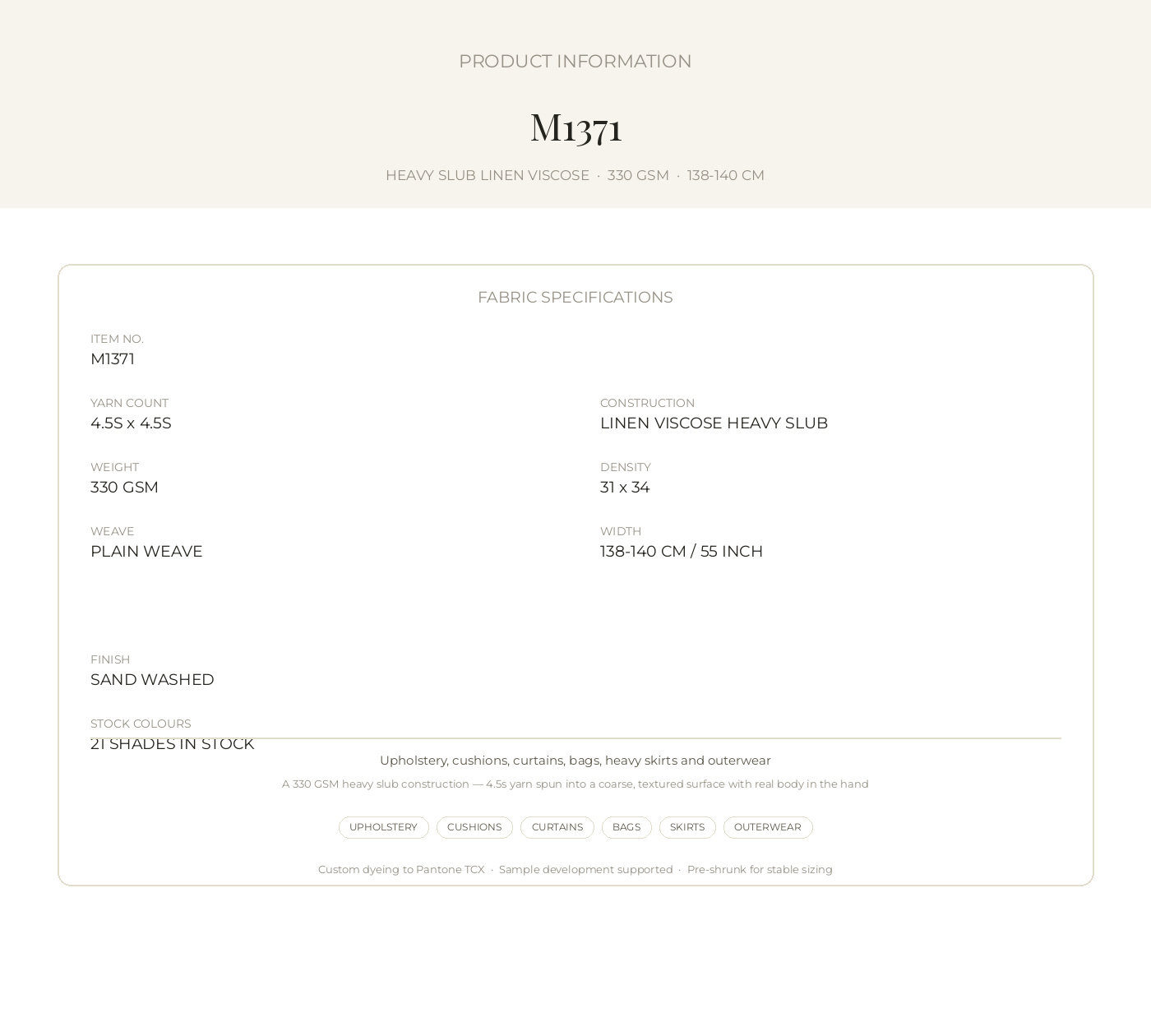
Item M1371 is a heavy slub linen-viscose — the 4.5s × 4.5s plain-weave construction at a 31 × 34 density, finished at 330 GSM and 138–140 cm wide in sand-washed solid shades. Everything about this cloth comes from the yarn count, and 4.5s is the number that matters — roughly four and a half times coarser than the 12s and 14s constructions used for apparel in this range. A yarn that coarse can carry a deliberate slub, and the fabric it produces has a surface that can be read with your fingertips rather than merely seen. This is not a refined apparel cloth and it is not trying to be one; it is a textural cloth, and the texture is the specification.
At 330 GSM this is also the heaviest construction in the range, and it crosses out of clothing altogether into furnishing and craft territory: upholstery, cushion covers, curtain cloth, heavy skirts, structured outerwear, bags and hand-work. That is not a limitation — it is where this cloth is strongest. The slub itself does the designing: because the surface catches light unevenly, a solid color reads deeper and richer than the same shade in a flat weave; because the texture masks light creasing and everyday marks, it works on the pieces that take the most handling; and because the fibre is linen and viscose rather than a pure synthetic, the cloth breathes and takes dye evenly across the whole color range. 21 stock shades run from naturals and creams through mid tones to deeper colors, and the same color story can be carried across an apparel range, a home range and a craft programme.
| Specification | Item M1371 |
| Item No. | M1371 |
| Construction | Heavy slub linen viscose |
| Yarn Count | 4.5S × 4.5S |
| Density | 31 × 34 |
| Weight | 330 GSM |
| Width | 138-140 cm / 55 inch |
| Weave | Plain weave |
| Finish | Sand washed |
| Season | Autumn / Winter |
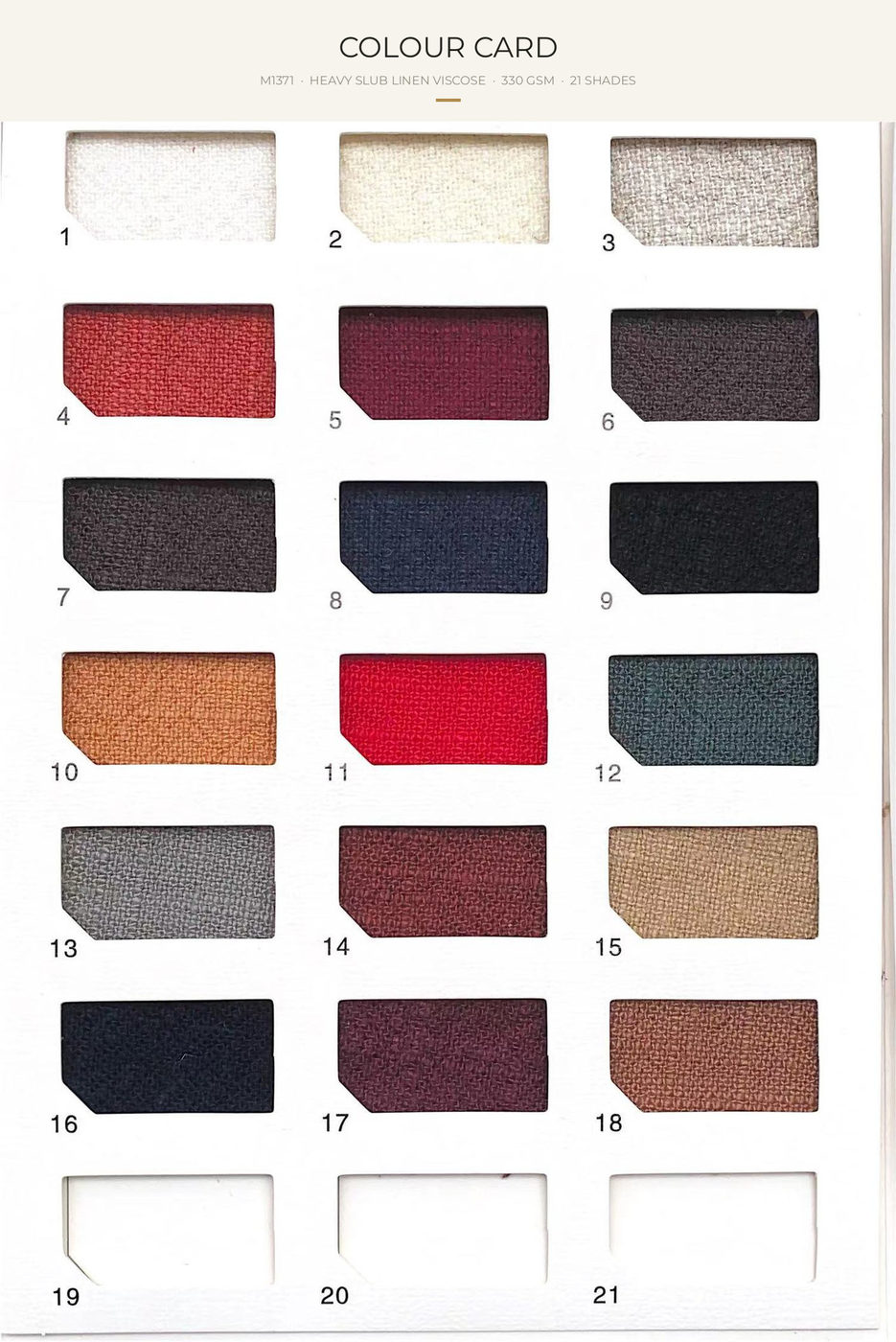
| Stock Colors | 21 shades in stock |
Five properties decide how this cloth behaves. Because the construction is defined by its yarn count and its weight, the useful questions are what the slub does for the buyer, where the fabric belongs, and where the textured construction costs something — stated plainly, because at 330 GSM a buyer is committing real money and real volume to it.
Where this weight sits. At the heavy end of the range. There is enough body here to hold a line in a trouser or an unlined jacket, and enough weight for the cloth to hang rather than cling. That makes it the natural choice for trousers, jackets, structured dresses and tailoring — and the honest trade-off is that slub yarn is measurably weaker at the thick points (tenacity can fall from around 39 to 32 cN/tex), and at 330 GSM it is not a summer garment cloth.
Everything about this fabric comes from one number. At 4.5s — roughly four and a half times coarser than the 12s and 14s constructions used elsewhere in this range — the yarn is thick enough to carry a deliberate slub, and the result is a cloth with a surface you can read with your fingertips rather than merely see. This is not a refined apparel cloth and it is not trying to be one. It is a textural cloth, the kind where the texture is the design, and that is a perfectly legitimate position for a brand building a furnishing or craft programme rather than a summer shirt range.
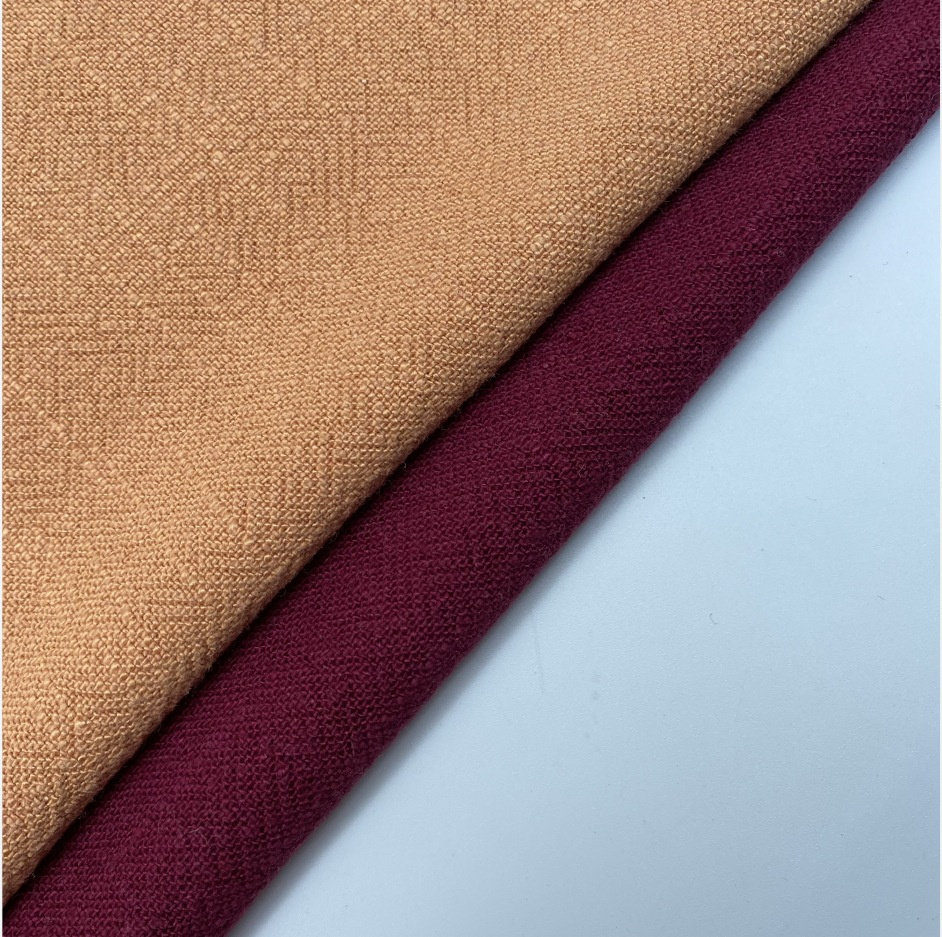
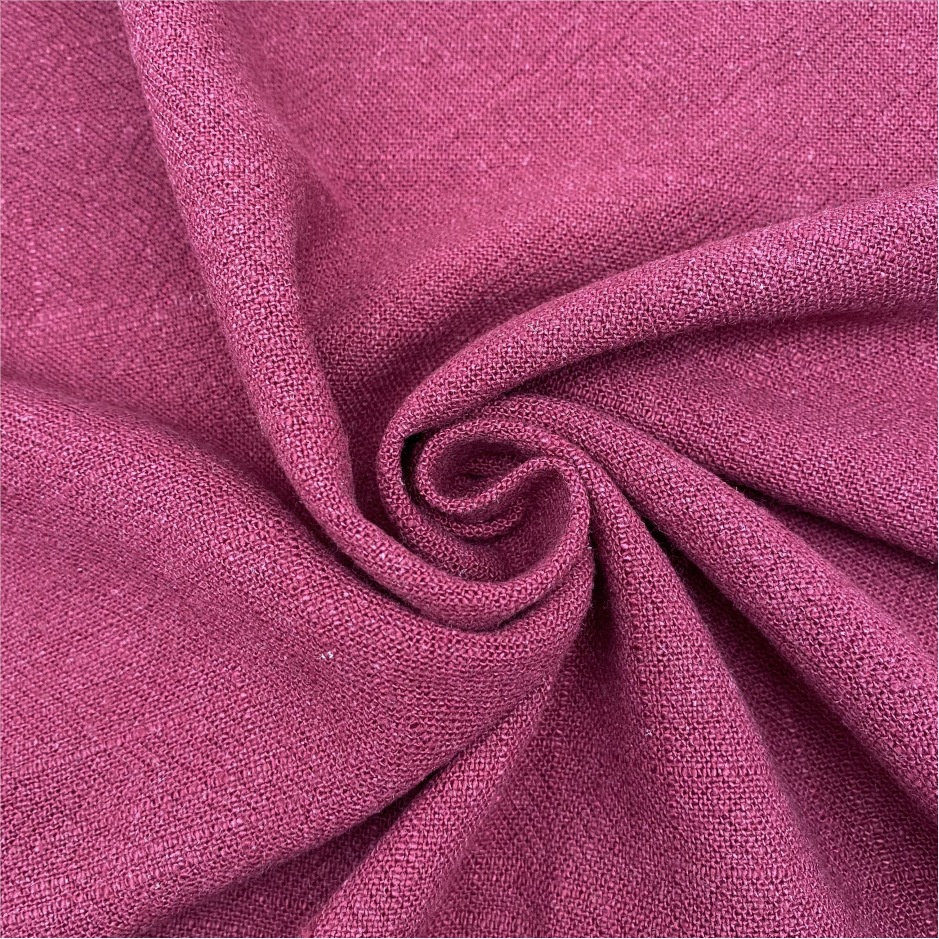
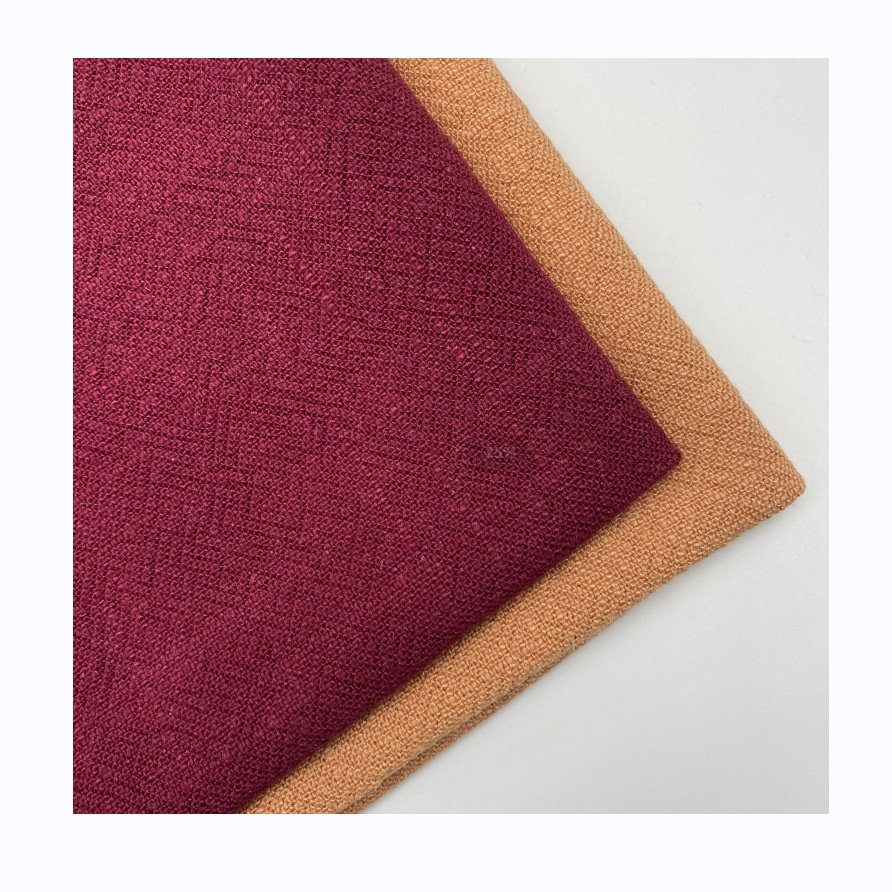
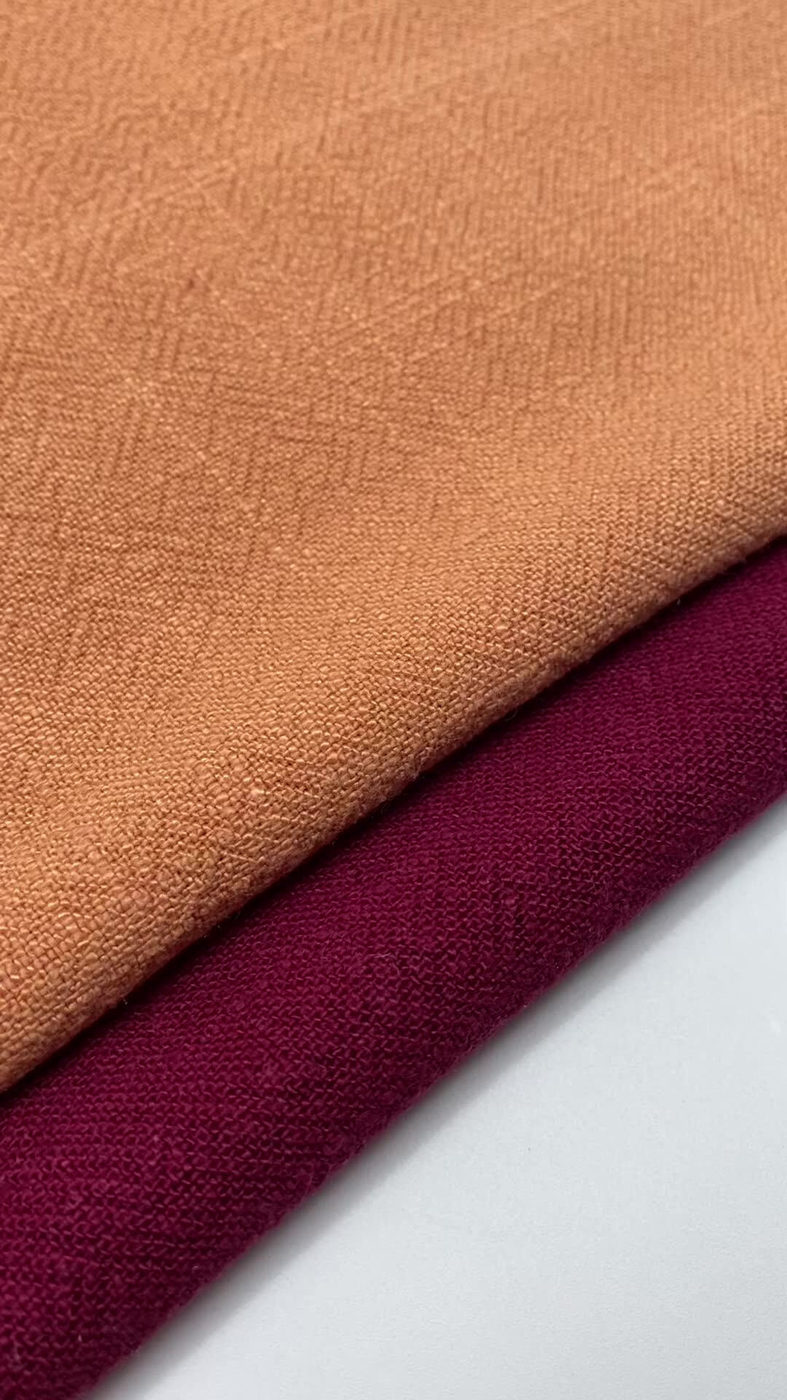
A slub is an intentional thick-and-thin variation along the yarn, produced by servo-controlled rollers in ring spinning — the thickened sections run roughly 1.2 to 1.8 times the base yarn diameter and 1 to 12 cm in length. Three commercial things follow from that. The surface catches light unevenly, so a solid color reads deeper and richer than the same shade in a flat weave. The texture masks light creasing and everyday marks, which matters enormously on a cushion or a sofa. And the cloth photographs with a depth that a smooth fabric of the same weight cannot produce. None of this is a defect being tolerated — it is the effect being bought.
At 330 GSM in a 31 × 34 plain weave this sits at the top of the range, and it crosses out of clothing altogether. It is the weight used for upholstery, cushion covers, curtain cloth, heavy skirts and structured outerwear — anywhere the cloth needs real body and a shape that holds rather than drapes away. The slub actually helps here: the texture adds stiffness, and a slubbed cloth holds a line instead of falling flat, which is exactly what a curtain or a cushion cover needs to look right. This is also why a 4.5s coarse yarn is the classic choice for craft and hand-work — it takes stitching and manipulation better than a fine yarn does.
Two things should be stated plainly. First, a slub is a weak point in the yarn: the thickened sections are less tightly twisted, and tenacity can fall from around 39 cN/tex in a plain yarn to 32 cN/tex or less in a slub variant — a drop of 10 to 20%. That is why a slubbed cloth needs a stable base yarn and balanced construction, and why we would not put this fabric into a high-tension or high-abrasion application without a Martindale or Wyzenbeek check on the specific lot. Second, the viscose content is weaker when wet, so a linen-viscose slub asks for a cold, gentle wash and a line dry rather than hot washing and tumble drying. On a 330 GSM furnishing cloth, professional cleaning or careful hand washing is the sensible route anyway.
The reason a heavy slub linen-viscose earns its place in a range is the breadth it covers with a single specification. The same 330 GSM cloth that becomes a sofa or a cushion cover becomes a heavy skirt, a structured jacket, a curtain, a table runner, a bag panel or the base of a piece of needlework — and it carries the same color story across all of them, which is what makes a collection look designed rather than assembled. The 21 stock shades run from naturals and creams through mid tones to deeper colors, and the viscose content takes dye evenly enough that a solid shade holds its depth across the texture. For a brand that wants to build a home range and an apparel range on the same cloth, that is the practical argument.
At 330 GSM this is the furnishing end of the range, and it is worth being clear about which end a buyer is buying. It is not a summer cloth, it is not a shirting, and it is not a lining. It is the weight you reach for when a piece has to hold its shape on a sofa, on a window, on a heavy bag, or under the needle — and where the surface itself is doing the visual work.
This is the core use and the reason for the weight. At 330 GSM the cloth has the body to stand up as a cushion cover, to hold a pleat in a curtain heading, and to keep a shape on a seat rather than slumping into it. The slub works in the buyer’s favour here in three ways: the uneven surface catches light differently across the piece so a solid color gains depth; it disguises light creasing and pressure marks over time; and it makes everyday spills less visually obvious once cleaned. At 138–140 cm the width also gives efficient cutting for upholstery widths, which is where fabric cost is usually decided.
The same weight and the same texture carry the cloth off the furniture and into the room. A curtain needs body to hang straight rather than cling, and a slubbed weave holds a line instead of falling flat — which is why heavy slub constructions have been the classic choice for curtain cloth for decades. Table runners, placemats and napkins take the texture well too, and the coarse 4.5s yarn takes a printed or embroidered surface with no trouble. For a home programme, this is one specification that covers seating, windows and the table.
Off the body the same construction works for heavy tote and shopper bags where a stiff cloth that holds its shape is the point, and for structured outerwear and heavy skirts where the fabric needs body rather than drape. There is a long tradition behind it as well: a 4.5s coarse yarn is the classic choice for craft and hand-work, because it takes stitching and manipulation better than a fine yarn — the slub gives the needle something to grip. That makes this cloth as useful to a needlework and lifestyle brand as it is to a home brand, and it is worth having one cloth that crosses both.
21 stock shades are held for immediate dispatch, running from naturals and creams through mid tones to deeper colors. The viscose content takes dye evenly across the whole range and holds it against the textured surface, and custom solid dyeing to Pantone TCX is available for development orders — with the note that on a slub construction the shade should be approved on the finished cloth, because the texture changes how a color reads.
Hand samples and cutting samples are supplied before bulk production, either from stock greige or from a lab dip matched to your shade. For a slub construction we strongly recommend judging the sample by touch and by light rather than from a swatch alone — the whole character of the cloth is in the surface, and a small swatch does not show how a slub catches light across a full width. Cut samples are supplied for this reason.
Development runs around three points: the yarn count and density, the shade matched to Pantone TCX, and the weight confirmed against the end use. On a heavy textured construction we also recommend a Martindale or Wyzenbeek abrasion check on the specific lot before it goes into a high-traffic seating application, because a slub is a deliberate thick point in the yarn and the strength at those points is measurably lower than in a plain yarn — a fair test is better than an assumption. We confirm shrinkage and dimensional stability on a washed sample before bulk is scheduled. Full-width greige and finished samples, small trial orders and custom development are supported for new customers.
| Service | Detail |
| Sampling | Hand sample and cutting sample before bulk |
| Lab dip | 3–5 shades against Pantone TCX or our own library |
| Greige | Full-width greige available on request |
| Development | Custom yarn count, density, weight, width and dyeing |
| Testing | Martindale / Wyzenbeek available on request |
| Production | Yongshun Dyeing & Finishing Plant |
| MOQ | Negotiable |
FABRIC ENQUIRY
Ask about this fabric
Share your requirements and our team will reply within 24 hours.