FAB-875355481
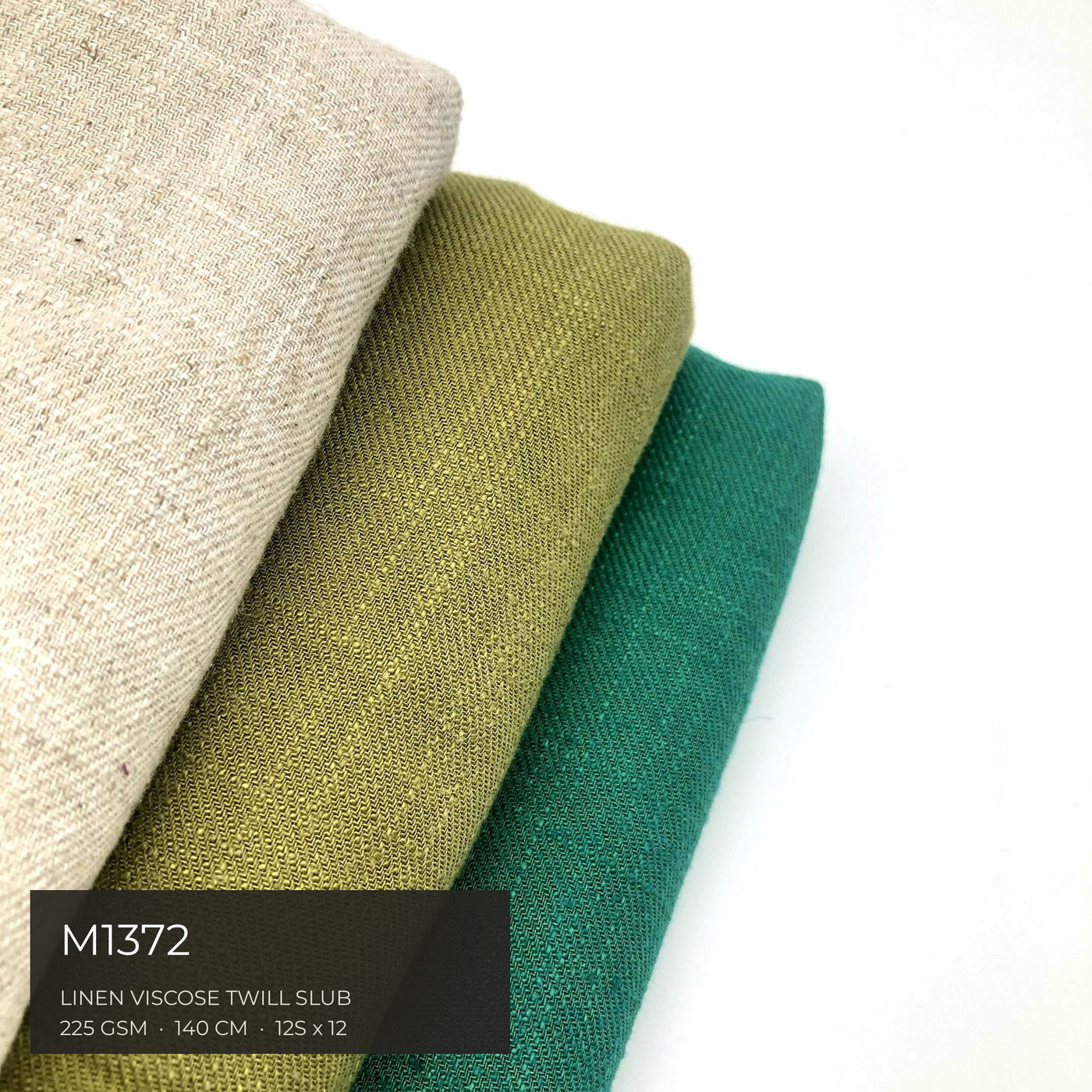
M1372 30% Linen 70% Viscose Twill Slub Fabric 12S 225 GSM 140cm Width – for Shirts, Dresses and Skirts
Quote required
Contact us for the latest price and availability.
- Composition
- 30% Linen 70% Viscose
- Weight
- 225 GSM
- Width
- 55 inches
- Weave
- 2/2 twill, slub
- Category
- Linen Fabric Wholesale / Linen Solid Color Dyed Fabric / Woven
- MOQ
- Negotiable
Sampling & delivery
Build your sample selection, then download a sourcing brief. Ordering, stock and delivery will be enabled after the store information is confirmed.
FABRIC STORY
Product details
| SHAOXING HENGHUI TEXTILE CO., LTD. | ITEM NO. M1372 LINEN-VISCOSE TWILL · 30% LINEN 70% VISCOSE · 12S · 225 GSM |
Twill Slub Fabric 12S
140 CM
12S x 12S
30% LINEN / 70% VISCOSE
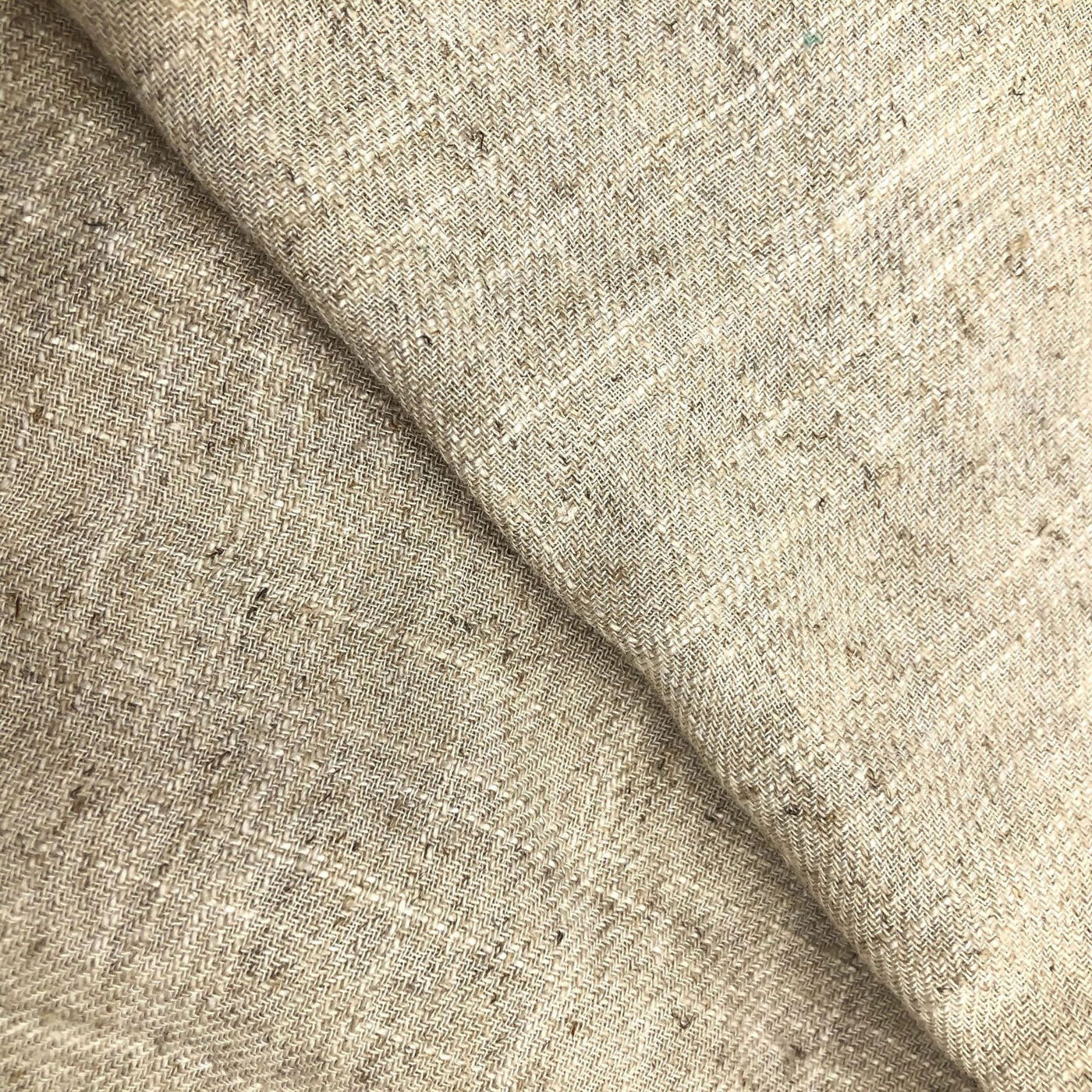
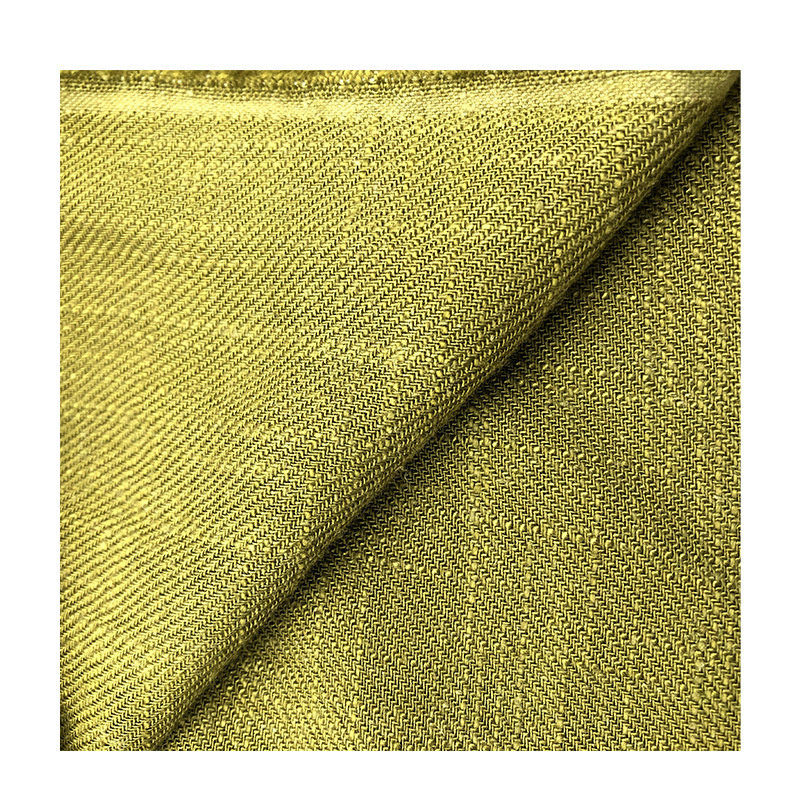
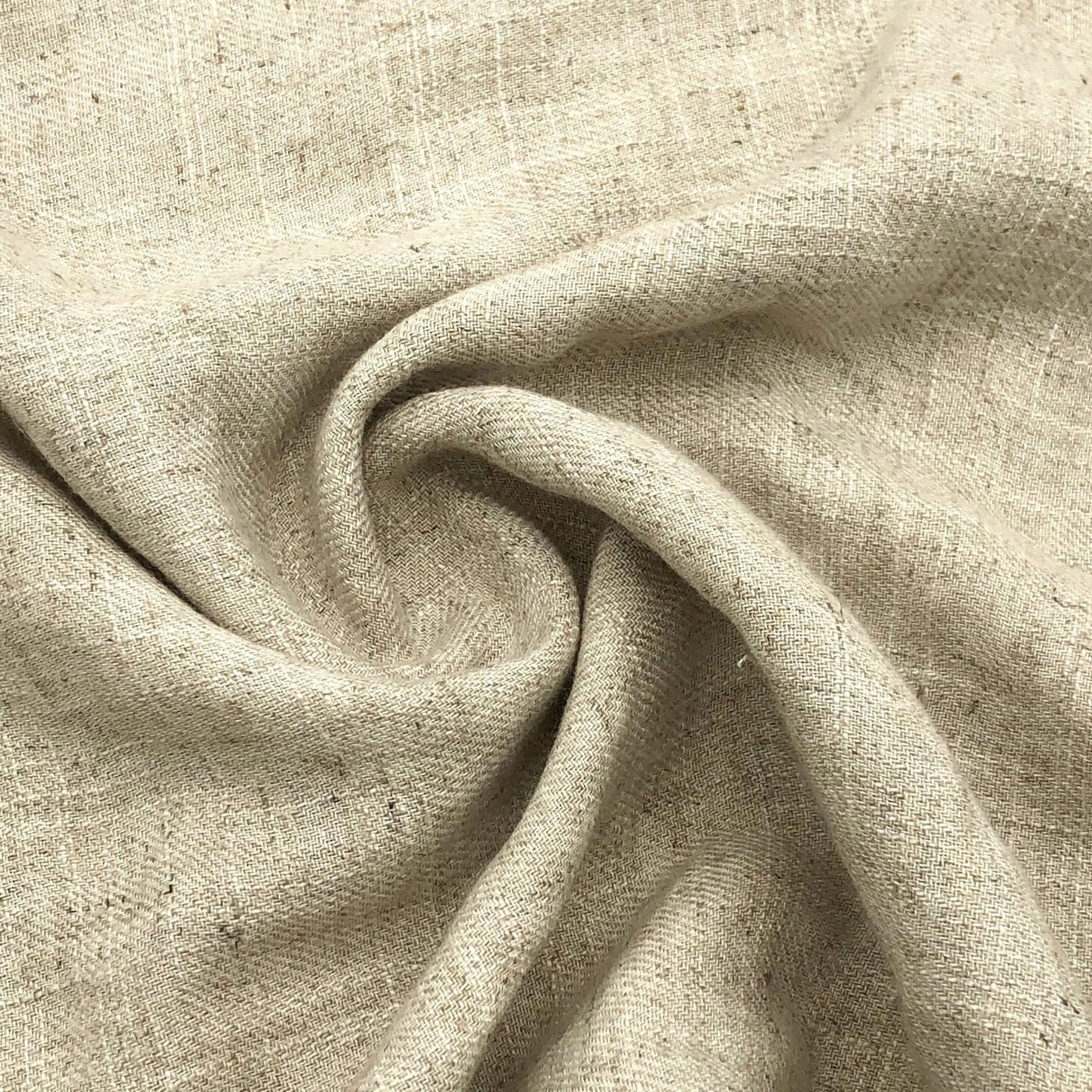
Item M1372 is a woven 30% linen / 70% viscose slub twill — the 12s × 12s construction at a 45 × 42 density, finished at 225 GSM and 140 cm wide in solid dyed shades. The blend here is not unusual; what makes this cloth different from every other linen-viscose construction in this guide is the weave. Woven as a plain weave, a 30/70 linen-viscose is crisp, flat and structural. Woven as a 2/2 twill, the same yarn and the same weight become a cloth that feels soft from the first touch and falls with a fluid line. The fibres did not change; the interlacement did, and that is what a buyer is buying when they specify a twill.
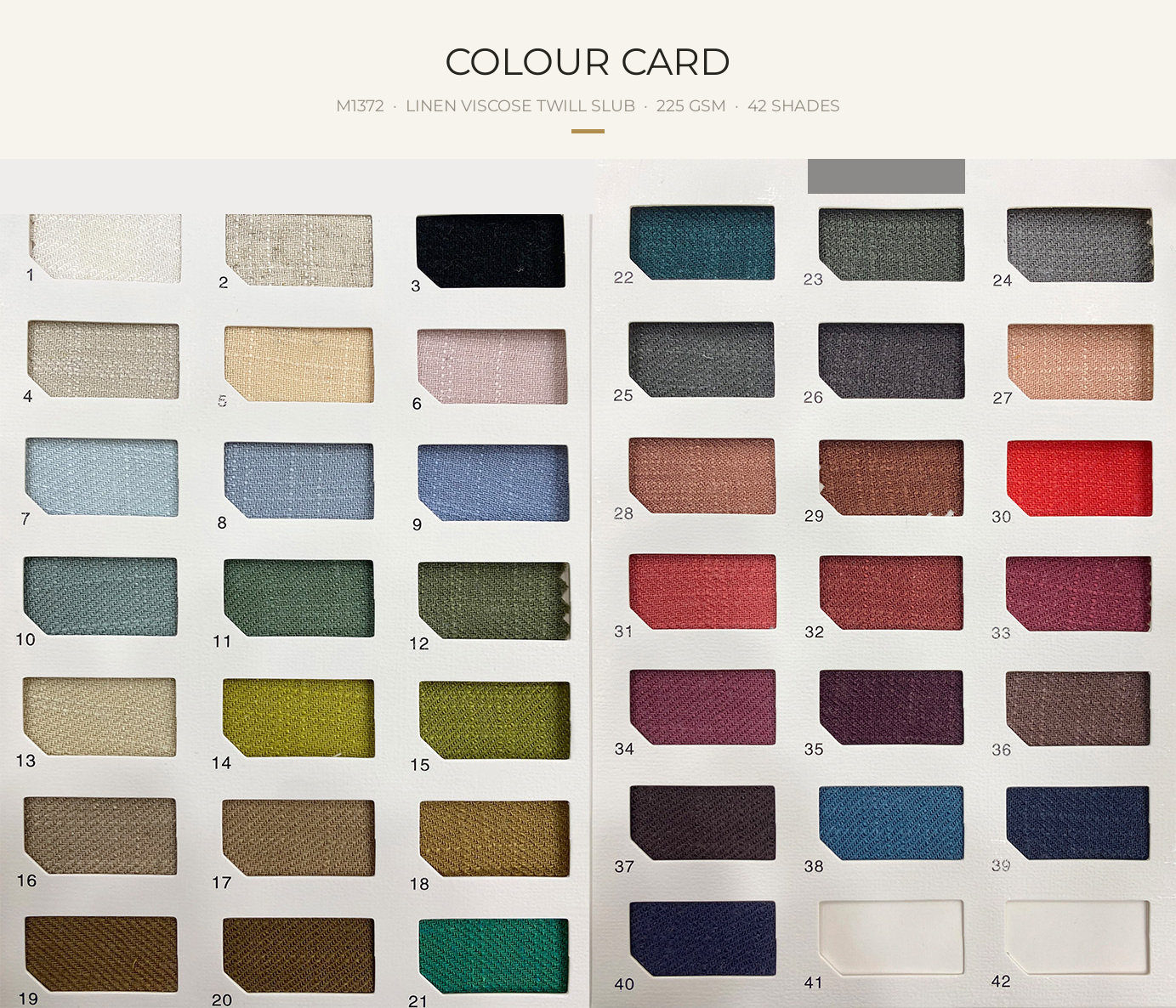
The mechanism is worth understanding because it explains what the cloth actually does in wear. In a plain weave every warp end interlaces with every weft pick, so the yarns are locked into a rigid lattice and the cloth holds an angle. In a twill the yarns travel further before they interlace, which lowers the crimp and gives the yarn real mobility inside the cloth — and because the interlacements are offset, the yarns can settle closer together, giving the cloth a higher packing factor. The practical result is that a twill of this weight often feels thicker and more substantial in the hand than the 225 GSM on the spec sheet suggests. On a 12s slub construction the two effects work together: the slub gives the irregular surface, the twill gives it a directional grain, and light crossing that grain at a consistent angle is what makes a solid color read with depth. 42 stock shades are held against the programme.
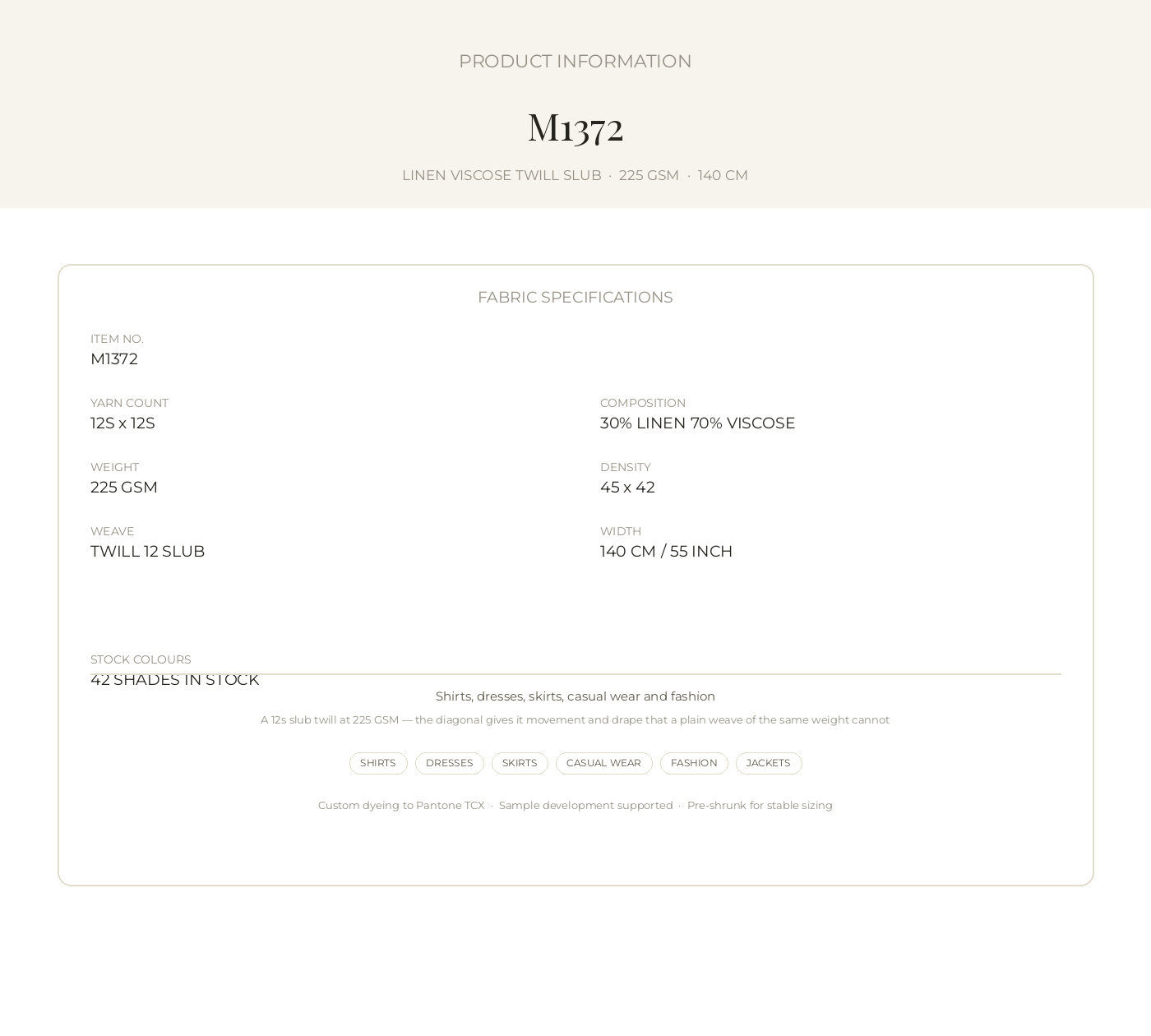
| Specification | Item M1372 |
| Item No. | M1372 |
| Composition | 30% Linen, 70% Viscose |
| Yarn Count | 12S × 12S |
| Density | 45 × 42 |
| Weight | 225 GSM |
| Width | 140 cm / 55 inch |
| Weave | 2/2 twill, slub |
| Finish | Solid dyed |
| Season | Spring / Summer |
| Stock Colors | 42 shades in stock |
Five properties decide how this cloth behaves in wear. Because the construction is defined by its weave rather than by a new fibre combination, the useful questions are what the twill structure physically does, how it wears, and where it should be used — with the honest limits stated, because a twill is not simply a better plain weave.
Where this weight sits. At the heavy end of the range. There is enough body here to hold a line in a trouser or an unlined jacket, and enough weight for the cloth to hang rather than cling. That makes it the natural choice for trousers, jackets, structured dresses and tailoring — and the honest trade-off is that the viscose component is weaker when wet, so it asks for a gentle wash, and the twill floats can snag where a plain weave would not.
A 30/70 linen-viscose blend woven as a plain weave and woven as a 2/2 twill are two different fabrics, and the difference is structural rather than cosmetic. In a plain weave every warp end interlaces with every weft pick, so the yarns are locked into a rigid lattice, the surface is flat and firm, and the cloth holds an angle. In a twill the yarns travel further before they interlace, which lowers the crimp and gives the yarn real mobility inside the cloth. That is the mechanical reason this twill feels soft from the first touch and falls fluidly, while a plain weave of the same yarn and weight would feel crisp and structural. The fibres did not change; the weave did.
Because the interlacements in a twill are offset, the yarns can settle closer together without the crimp pushing them apart, which gives the cloth a higher packing factor. The practical result is that a twill and a plain weave made from the same yarn at the same 225 GSM can feel noticeably thicker and more substantial in the hand than the weight on the spec sheet suggests. The longer floats also create small air pockets beneath the surface, which hold a little warmth. For a buyer choosing between two cloths of identical fibre and weight, this is very often what decides it.
The oblique direction of the twill rib disperses surface abrasion along the length of the yarn instead of concentrating it at every crossing point, so a twill often holds up better against surface wear before the fibres break. There is a trade-off worth stating: the floats are initially more exposed, so the cloth can snag where a plain weave would not, and abrasion can leave a lighter mark along the diagonal. On a slubbed cloth this reads as softening rather than as damage — the clothing-trade term for it is a patina, and it is the reason a garment cut from a twill is often specified precisely because it is meant to be worn hard rather than kept pristine.
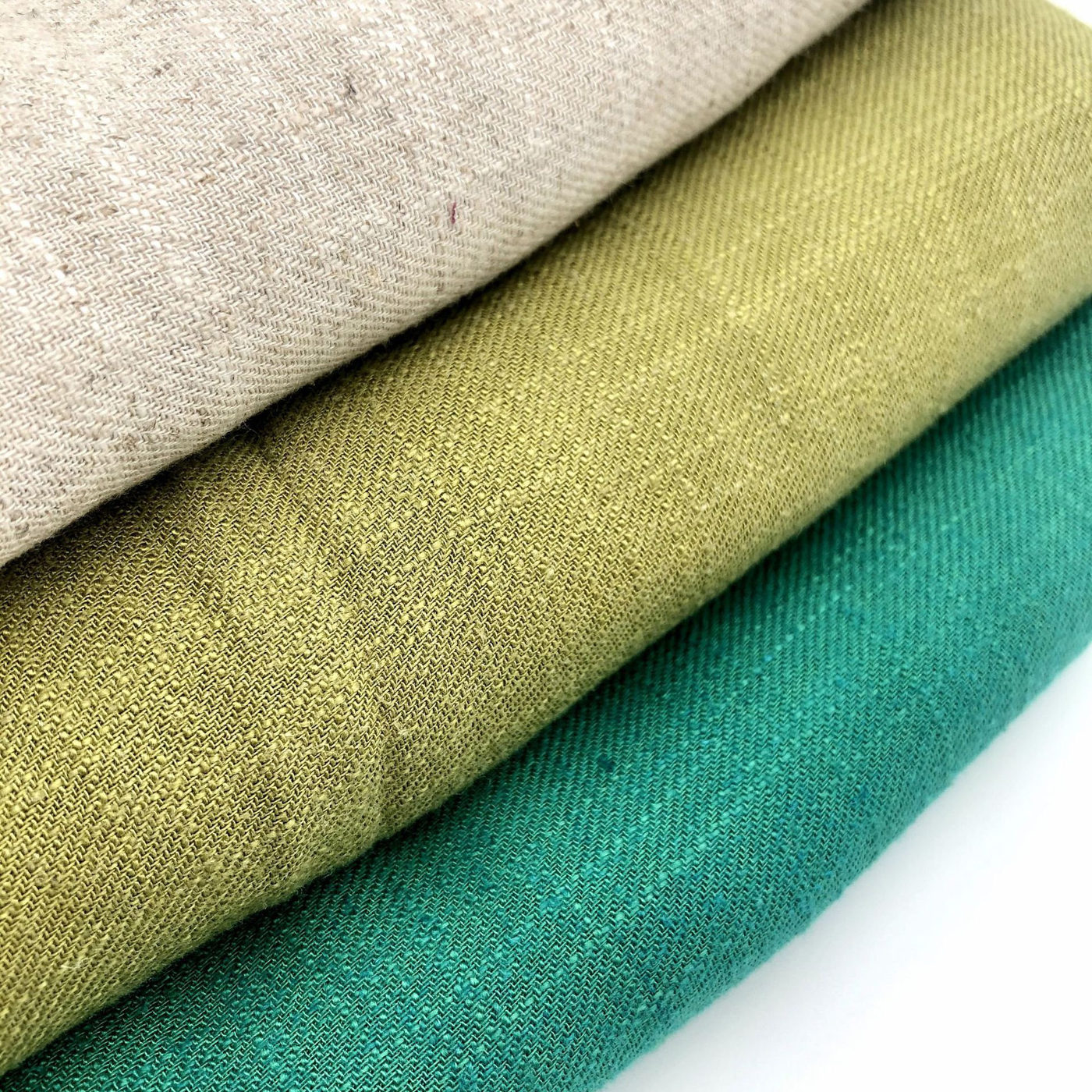
The diagonal rib does something to the color that a plain weave does not. Light crosses the twill line at a consistent angle, so the ribs produce a fine tonal shift across the surface — the cloth reads as having depth even in a solid shade, and a darker or deeper tone than the same yarn in a flat weave. On this 12s slub construction the two effects work together: the slub gives the irregular surface and the twill gives it the directional grain. Neither is loud, and that is why the cloth holds a rich color in a photograph and looks expensive without needing a pattern. The 45 × 42 density in a 140 cm width gives efficient marker making for exactly this kind of solid.
Two things should be said plainly. First, the viscose content is weaker when wet, so this cloth asks for a cold, gentle wash and a line dry — hot washing and a rough drum load are what make a viscose-led cloth go slack, and on a twill the diagonal can distort if it is washed roughly. Second, because the twill floats are longer, they can catch on rough surfaces in a way a plain weave does not; for a garment meant to be worn against Velcro, hook-and-loop fasteners or rough surfaces, that is worth checking before the fabric goes into production. What this cloth is: a 225 GSM twill with real drape, a deep solid color and a surface that softens into a patina rather than wearing out. For shirts, dresses, skirts and relaxed tailoring, it is the construction a buyer reaches for when a plain weave would look too flat and a heavy slub would look too rustic.
At 225 GSM and 140 cm this is the weight that crosses from shirting into light tailoring, and the twill is what allows it to work across more than one category. A plain weave at this weight would be too firm for a dress and too soft for a jacket; the twill gives the body for a collar and a shoulder line while keeping the movement for a skirt. That combination is why twill has been the standard construction for trousers, shirts and light jackets for a century.
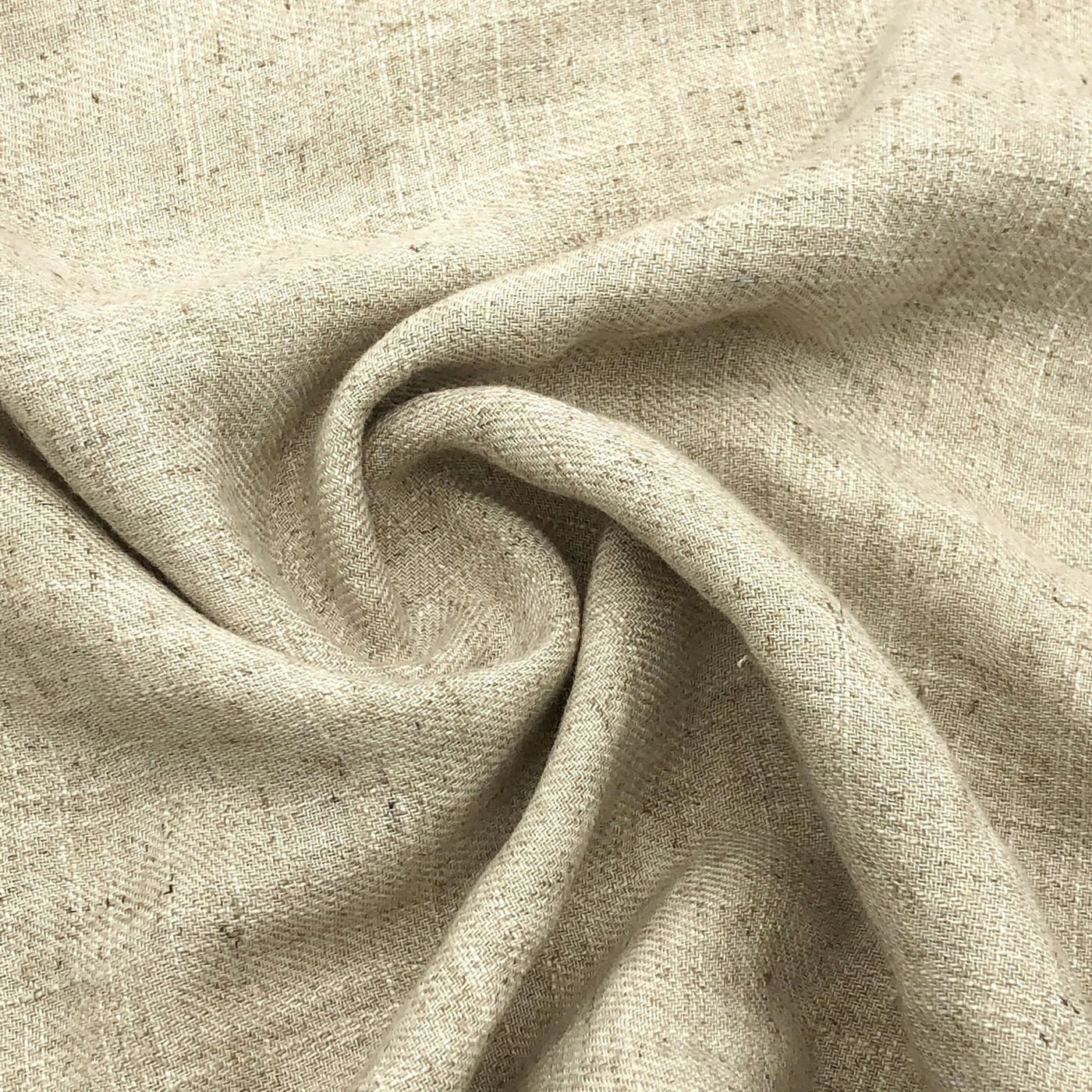
This is the core use, and the reason for the weave. The reduced crimp means the yarn moves inside the cloth rather than being locked in place, so the fabric feels soft from the first wear and falls with a fluid line rather than a stiff one — which is what makes a 225 GSM cloth work as a shirt-dress or a bias skirt rather than only as a trouser cloth. The linen content keeps the hand dry and prevents the cloth from feeling slick against the skin, and the viscose takes dye deeply and evenly, so a solid shade holds its depth across the diagonal grain.
The same construction works for a relaxed trouser, a soft jacket or a utility shirt, and the 140 cm width gives efficient marker making for long panels. What the twill adds over a plain weave of the same weight is the combination of drape and body — the garment holds a line at the collar and shoulder, and moves at the hem. It also wears better: the diagonal disperses abrasion along the yarn rather than concentrating it at each crossing point, so the cloth tends to soften into a patina rather than wearing out at the stress points. For a brand that wants a garment to look better after a season, that is a material argument as much as a visual one.
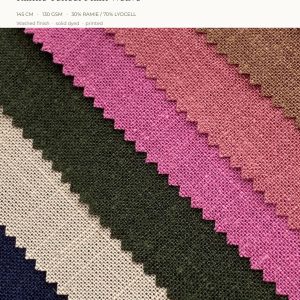
42 stock shades are held for immediate dispatch, running from naturals and ecru through olives, deep greens, blues, greys and deeper tones. The viscose content takes solid dye evenly and deeply, and on a twill the diagonal grain gives the color a tonal shift across the surface that a plain weave does not — which is why a solid twill reads richer in a photograph than the same shade in a flat construction. Custom solid dyeing to Pantone TCX is available for development orders.
Hand samples and cutting samples are supplied before bulk production, either from stock greige or from a lab dip matched to your shade. For a twill we recommend judging the sample by its movement rather than from a flat swatch — the whole point of the construction is how the cloth falls, and a small sample held flat does not show it. Cut samples are supplied for this reason.
Development runs around three points: the yarn count and density, the shade matched to Pantone TCX, and the weight confirmed against the end use. On a twill we also confirm the diagonal direction against the garment pattern before bulk, since left-hand and right-hand twill read differently across a garment and the panels should be cut consistently. Shrinkage and dimensional stability are confirmed on a washed sample before bulk is scheduled, and we specify a cold gentle wash route so the diagonal does not distort. Full-width greige and finished samples, small trial orders and custom development are supported for new customers.
| Service | Detail |
| Sampling | Hand sample and cutting sample before bulk |
| Lab dip | 3–5 shades against Pantone TCX or our own library |
| Greige | Full-width greige available on request |
| Development | Custom yarn count, density, weight, width and dyeing |
| Weave | 2/2 twill, 12s slub |
| Production | Yongshun Dyeing & Finishing Plant |
| MOQ | Negotiable |
FABRIC ENQUIRY
Ask about this fabric
Share your requirements and our team will reply within 24 hours.