FAB-158946393
M1392 10% Linen 90% Lyocell Fabric 130 GSM 155cm Width – for Shirts, Dresses and Summer Wear
Quote required
Contact us for the latest price and availability.
- Composition
- 10% Linen 90% Lyocell
- Weight
- 130 GSM
- Width
- 61 inches
- Weave
- Plain weave
- Category
- Linen Fabric Wholesale / Linen Solid Color Dyed Fabric / Woven
- MOQ
- Negotiable
Sampling & delivery
Build your sample selection, then download a sourcing brief. Ordering, stock and delivery will be enabled after the store information is confirmed.
FABRIC STORY
Product details
| SHAOXING HENGHUI TEXTILE CO., LTD. | ITEM NO. M1392 LINEN-LYOCELL · 90% LYOCELL 10% LINEN · 130 GSM |
Fabric 90/10
155 CM
90% LYOCELL
10% LINEN
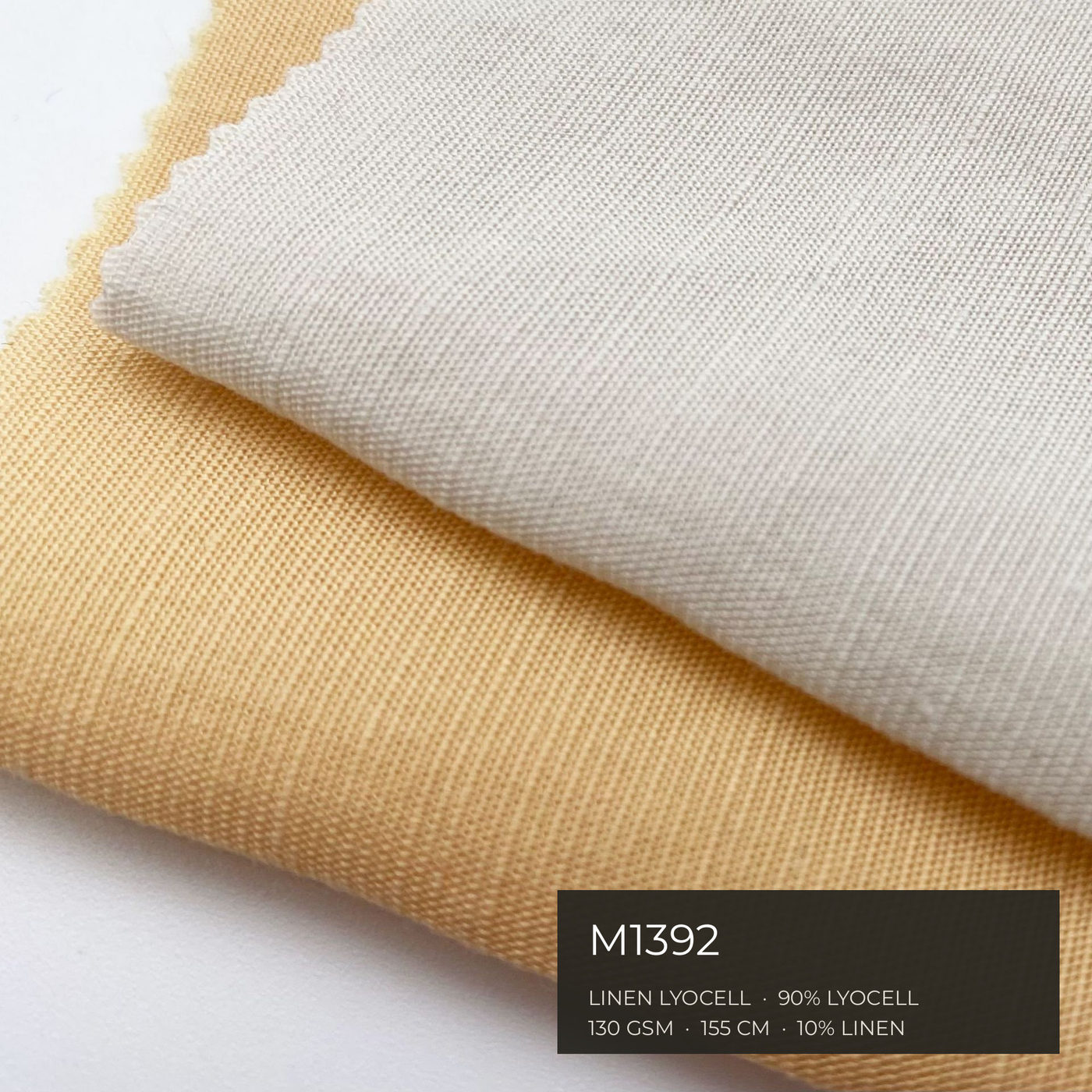
Item M1392 is a woven 10% linen / 90% lyocell plain weave at 130 GSM and 155 cm wide, supplied in solid dyed shades. At this ratio the cloth is a lyocell with a linen fibre in the yarn, and that is the construction a buyer who has actually worked with pure linen ends up asking for. Flax is the classic summer fibre for good reasons — hollow fibre, fast moisture transport, a genuinely cool touch — but it is stiff, it prickles against the skin, and it creases hard enough to change the look of a garment. Lyocell solves each of those: it softens the flax, it calms the crease, and it adds the deep even color that flax cannot take on its own. The small flax share still keeps the hand dry and the surface from reading as pure synthetic.
The performance figures are what make this worth specifying. Lyocell has a moisture regain of about 11.5 to 13% against roughly 8.5% for cotton, and its nanofibril structure moves moisture to the fibre surface around 50% faster than cotton — which is why a garment cut from it does not stick to the back in heat. The fibre cross-section is rounded with no hard edges, so the hand is often compared to silk and it does not irritate sensitive skin; it also holds good strength in the wet state, so unlike viscose it does not lose the fabric in the wash, and its wrinkle resistance exceeds that of linen. At 130 GSM this is a true lightweight, and the 155 cm width is the detail that makes it commercially useful: a wide lightweight cloth can be cut for a full dress panel or a long shirt in one piece, which removes a seam from the most visible place on the garment.
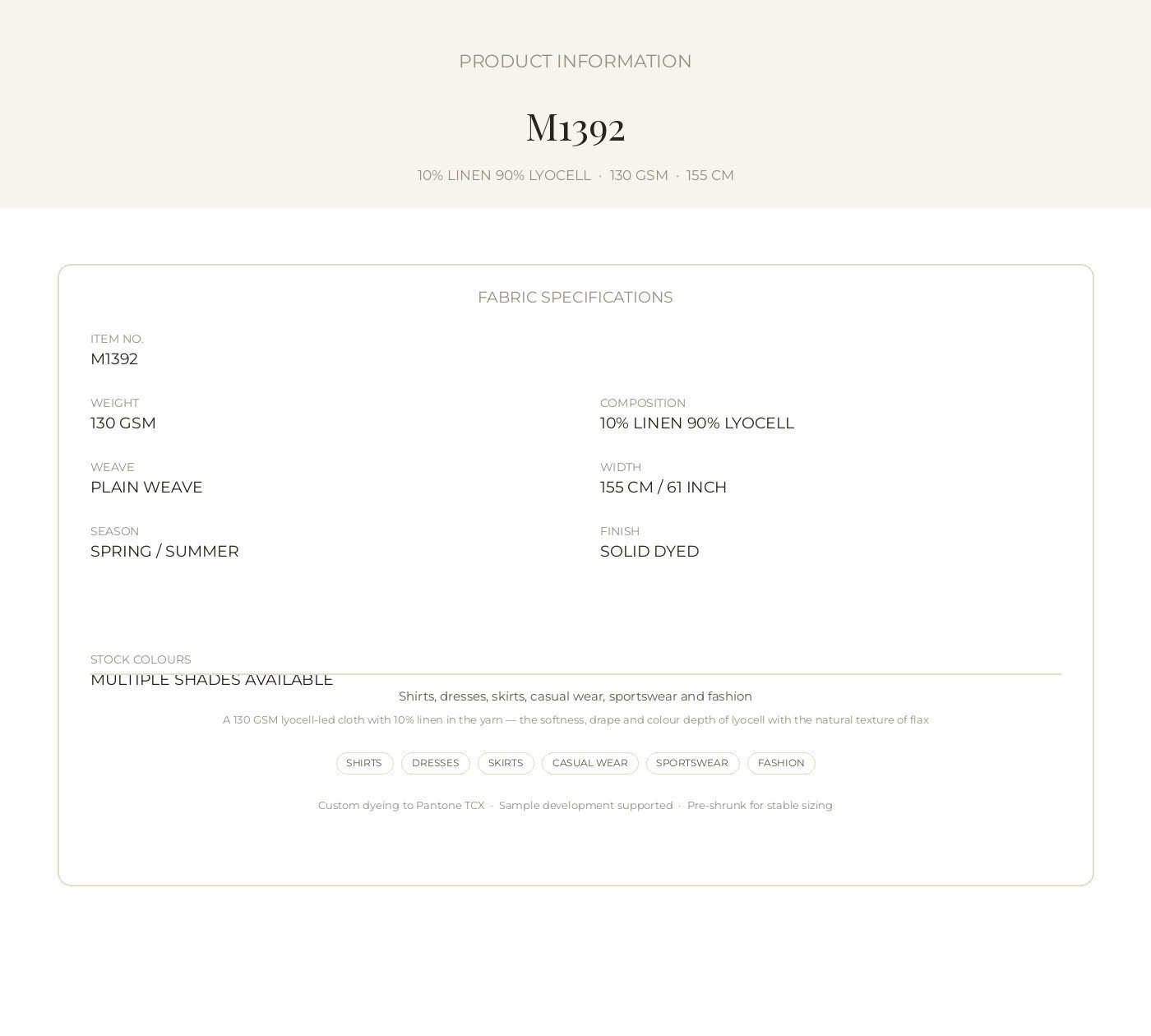
| Specification | Item M1392 |
| Item No. | M1392 |
| Composition | 10% Linen, 90% Lyocell |
| Weight | 130 GSM |
| Width | 155 cm / 61 inch |
| Weave | Plain weave |
| Finish | Solid dyed |
| Season | Spring / Summer |
| Applications | Shirts, dresses, skirts, casual and sportswear |
Five properties decide how this cloth behaves in wear. Because the construction is defined by a leading fibre rather than by an unusual ratio, the useful questions are what lyocell actually does, what the measured figures are, and what the honest limits are for a 90/10 construction at 130 GSM.
Where this weight sits. In the middle of the range, and the middle is where most linen apparel actually lives. Heavier than the 60–100 GSM cloths used for sheers and summer shirting, lighter than the 200+ GSM linens used for upholstery and heavy tailoring. That makes it the natural choice for shirting that stands away from the body, dresses and skirts that hold a shape, unlined jackets — and the honest trade-off is that lyocell fibrillates under heavy wet friction, so it needs a gentle wash and no tumble drying, and a 10% flax share cannot carry a structural role.
At 10% linen and 90% lyocell this is a lyocell cloth with a flax fibre in the yarn, and that ratio is what a buyer who has actually worked with pure linen ends up asking for. Flax is the classic summer fibre for good reasons — hollow fibre, fast moisture transport, a genuinely cool touch — but it is stiff, its fibre ends prick against the skin, and it creases hard enough to change the look of a garment. Lyocell solves each of those: it softens the flax, it calms the crease, and it adds the deep even color that flax cannot take on its own. What the small flax share still contributes is the dry hand and the irregular surface texture. In this ratio the linen is doing texture and hand; lyocell is doing everything structural.
The leading fibre here is a regenerated cellulose produced by a closed-loop solvent process, and the figures are what make it worth specifying. Moisture regain runs about 11.5 to 13%, against roughly 8.5% for cotton, and the nanofibril structure moves moisture to the fibre surface around 50% faster than cotton — which is why a garment cut from it does not stick to the back in heat. The fibre cross-section is rounded with no hard edges, so the hand is often compared to silk and it does not irritate sensitive skin, and its thermal behaviour gives a cool contact that suits a hot climate. It also holds good strength in the wet state, so unlike viscose it does not lose the fabric in the wash. The solvent recovery rate in the closed-loop process is around 99.7%.
At 130 GSM this sits in the lightweight band used for summer shirting, shirt-dresses and lining — light enough to drape close to the body, and to disappear under a jacket. The 155 cm width is the detail that makes it commercially useful rather than merely nice: a wide lightweight cloth can be cut for a full dress panel or a long shirt in one piece, which removes a seam from the most visible place on the garment and reduces cutting waste. Lyocell also holds a crease well enough to be pressed if wanted but soft enough that a shirt taken out of a case recovers on its own. Its drape is fluid rather than stiff, and it does not need interfacing to stand — which means the cloth keeps moving on the body instead of being propped up.
The visual result of this construction is worth describing, because it is not the same as a plain lyocell. Lyocell takes dye evenly and deeply and holds a rich color, which is the part that compensates for flax’s own weak point — flax holds color less reliably, so a linen-led cloth can look flat or slightly cloudy in the same shade. The small flax share adds what is often called a matte or pearl lustre rather than a shine, so a solid color reads with depth in a photograph instead of looking like a flat synthetic. After washing, the controlled fibrillation of the lyocell gives the surface a soft peach-skin character. The two effects together are why a 90/10 linen-lyocell reads as a natural cloth at a glance while behaving like a modern technical one.
Three points stated plainly. First, lyocell fibrillates — under heavy wet friction the fibre surface raises fine fuzz, and in the worst case it mats into pills. That is why this cloth asks for a cold or warm wash, a gentle cycle, no soaking and no tumble drying, and why deep shades should be washed separately. Second, lyocell is not as hard-wearing as a polyester or a cotton-heavy cloth, and it can develop pale wear marks at friction points such as a collar or a cuff. Third, with only 10% flax in the yarn this is a lyocell cloth with a linen character, not a linen cloth — the label must state 90% lyocell, and it should be marketed on what it is: a soft, cool, fluid, low-crease summer cloth with a natural-looking surface. What it is: one of the easiest fabrics in this range to wear all day, to wash, and to sell.
At 130 GSM and 155 cm this is a lightweight cloth that crosses from shirting into dress territory, and the width is what makes it work across both. A 155 cm lightweight can be cut for a full dress panel in one piece, which removes a seam from the most visible place on the garment and cuts waste off the cutting table — which is usually where the margin is lost on a low-weight fabric.
This is the core use, and the reason for the weight. At 130 GSM the cloth is light enough to disappear under a jacket, and the lyocell content means it is soft and smooth against the skin from the first wear, with no break-in period. The linen share keeps the hand dry and gives the surface an irregular, natural character rather than a slick synthetic one. It also holds a crease well enough to be pressed if a formal look is wanted, but soft enough that a shirt taken out of a case recovers on its own.
The 155 cm width makes this the dress cloth of the two. A full panel comes out of the width in one piece, and because lyocell does not need interfacing to stand, the finished dress keeps a fluid line rather than a propped-up one. In heat the performance is the point: moisture moves to the fibre surface around 50% faster than cotton and the cloth does not cling, while the drape means it hangs away from the body rather than sticking to it.
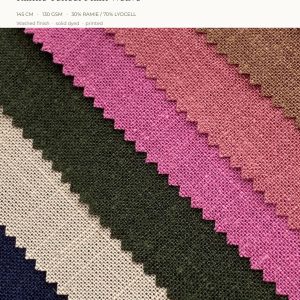
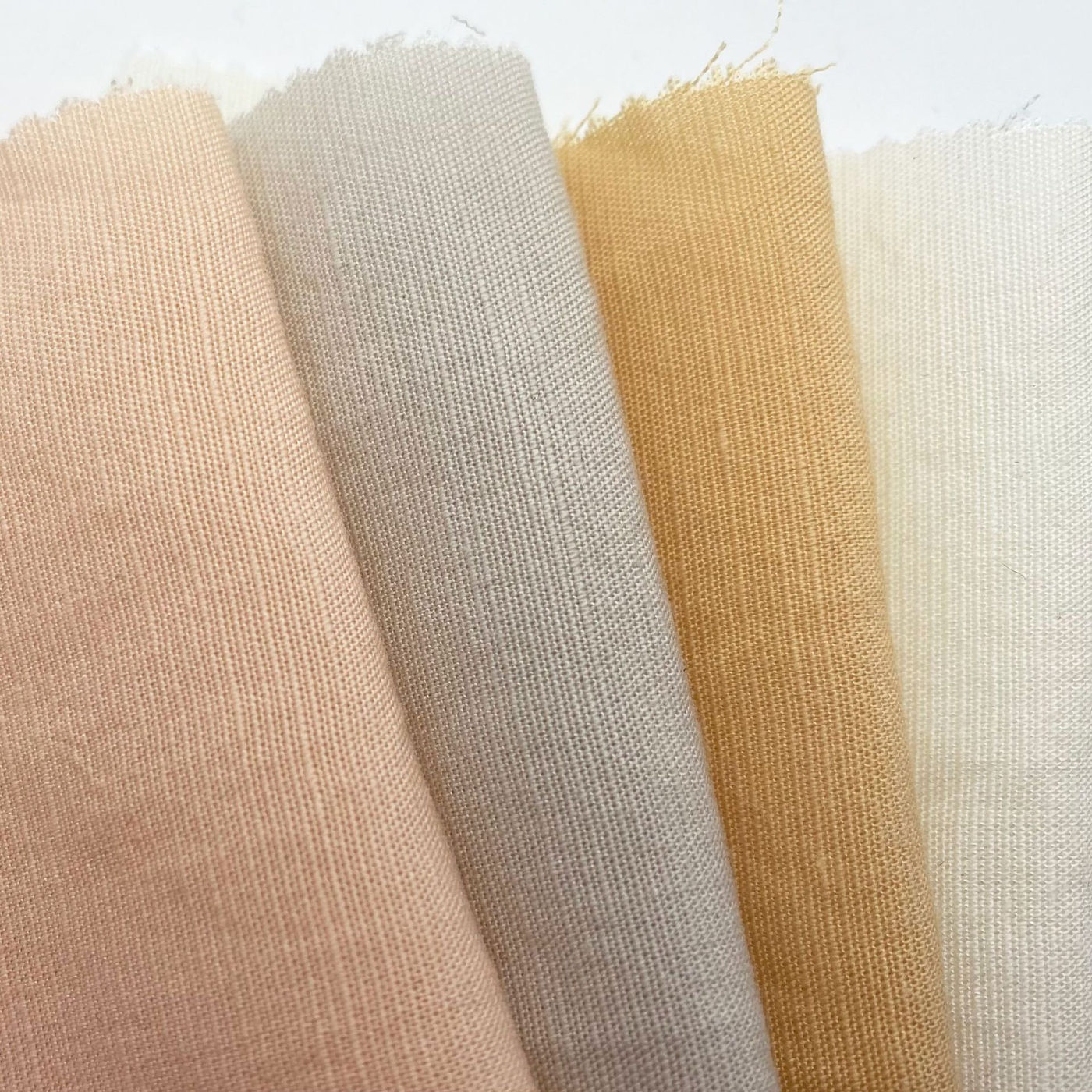
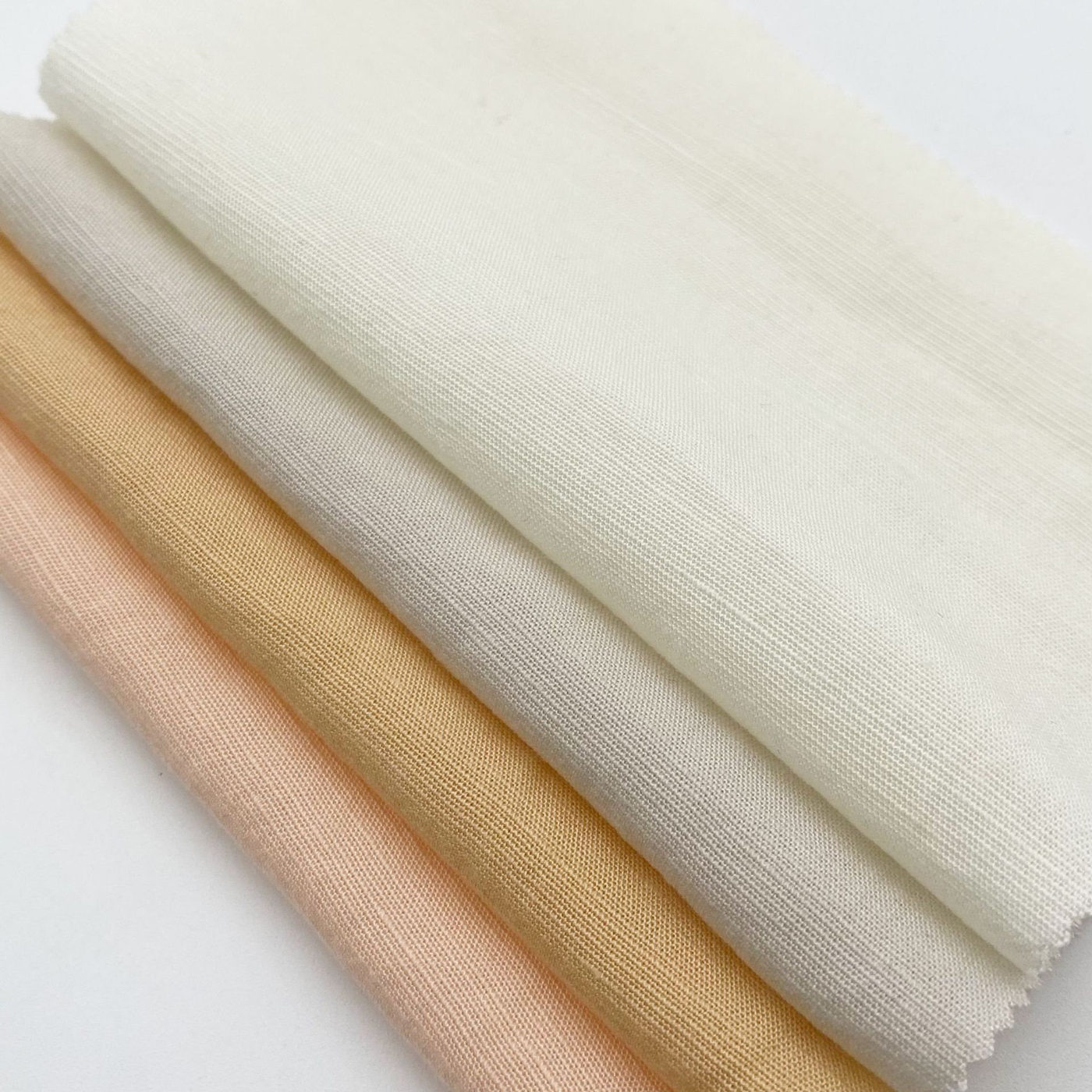
A range of solid dyed shades is available, running from naturals and ecru through blush, mustard, greys and deeper tones. The lyocell content takes dye evenly and deeply and holds it — the part of the construction that compensates for flax’s own weak point, since flax holds color less reliably and a linen-led cloth can look flat or cloudy in the same shade. The small flax share contributes what is often called a matte or pearl lustre, so a solid reads with depth rather than looking like a flat synthetic. Custom solid dyeing to Pantone TCX is available for development orders, and the shade should be approved on a washed sample.
Hand samples and cutting samples are supplied before bulk production, either from stock greige or from a lab dip matched to your shade. For a lyocell construction we recommend approving the sample after a wash: the surface develops a soft peach-skin character after laundering, and the shade can shift slightly in that first wash, so the washed result is the one the customer will judge. Cut samples are supplied so the drape can be checked on the body.
Development runs around three points: the fibre ratio and yarn count, the shade matched to Pantone TCX, and the weight confirmed against the end use. Because lyocell fibrillates under heavy wet friction, we specify a gentle-wash route — cold or warm wash, gentle cycle, no soaking and no tumble drying — and we confirm both shrinkage and color fastness on a washed sample before bulk is scheduled. On a 155 cm lightweight we also recommend checking the marker efficiency on the actual pattern, since the width is the main commercial advantage of this cloth and it is worth confirming the saving before it is committed to a range. Full-width greige and finished samples, small trial orders and custom development are supported for new customers.
| Service | Detail |
| Sampling | Hand sample and cutting sample before bulk |
| Lab dip | 3–5 shades against Pantone TCX or our own library |
| Greige | Full-width greige available on request |
| Development | Custom ratio, weight, width, finish and dyeing |
| Production | Yongshun Dyeing & Finishing Plant |
| MOQ | Negotiable |
The answers below state the specification directly, so that the construction can be identified quickly and quoted accurately.
FABRIC ENQUIRY
Ask about this fabric
Share your requirements and our team will reply within 24 hours.