FAB-937140934
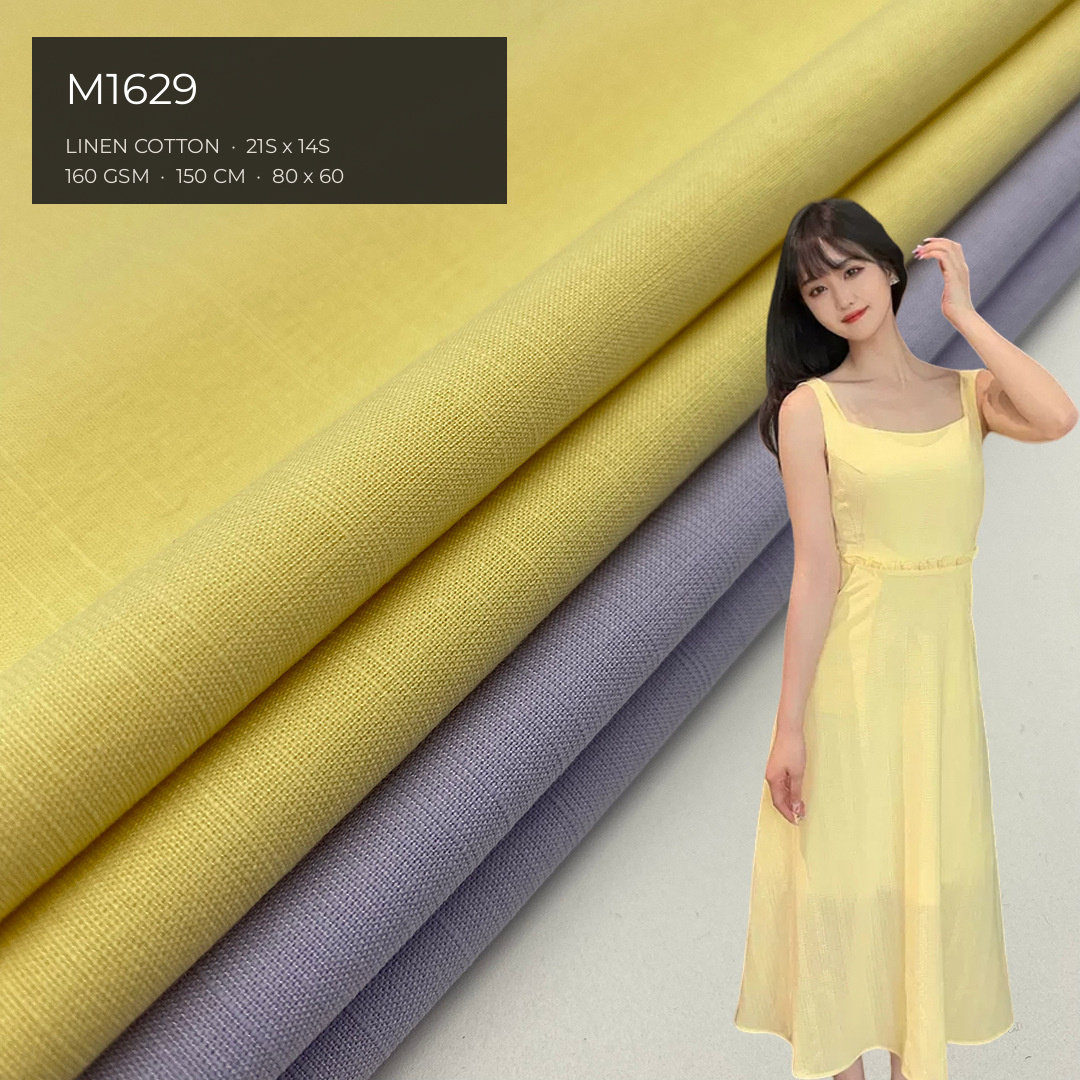
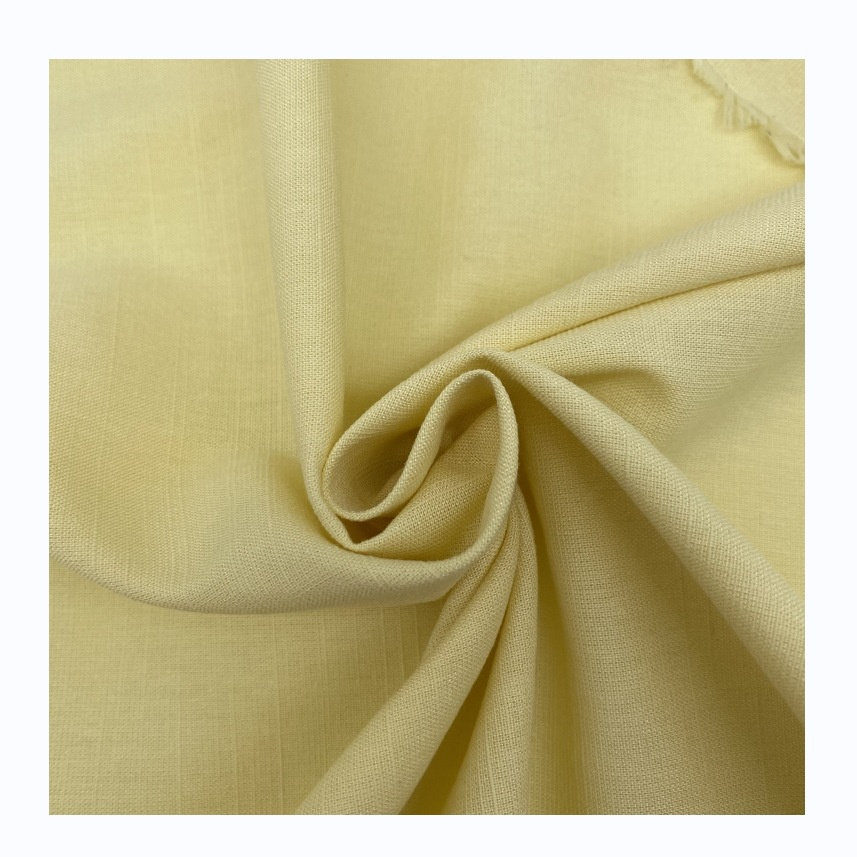
M1629 Linen Cotton Fabric 21S x 14S 160 GSM 150cm Width – for Shirts, Dresses, Skirts and Thin Jackets
Quote required
Contact us for the latest price and availability.
- Composition
- Linen Cotton (composition to confirm)
- Weight
- 160 GSM
- Width
- 59 inches
- Weave
- Plain weave
- Category
- Linen Fabric Wholesale / Linen Solid Color Dyed Fabric / Woven
- MOQ
- Negotiable
Sampling & delivery
Build your sample selection, then download a sourcing brief. Ordering, stock and delivery will be enabled after the store information is confirmed.
FABRIC STORY
Product details
| SHAOXING HENGHUI TEXTILE CO., LTD. | ITEM NO. M1629 LINEN-COTTON · 21S x 14S · 160 GSM · 150 CM |
21S × 14S · 160 GSM
150 CM
21S x 14S
80 x 60 DENSITY
Item M1629 is a woven linen-cotton in a 21s × 14s yarn pairing, at a 80 × 60 density, finished at 160 GSM and 150 cm wide, supplied in solid dyed shades and by digital print. The yarn combination is deliberate rather than incidental, and it is what makes this weight work. A 21s linen yarn on its own is fine enough for a 120–150 GSM lightweight — a summer shirt, a bias skirt, a fluid overlay. A 14s yarn is a middle-to-coarse count that wants 180–220 GSM before it hangs properly. Running the two together lets the finer warp carry the surface and the coarser weft carry the body, which is how this construction lands at 160 GSM — the weight that sits between a summer shirting and a garment that has to hold a shape.
At this weight the cloth is firm enough to hold a collar and a shoulder and fluid enough to fall as a dress, which in practice means one specification can cover a whole summer range: a shirt or shirt-dress, a day dress or skirt, a wide-leg trouser or culotte, and an unlined jacket or overshirt. The 150 cm width is what makes that commercially workable: a full-length dress panel or a wide trouser leg can be cut in one piece, which removes a seam from the most visible place on the garment and cuts waste off the cutting table — on a fabric of this weight, that is usually where the margin is actually lost. The cotton in the blend is not a cost-saving substitute either; it brings softness, crease recovery and sewing ease, so the cloth is workable and creases far less than pure linen.
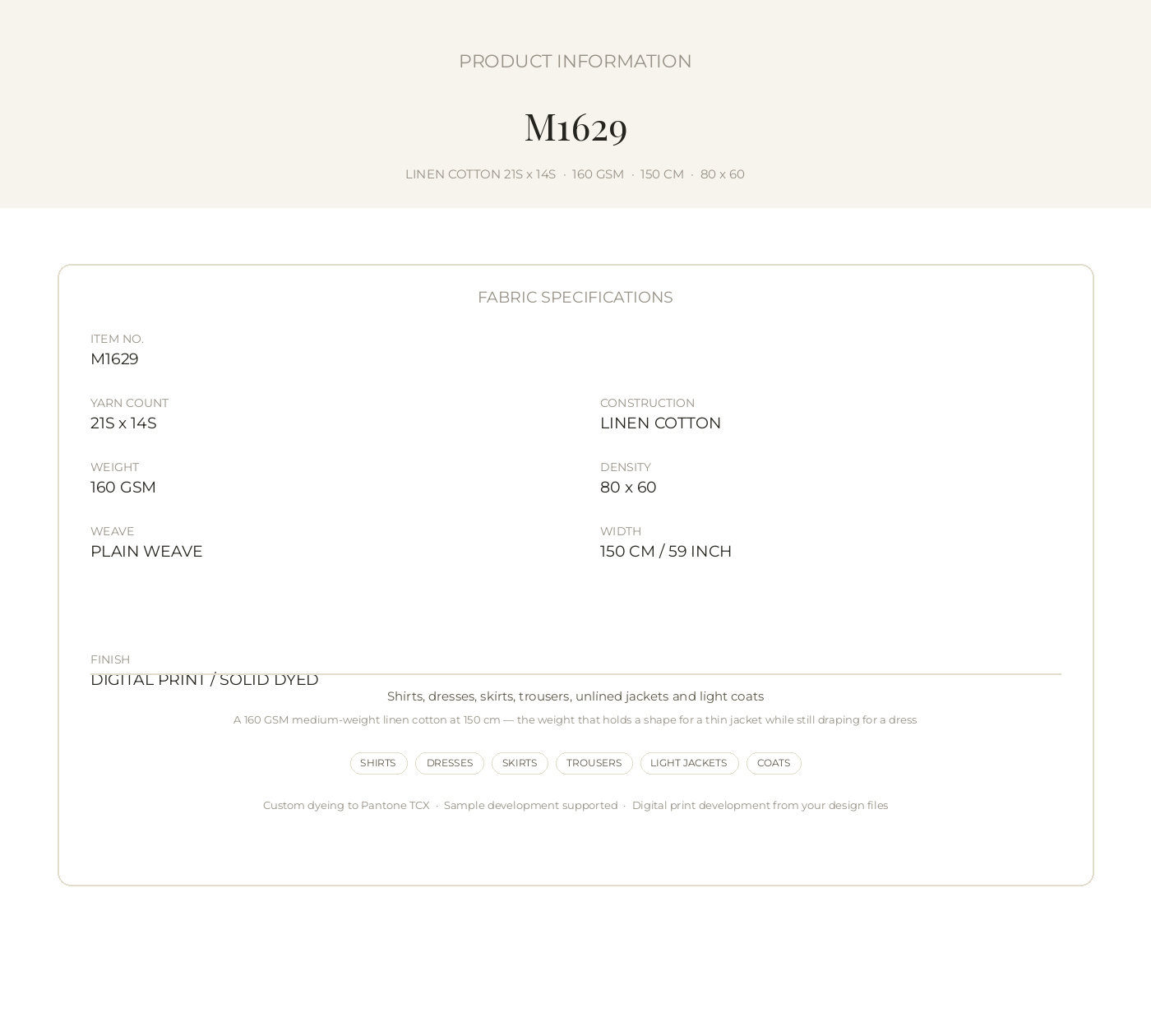
| Specification | Item M1629 |
| Item No. | M1629 |
| Construction | Linen cotton |
| Yarn Count | 21S × 14S |
| Density | 80 × 60 |
| Weight | 160 GSM |
| Width | 150 cm / 59 inch |
| Weave | Plain weave |
| Finish | Solid dyed / digital print |
| Season | Spring / Summer |
Five properties decide how this cloth behaves in wear. Because this construction is defined by a yarn count and a weight rather than by an unusual fibre ratio, the useful questions are what that yarn pairing buys, which garments the weight is actually right for, and where the limits of this weight sit.
Where this weight sits. In the middle of the range, and the middle is where most linen apparel actually lives. Heavier than the 60–100 GSM cloths used for sheers and summer shirting, lighter than the 200+ GSM linens used for upholstery and heavy tailoring. That makes it the natural choice for shirting that stands away from the body, dresses and skirts that hold a shape, unlined jackets — and the honest trade-off is that a cotton-linen of this weight is a shirt and dress cloth, not a coat cloth — below about 220 GSM it will not hold a lapel roll without fusing, and the fusing kills the reason people buy linen outerwear.
The yarn pairing here is 21s in the warp with 14s in the weft, and that combination is deliberate rather than incidental. A 21s linen yarn on its own is fine enough for a 120 to 150 GSM lightweight — a summer shirt, a bias-cut skirt, a fluid overlay. A 14s yarn is a middle-to-coarse count that wants 180 to 220 GSM before it hangs properly, because a heavier yarn needs more cloth in the square metre to support itself. Running the two together lets the finer warp carry the surface and the coarser weft carry the body, which is exactly how this construction lands at 160 GSM — the weight that sits between a summer shirting and a garment that has to hold a shape. A buyer can order this one cloth for a whole summer range rather than splitting the order across two specifications.
At 160 GSM this is a medium-weight linen-cotton, and weight — not the fibre ratio — is what decides whether a cloth works as a shirt or as a curtain. At this weight the cloth is firm enough to hold a collar and a shoulder, and fluid enough to fall as a dress. In practice that means it is the right cloth for a shirt or shirt-dress, because it is cool and breathable and survives a working day; for a day dress or a skirt, because tiered, shirred and A-line silhouettes all work at this weight; for a wide-leg trouser or culotte, because there is enough body to hold the leg line without bagging at the knee; and for an unlined jacket or overshirt, because the cloth stands on its own without interfacing. It is also the natural weight for co-ord sets and resortwear, the category where cotton-linen has largely replaced pure linen commercially because it survives travel and packing better.
The 150 cm width is not a detail on this cloth — it is the reason the weight works commercially. At a density of 80 × 60 the cloth is closely woven enough to be opaque and to resist abrasion, without going so tight that it loses the air permeability that makes a linen-cotton worth buying in the first place. And a wide cloth changes the pattern maths. A full-length dress panel or a wide trouser leg can be cut in one piece at 150 cm, which removes a seam from the most visible place on the garment and cuts waste off the cutting table. On a fabric of this weight, that is usually where the margin is actually lost — not in the cloth itself, but in the offcuts. For a brand running a summer range across several garment types, one width that works for all of them is worth more than a slightly better hand.
The cotton in a linen-cotton blend is not a cost-saving substitute — it is what makes the cloth workable. Cotton brings softness against the skin, crease recovery and sewing ease, and it takes dye more evenly than flax, which is why a cotton-linen holds color better than a pure linen. The flax brings the breathability, the moisture transport, the dry hand and the natural slub texture, and it is stronger than cotton when wet. The practical result is a cloth that is cooler than cotton, softer than pure linen from the first wash, and noticeably less prone to the deep creasing that makes some buyers avoid linen altogether. It also softens with every wash while keeping its shape. The honest limits are worth stating: the flax content makes it crease more than a pure cotton, it is not as cool as pure linen, and a cloth of this weight is not a coat cloth.
Four practical points, stated plainly. First, below about 220 GSM a cotton-linen will not hold a lapel roll or a heavy shoulder without fusing — and heavy fusing kills the reason people buy linen outerwear in the first place. If the garment is a lined jacket or a structured coat, this is the wrong cloth; specify a heavier one. Second, cotton-linen shrinks 3 to 6% on the first wash unless it has been pre-shrinked, and it can also lose 5 to 10% of its greige weight in finishing — which is why we confirm both shrinkage and color fastness on a washed sample before bulk. Third, the density and the weight are not interchangeable: a heavier cloth is not automatically a better cloth, and procurement decisions made on GSM alone are a common source of disappointment. Fourth, this is a plain weave, so it will not hide a stain the way a twill or a slub does, and it presses more easily than pure linen. What it is: the middle of the linen-cotton weight range, at a width that makes one specification cover a whole summer range.
At 160 GSM this is a medium-weight linen-cotton, and weight — not the fibre ratio — is what decides whether a cloth works as a shirt or as a curtain. This is the band that carries the most garment types: below about 150 GSM the cloth is a shirt and cannot hold a collar, above about 220 GSM it becomes a trouser or a jacket and stops being a dress fabric. At 160 GSM it holds a collar, drapes as a dress, hangs as a trouser and stands as an unlined jacket.
This is the core use, and the reason for the weight. At 160 GSM the cloth is comfortable against the skin and breathable, but firm enough that a collar stands on its own rather than needing interfacing — which is where a linen-cotton at this weight genuinely outperforms pure linen. It holds a shape through a working day, presses more easily than linen, and survives the wash without the deep creasing that makes some buyers avoid linen altogether. For a shirt-dress, the same body is what lets the skirt fall rather than cling.
At this weight the cloth works as a day dress or a skirt because it has enough substance to hang properly — tiered, shirred and A-line silhouettes all work at 160 GSM, and a soft stonewashed or enzyme-washed finish gives the lived-in drape these shapes want. A culotte or wide-leg skirt is the other natural use: there is enough body to hold the leg line without bagging at the knee, which is the failure mode of anything lighter.
At 160 GSM the cloth can carry an unlined jacket or overshirt without interfacing, which is what makes this the natural garment for a light tailoring piece in a summer collection. The co-ord set is the category where cotton-linen has largely replaced pure linen commercially, because it survives travel and packing better. One honest boundary: below about 220 GSM a cotton-linen will not hold a lapel roll or a heavy shoulder without heavy fusing — and heavy fusing kills the reason people buy linen outerwear in the first place. If the garment is a structured jacket with a lapel, this is the wrong cloth; a heavier construction is needed.
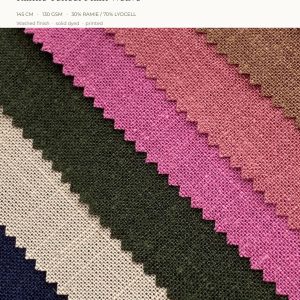
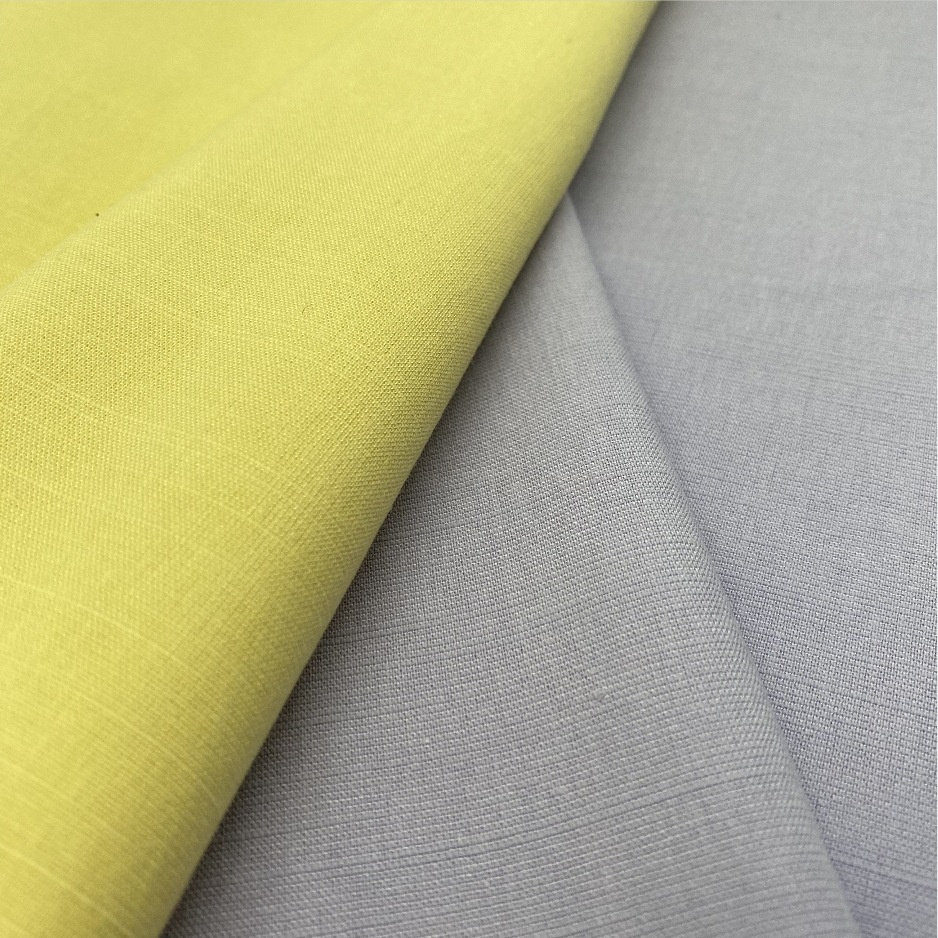
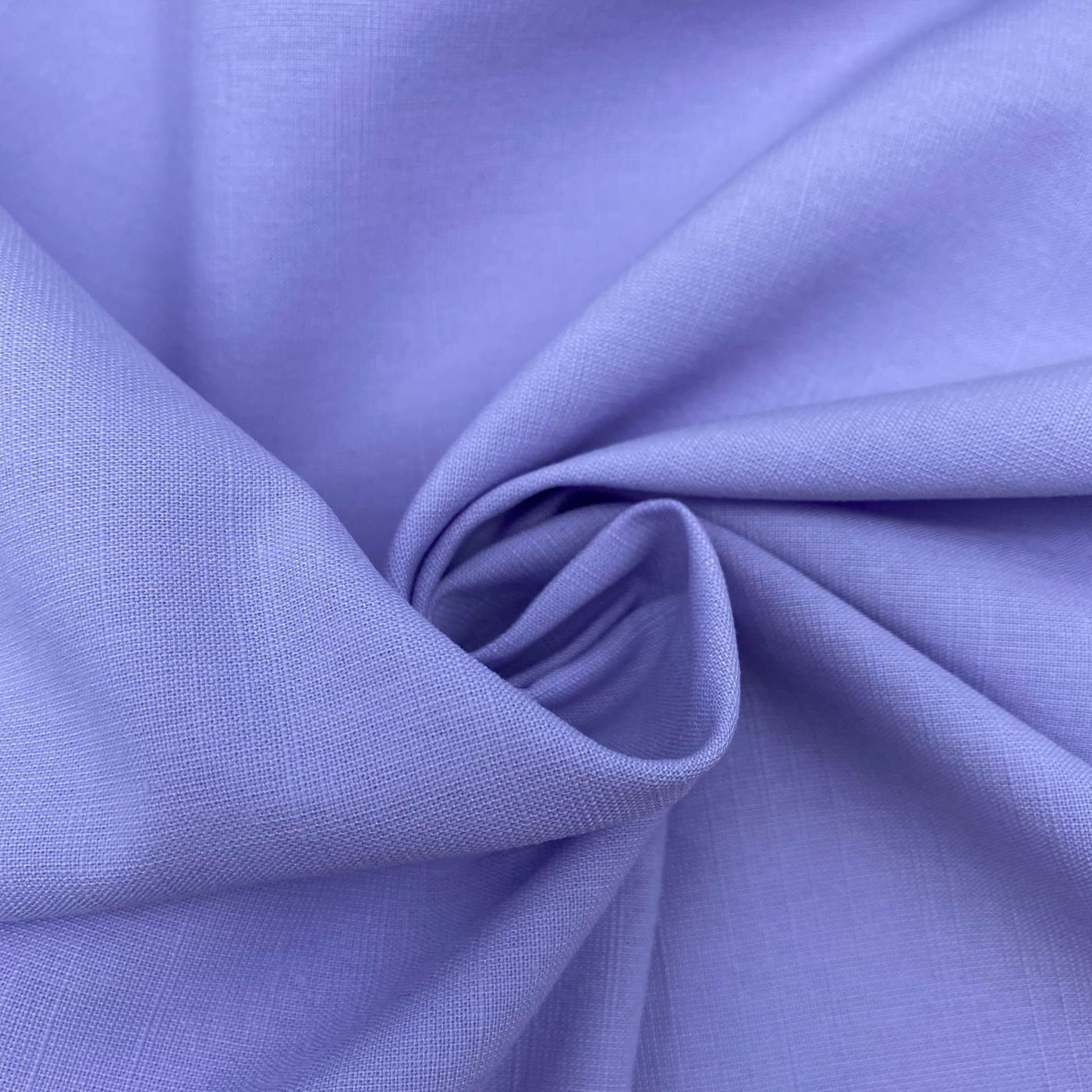
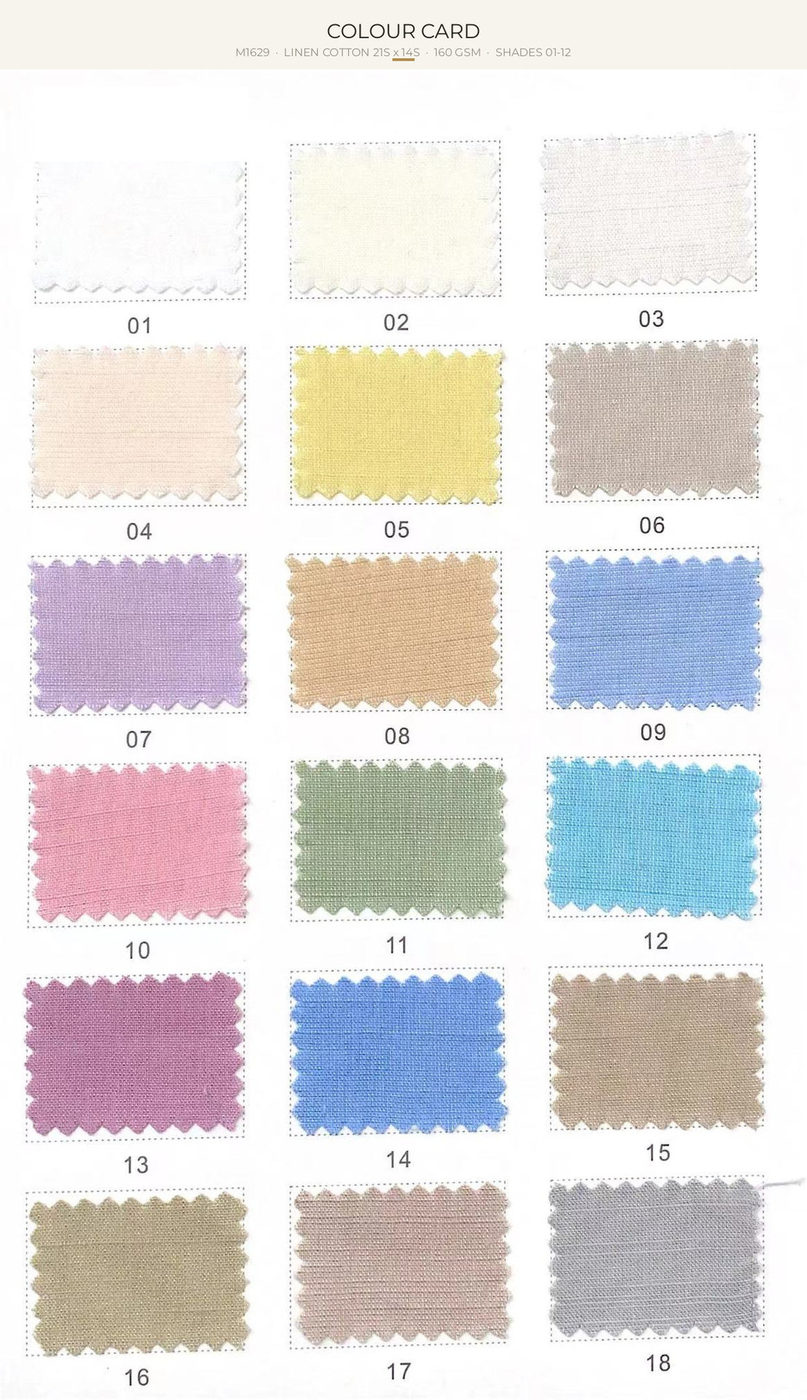
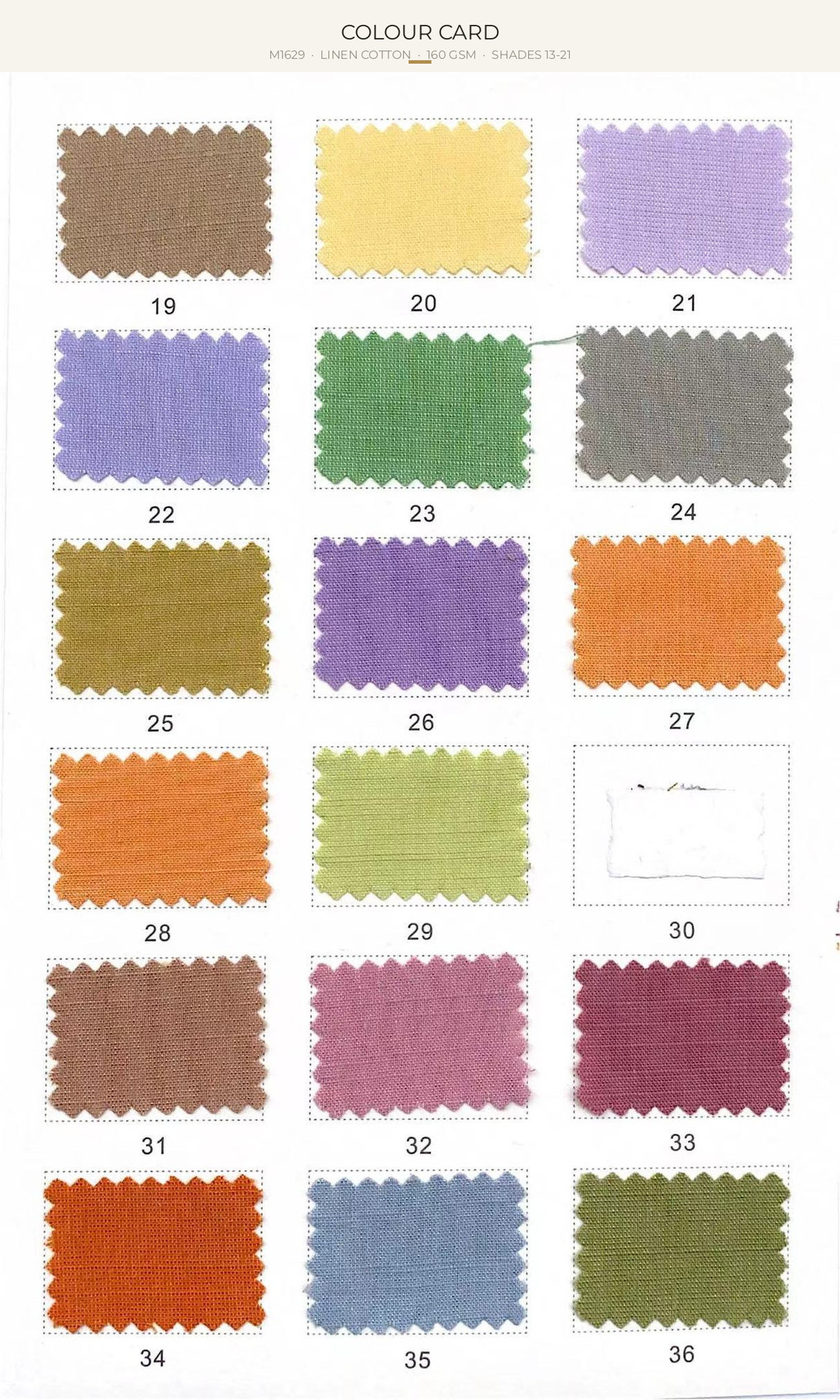
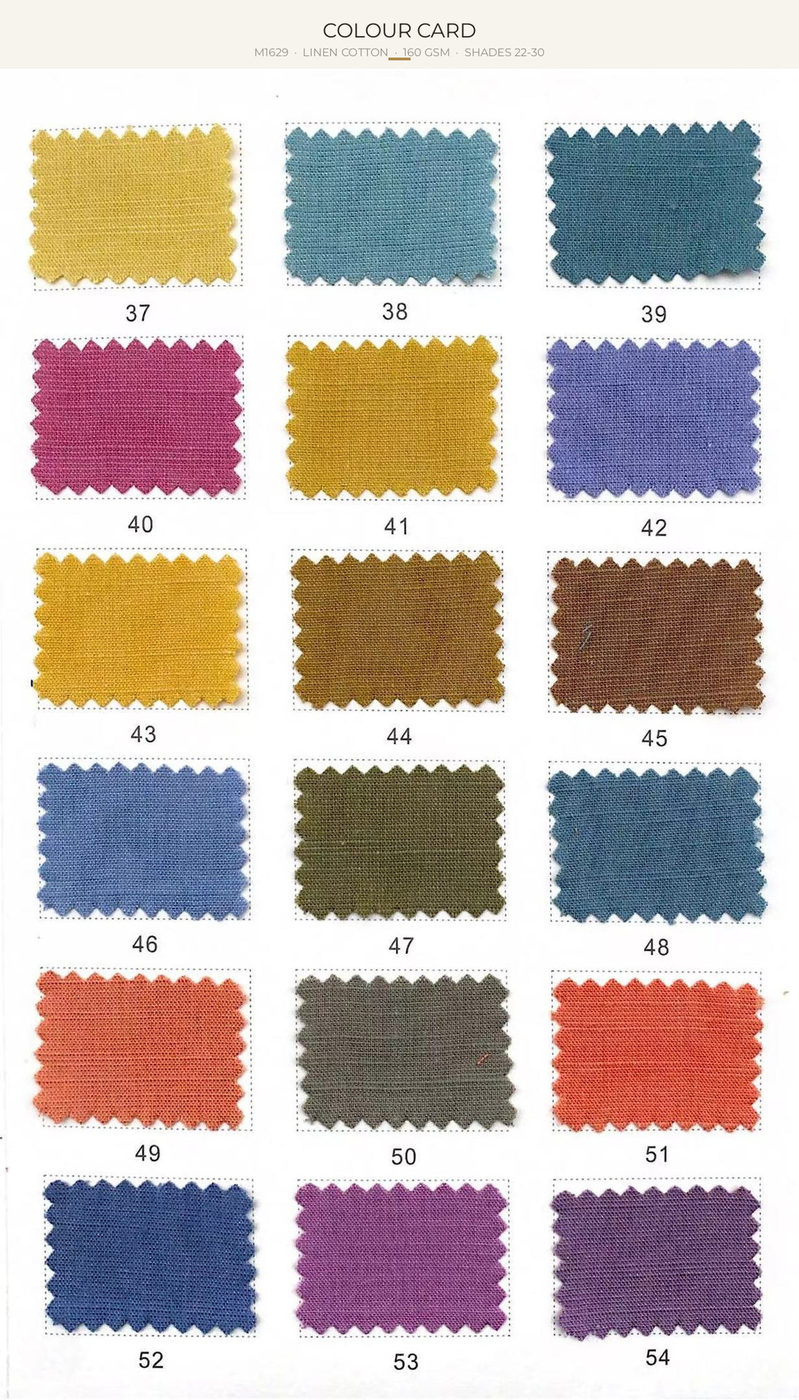
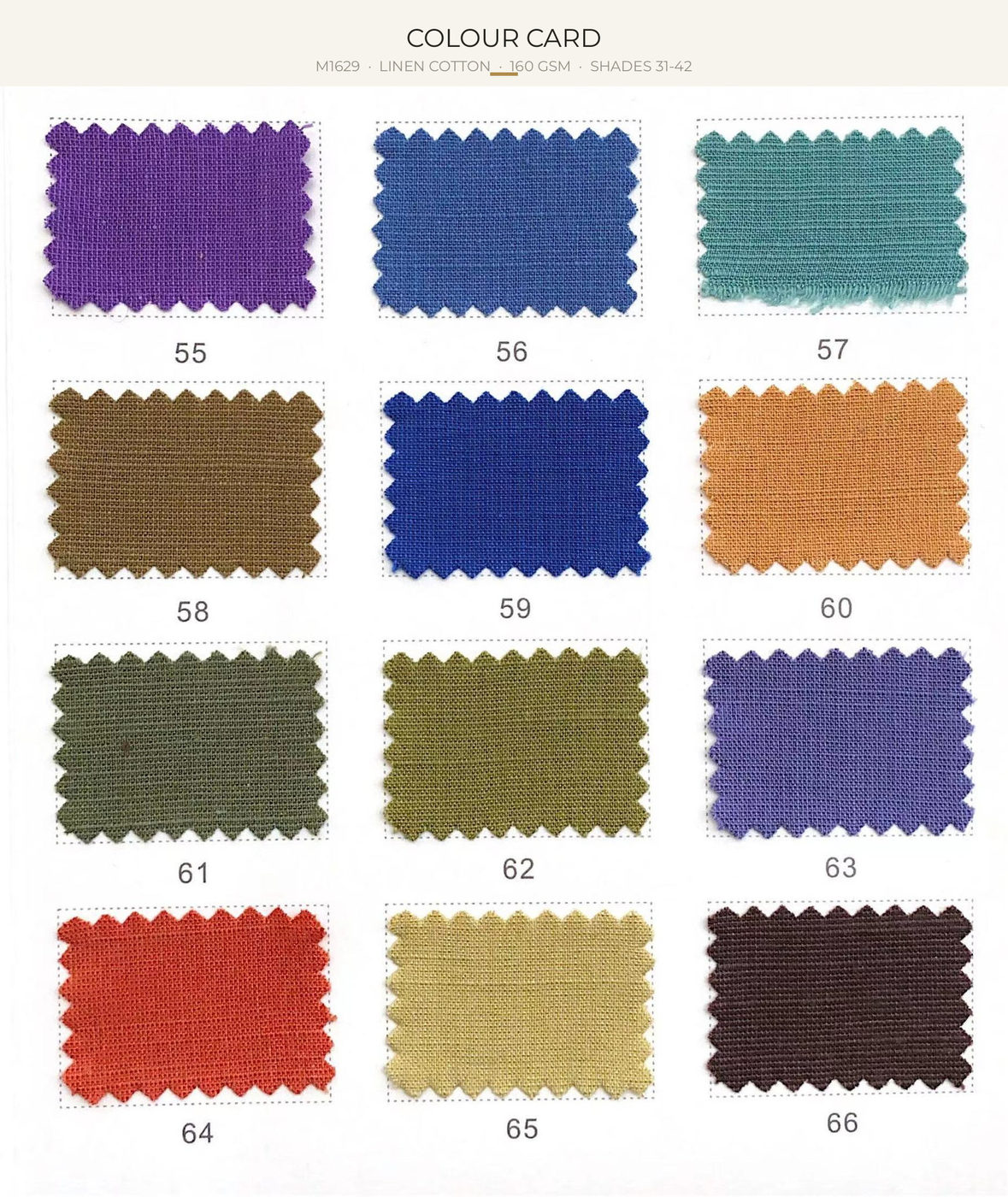
Four full color card pages are held for this construction — over 60 shades in total, running from naturals and creams through pastels, mid tones, olives, terracottas and deep shades. The cloth is supplied in solid dyed shades and, because it is also run as a digital print, the same construction carries a printed programme from the brand’s own design files. Cotton takes dye more evenly than flax, which is why a cotton-linen holds color better than a pure linen and why the shade range here is consistent across the board. Custom solid dyeing to Pantone TCX is available for development orders.
Hand samples and cutting samples are supplied before bulk production, either from stock greige or from a lab dip matched to your shade. For a cotton-linen we recommend approving the sample washed: the fabric typically shrinks 3 to 6% on the first wash unless it has been pre-shrinked, and it can also lose 5 to 10% of its greige weight in finishing, so the greige hand is not the hand the customer will receive. Cut samples are supplied so the drape can be checked on the body.
Development runs around three points: the yarn count and density, the shade matched to Pantone TCX, and the weight confirmed against the end use. Because this construction is also run as a digital print, we support print development from the brand’s own design files. We confirm shrinkage and color fastness on a washed sample before bulk is scheduled, and we specify a cold or warm wash with a line dry, because high heat sets the wrinkles into the cotton component. On a 150 cm cloth we also recommend checking the marker efficiency against the actual pattern, since the width is the main commercial advantage of this construction. Full-width greige and finished samples, small trial orders and custom development are supported for new customers.
| Service | Detail |
| Sampling | Hand sample and cutting sample before bulk |
| Lab dip | 3–5 shades against Pantone TCX or our own library |
| Greige | Full-width greige available on request |
| Development | Custom yarn count, density, weight, width and dyeing |
| Digital print development from your design files | |
| Stock range | 60+ shades held across four color cards |
| MOQ | Negotiable |
The answers below state the specification directly, so that the construction can be identified quickly and quoted accurately.
FABRIC ENQUIRY
Ask about this fabric
Share your requirements and our team will reply within 24 hours.